
AIBC Conference 2026: Comprehensive Studio Student Exhibition
ARCHITECTURE BEFORE SYSTEMS: The Systemsless Studio
Professors: James Huemoeller, Joanne Gates, Inge Roeker, Amanda Reed (MGA) with Adan Rysneck
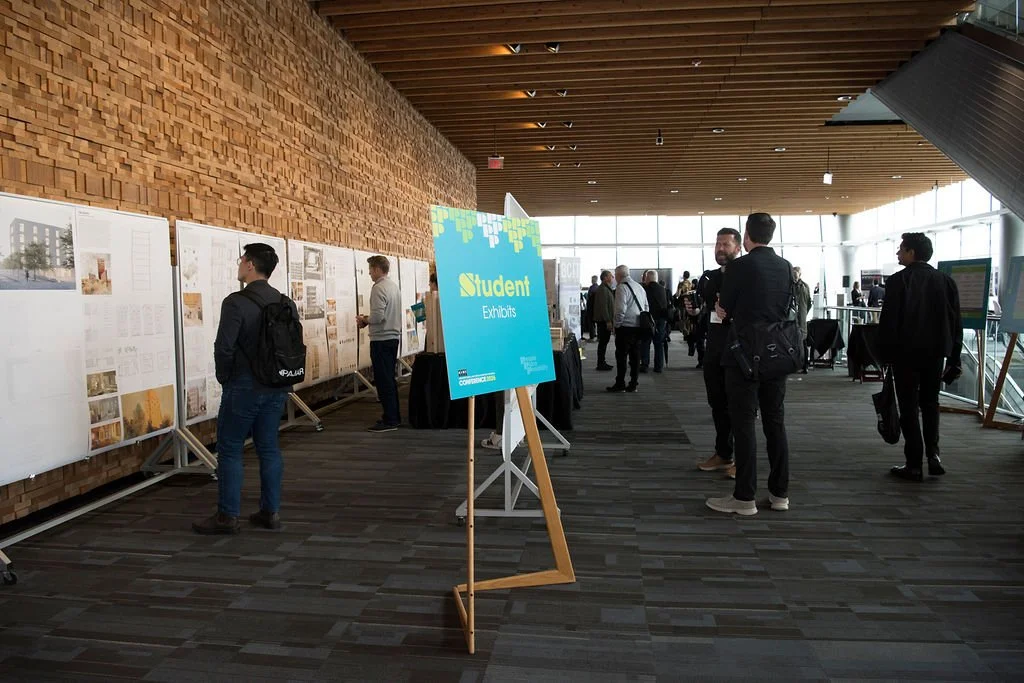
These projects mark the fifth iteration of what we have deemed “The Systemless Studio.” As the comprehensive design studio for MArch students at UBC, this studio emphasizes integrating technical aspects into students’ design development. A central principle is that students must not only illustrate their design details but also demonstrate how their projects perform. Given mounting regional concerns such as climate change and seismic resilience, the studio maintains that architects must take responsibility for their role in addressing these issues, given our outsized influence in the initial formation of a design project. Here, we focus on thermal comfort and operational and embodied carbon through a systemless approach.
What is Systemless?
By systemless, we mean buildings, or portions of buildings, designed to meet thermal comfort and health and safety criteria without mechanical heating, cooling or ventilation. Inspired by the 2226 model developed by Bauschlager and Eberle with Lars Janghans, the designs rely on internal gains (people and lighting) for heating and natural ventilation for cooling. To achieve the required performance, the designs must largely align with the following principles:
local environmental phenomena and ecosystems
compact volume/ form
highly insulated building enclosure (superinsulation) with white or bright cladding
thermal mass, exposed to the interior
bodies as the primary heat source (lighting secondary)
natural ventilation (indoor air quality + cooling) managed with sensors + controls
local, low embodied carbon and healthier materials
regularly spaced openings for daylighting with solar shading
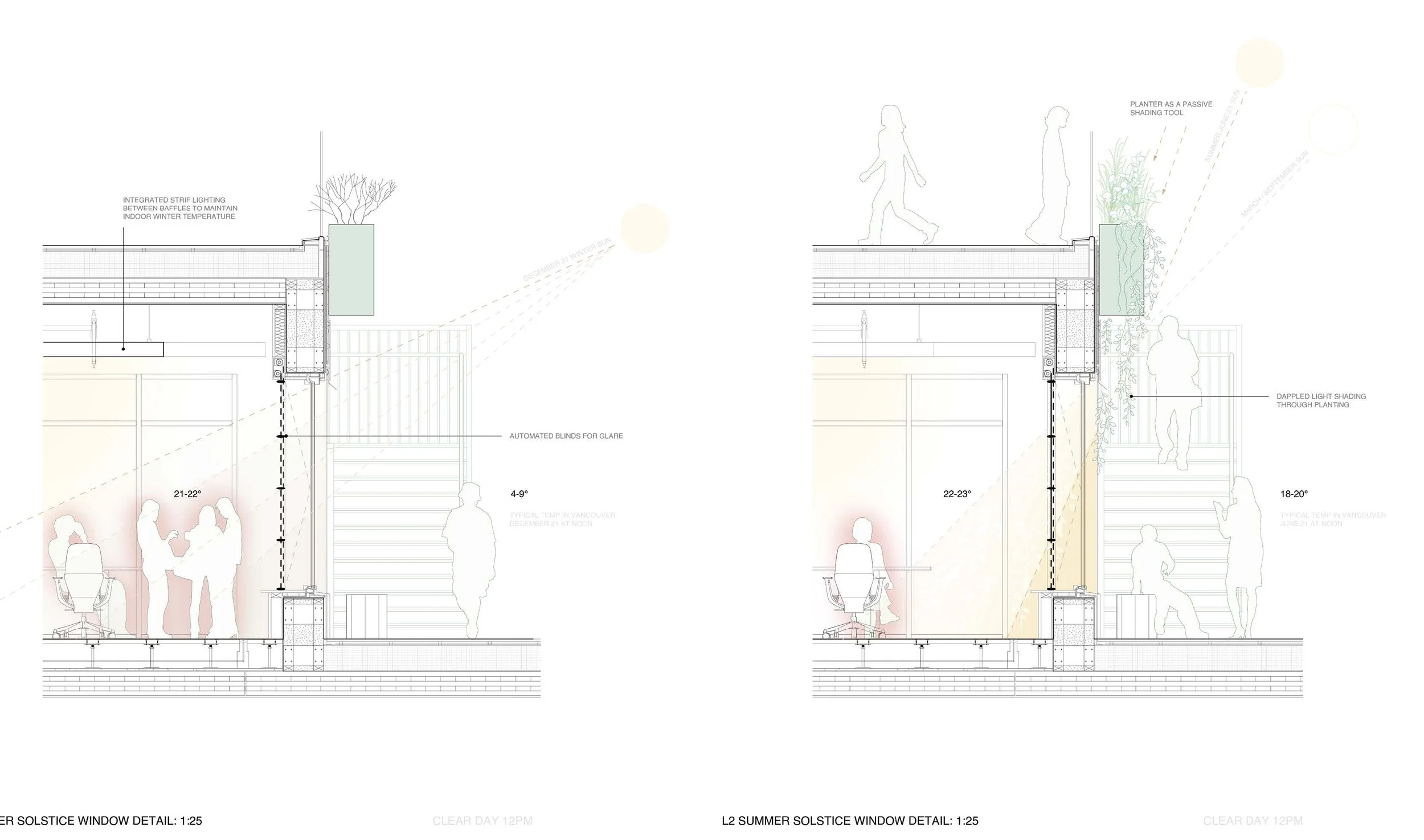
DAYLIGHT STRATEGY: WINTER (LEFT) + SUMMER (RIGHT) SOLSTICE | Sinnie Choi, Cynthia San
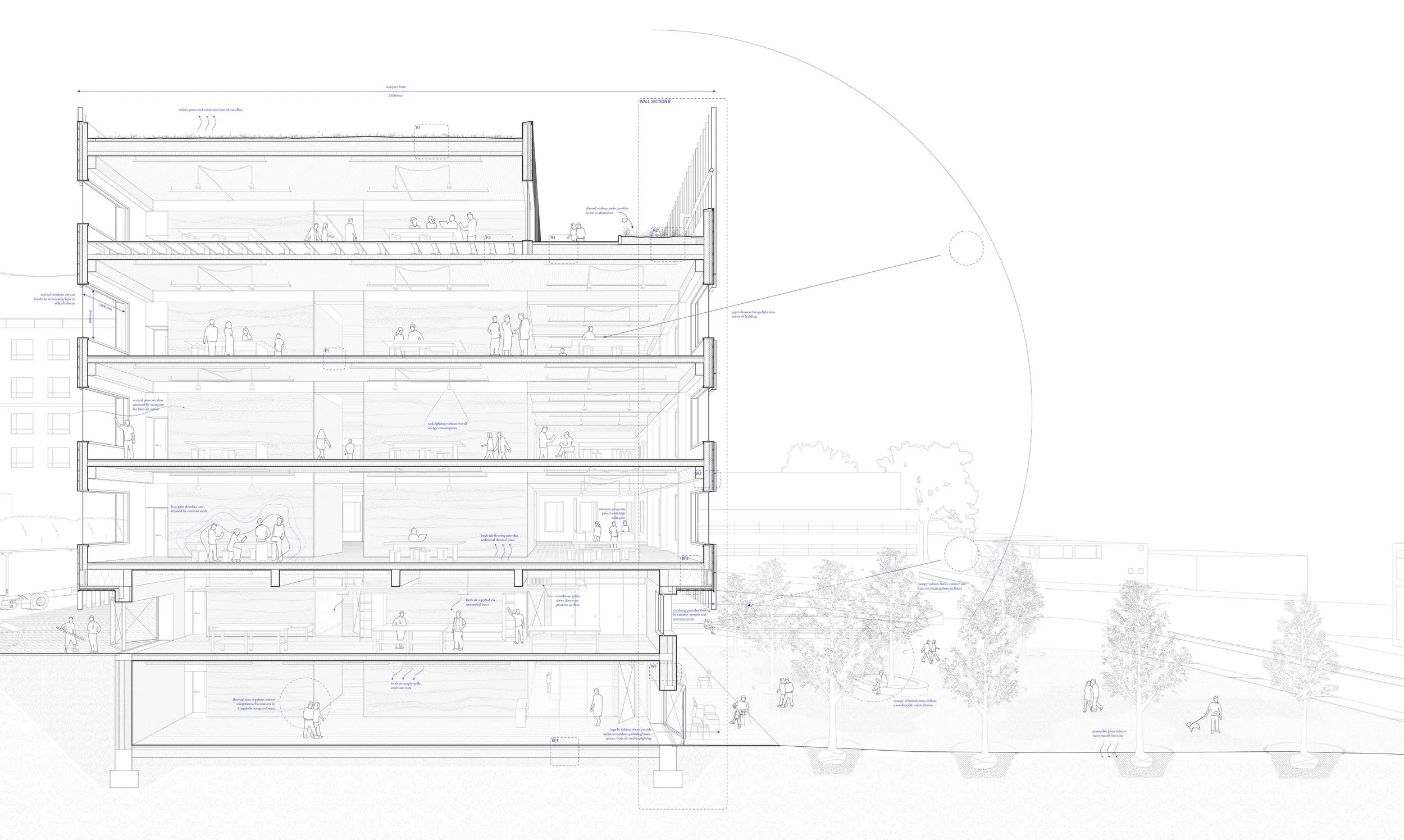
BUILDING SECTION | Eva Sabourin, Anya Chuprys
The Pedagogical Ambition
Systemless design brings clear constraints. Despite or even because of these limitations, the project requires students to take a different approach from other studios. The focus on compactness means architectural quality must come from aspects other than formal complexity. Daylighting, materiality, and sensory experience are the tools for this studio. Minor details—not grand gestures—set these projects apart.
From a technical perspective, it also means that students are accountable for the architectural decisions they make. Decisions that negatively impact thermal comfort cannot be made up for in the building systems. As such, students must know how their buildings are performing and are asked to model their project using ClimateStudio, a Rhino/Grasshopper interface for EnergyPlus, to verify conformance. For too long, our industry has prioritized complex building systems to address climate change. Despite continued growth in system commissioning, these systems still rarely meet design performance targets due to various factors. This studio takes the stance that architects must assume greater responsibility for their design decisions and environmental impact.
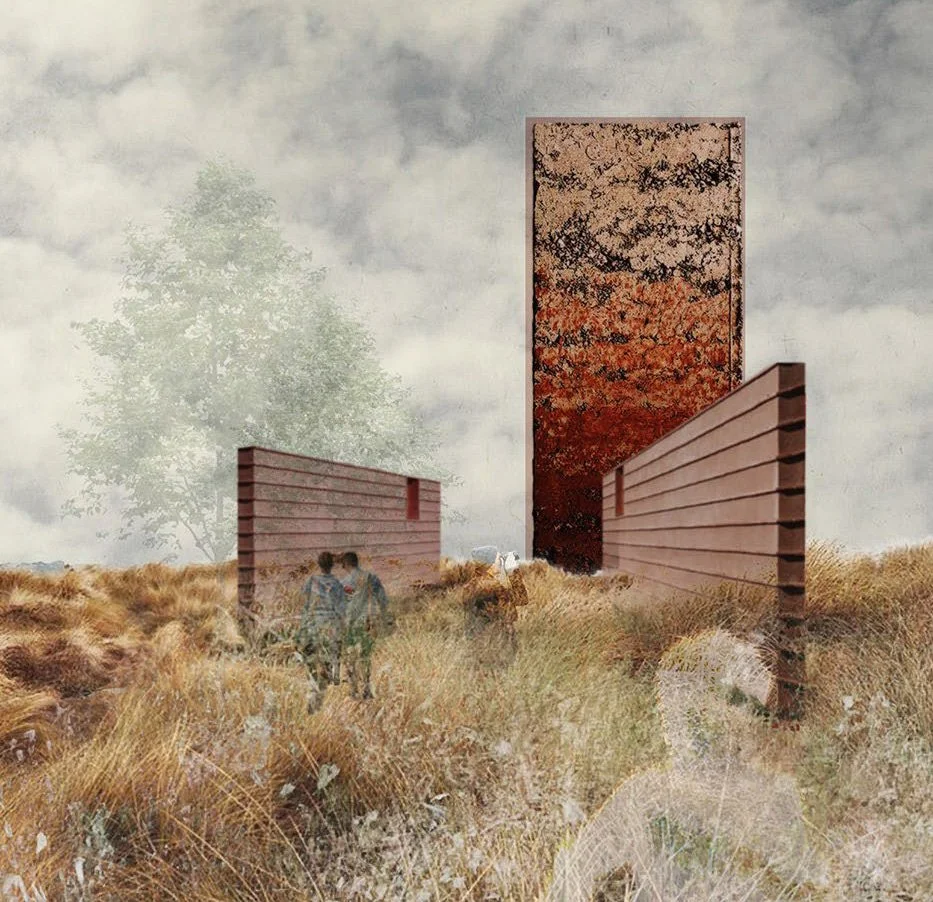
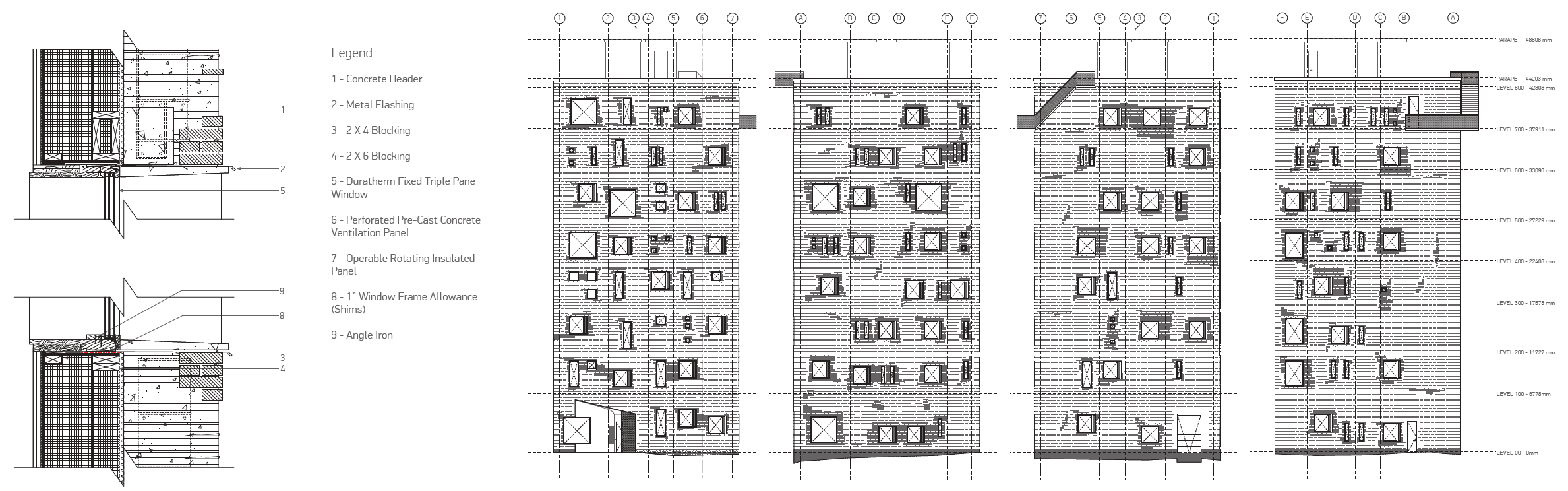
THE HEARTH CONCEPTUAL DIAGRAM (TOP LEFT), DETAIL (TOP RIGHT), ELEVATIONS (BOTTOM) | Andrea Tabing, Duncan Maconachie
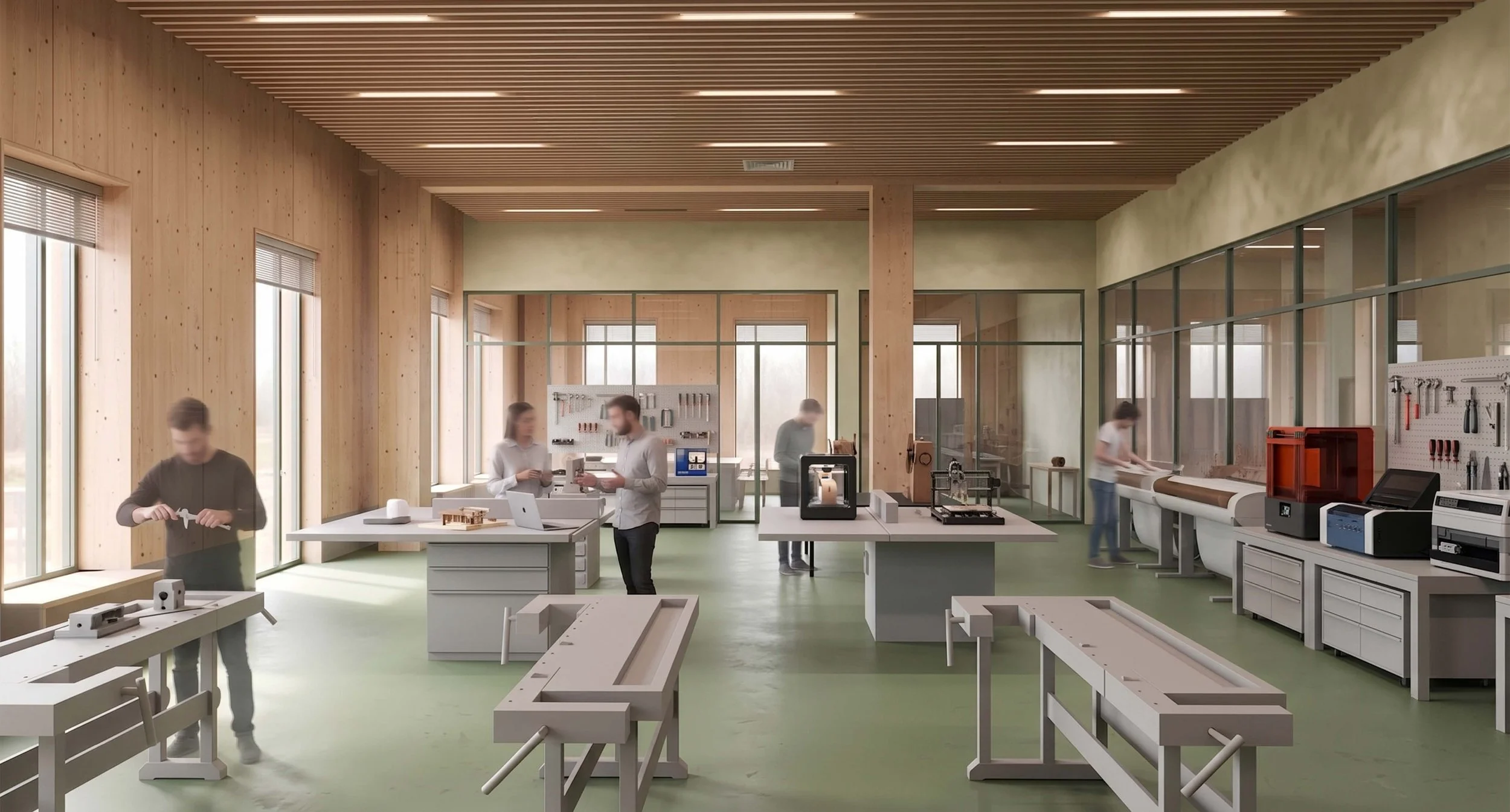
MAKERSPACE WORKSHOP | Sinnie Choi, Cynthia San
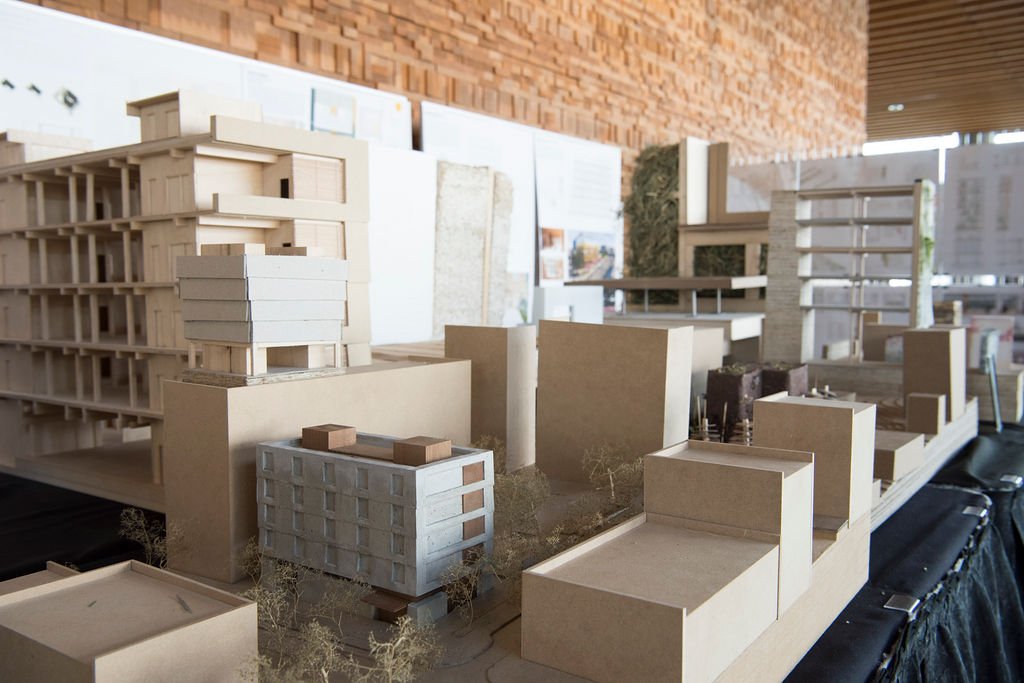
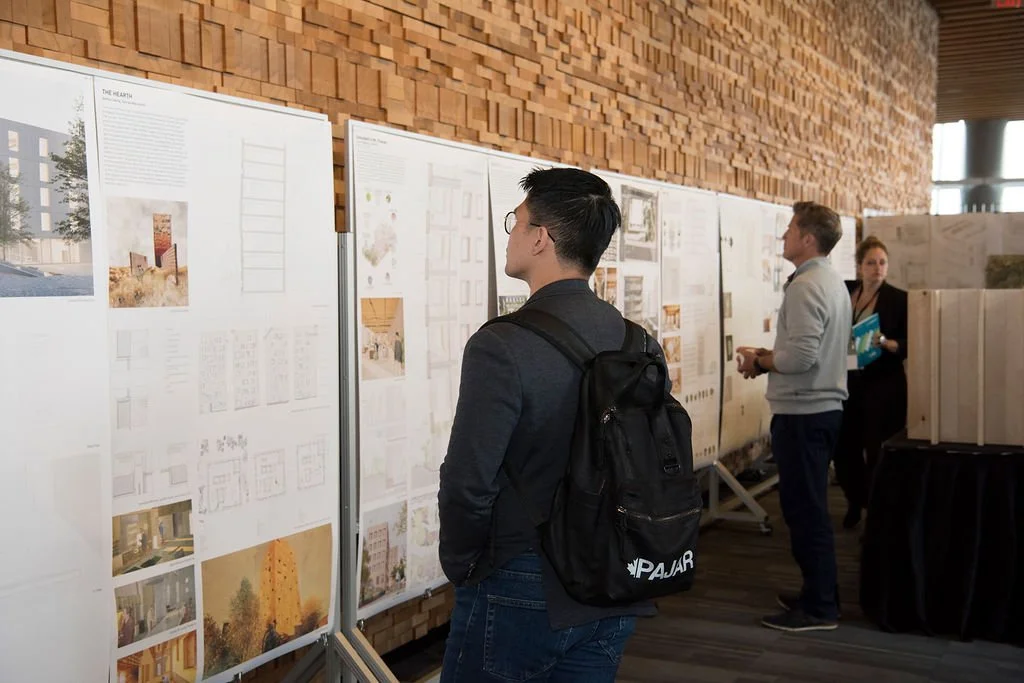
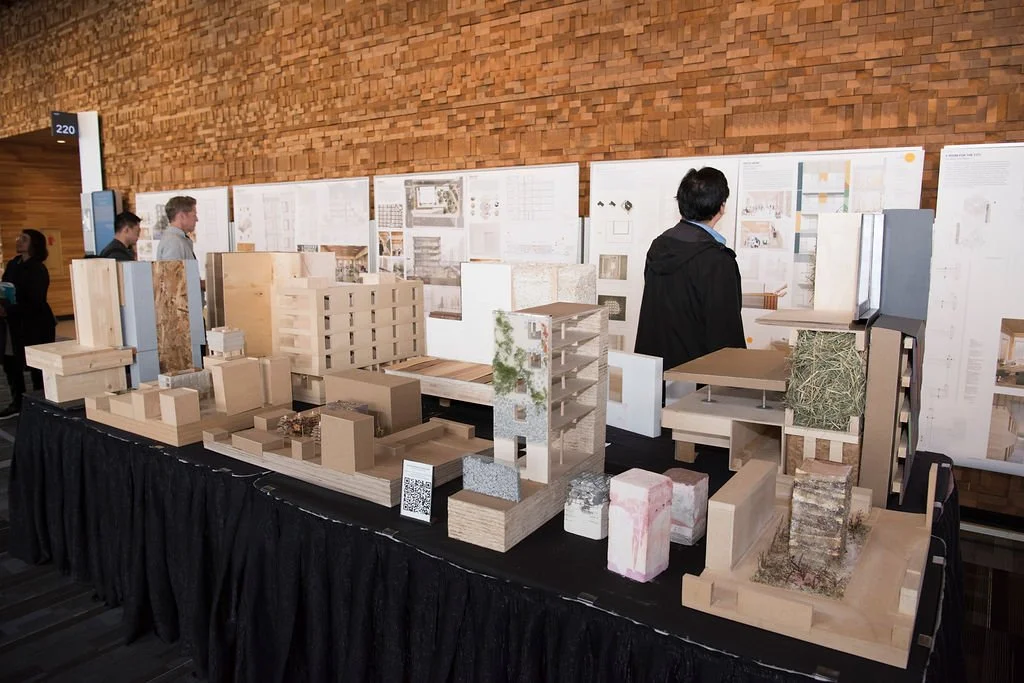
1:2 Detail Models and Concept Models