
RAIC Talk: Design+Build as Provocation
On May 7, James Hoemoeller, Principal at JIM had an opportunity to speak at the 2026 RAIC-CCUSA Academic Summit on a panel titled “Collaborative Learning: Community, Partnerships, Architecture”:
Over the past half-century, architectural research and pedagogy have increasingly branched out from academic seclusion into communities and places where experiential learning opportunities synergistically engage with local geographies and contexts. This session offers three examples of how programs in Canada are forming such partnerships and collaborations with communities, industries, and organizations. Student learning and design research are woven into reciprocal conversations about the pressing challenges we collectively face, while offering tangible insights to how rigorous design thinking, creative making, and responsible engagement can continue to inspire a positive path forward.
James contributed a talk titled “Design+Build as Provocation” speaking to the (re)making of the UBC SALA Design+Build program. In the 50 years of Design+Build at UBC SALA, projects have been either unconditioned constructions in light wood framing or temporary installations on UBC’s campus. Though excellent experiences, these projects have limited engagement with 21st-century building technology and processes. Building on the success of Third Space, a student initiative, SALA, in collaboration with the Faculty of Applied Sciences, initiated a year-long thesis course that combines research, design, and construction to address these shortcomings. This program aims to achieve three goals: showcase the ongoing research of faculty seeking to address the pressing problems facing our built environment, build partnerships with like-minded industry and community partners, and equip our students with the skills required to reshape practice. The ensuing potential of the resulting permanent installations should also provoke dialogue within our professional and social communities about alternative approaches to improving the places we live.
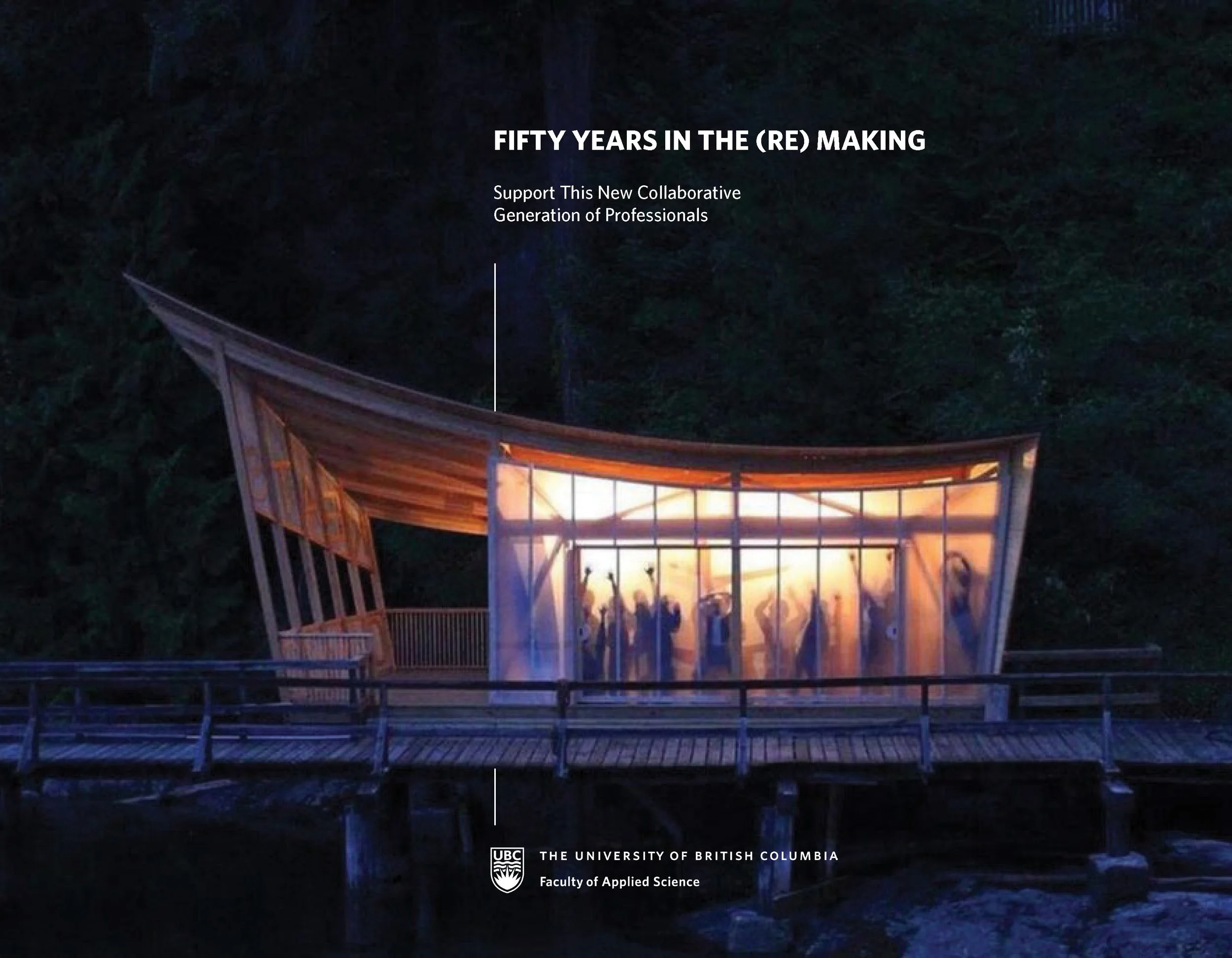
In 2024, James Huemoeller was brought on full-time at UBC SALA to continue the 50 years of design+build at the school. The most recent iterations were light wood-framed structures at island camps. They offered students an accessible introduction to many lessons from design+build projects across the country and were highly popular among students. James recounted, unfortunately, his experience in building was quite different. In typical infrastructure projects, craft was in your ability to negotiate paperwork and supply chains. Furthermore, these traditional design+build projects seemed to reinforce rather than challenge the approaches he has long worked to question as a practitioner. He acknowledged that yes, it introduces students to building, but does it do so in an impactful way?
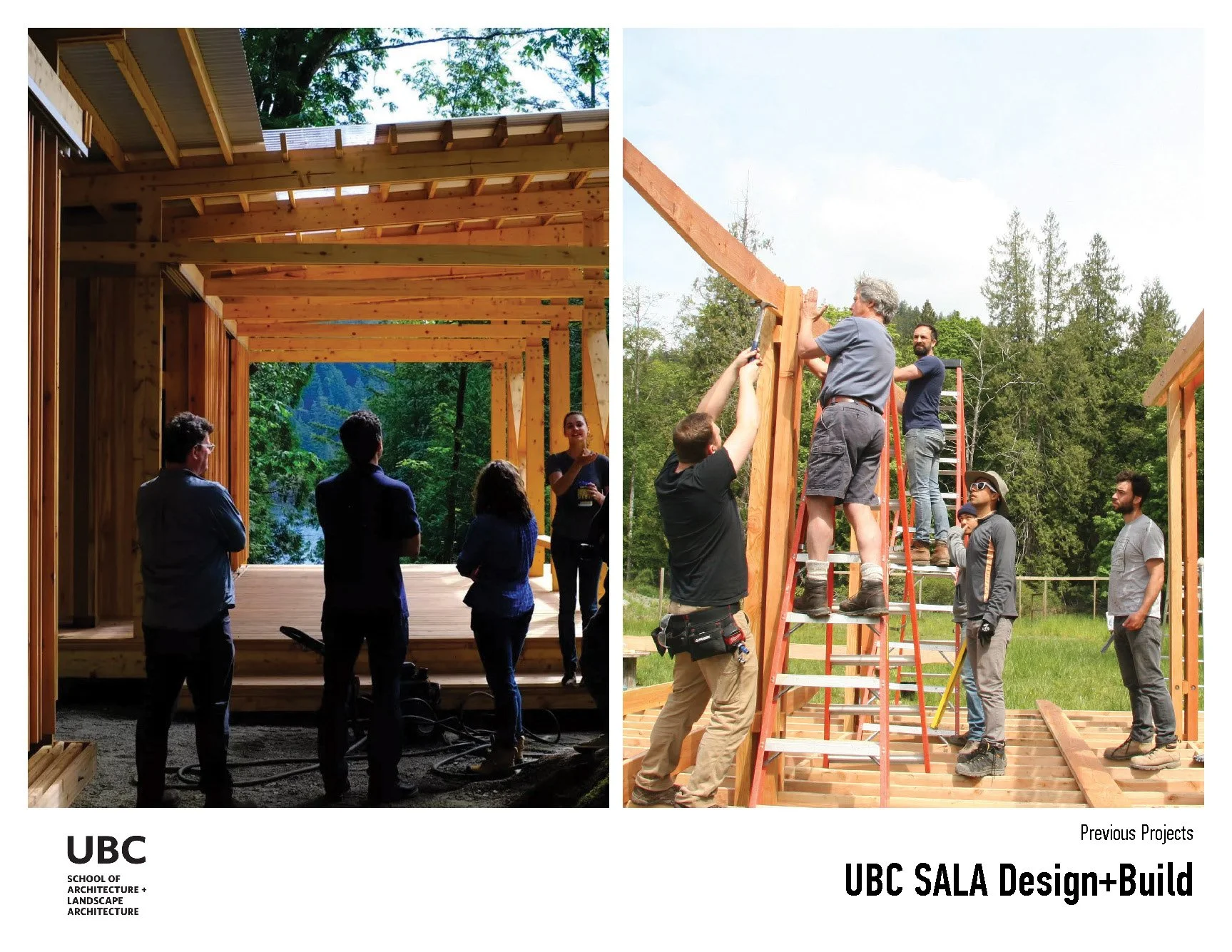
What are the processes that can make a positive impact on our society and its built environment?
His focus and interest in teaching are thus to instruct students in processes that make a tangible impact on our built environment. Specifically, James believes there has been a growing disconnect between academic innovation and practice, and he want to break it down. He wants to be a bridge.
As a first step, he shifted the focus of UBC SALA’s existing program at Keats Camp away from creating new structures and towards the spaces that already exist. First, with a landscape project. And currently with an interior renovation of the historic hall, largely abandoned to storage.
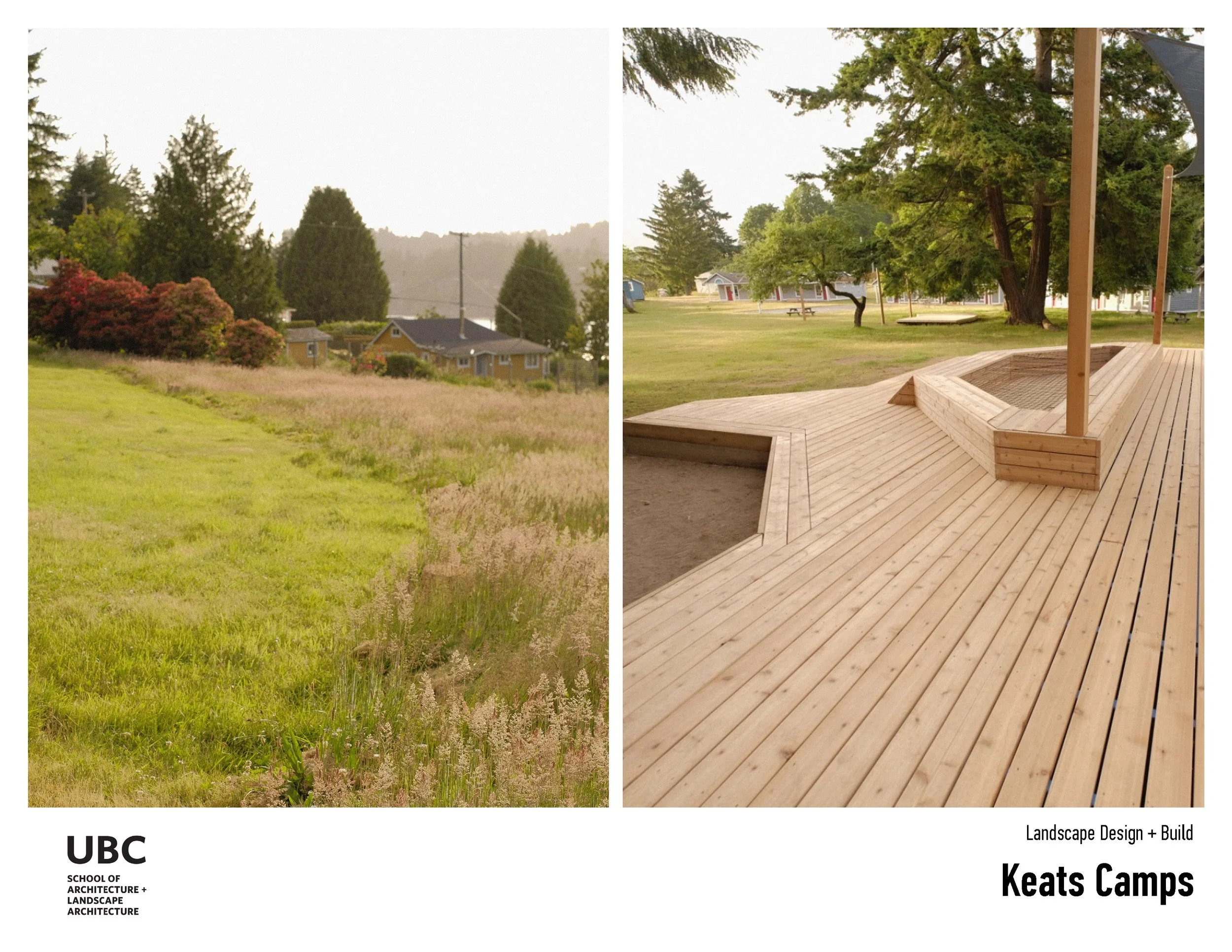
Keats Landscape, Summer 2025
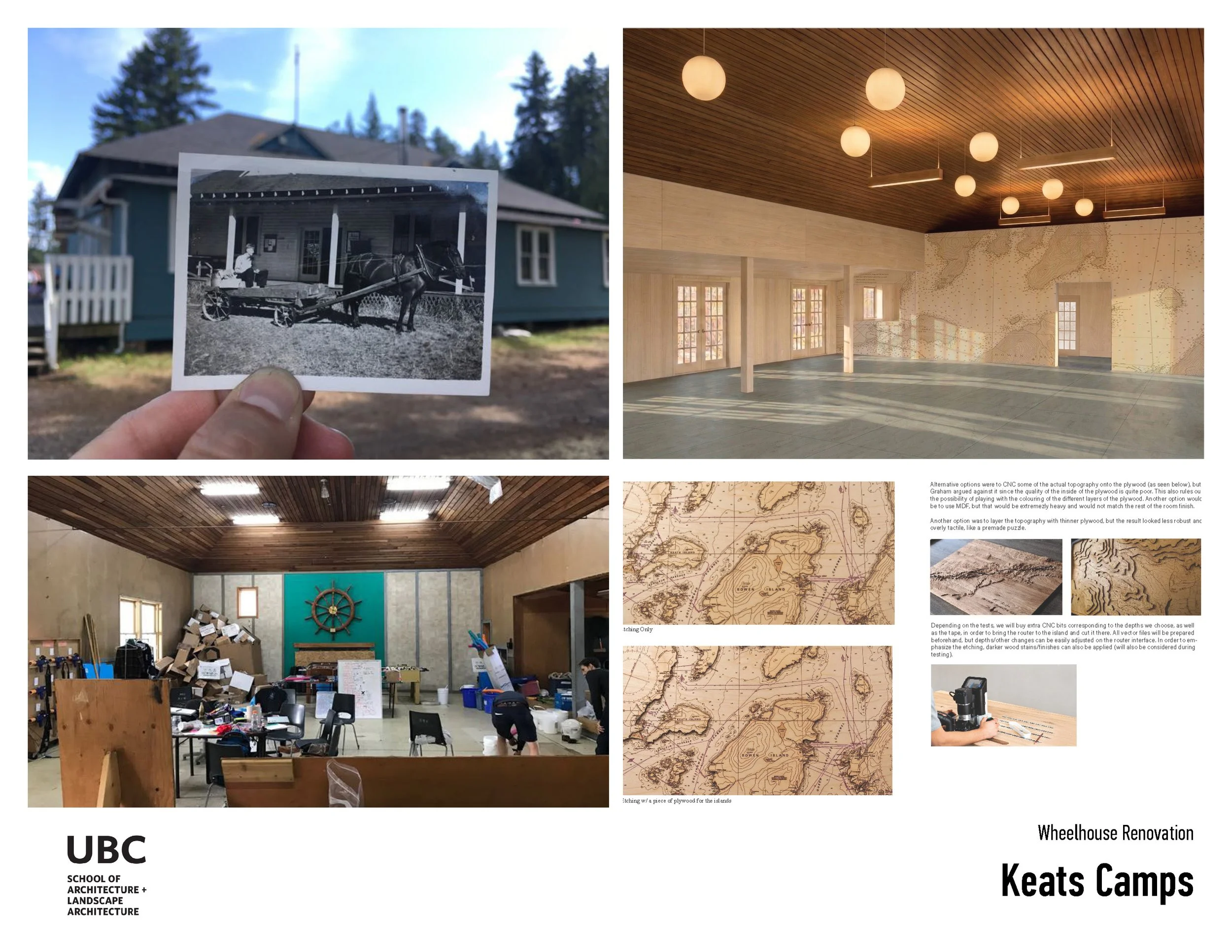
Keats Wheelhouse Renovation, Summer 2026
His next step was to find space in the curriculum for another form of design-build. This form would give time and space to implement more complex projects grounded in academic research, both in SALA and, ideally, across the university. This crucial step would also allow the faculty to engage both community and industry partners over a longer duration.
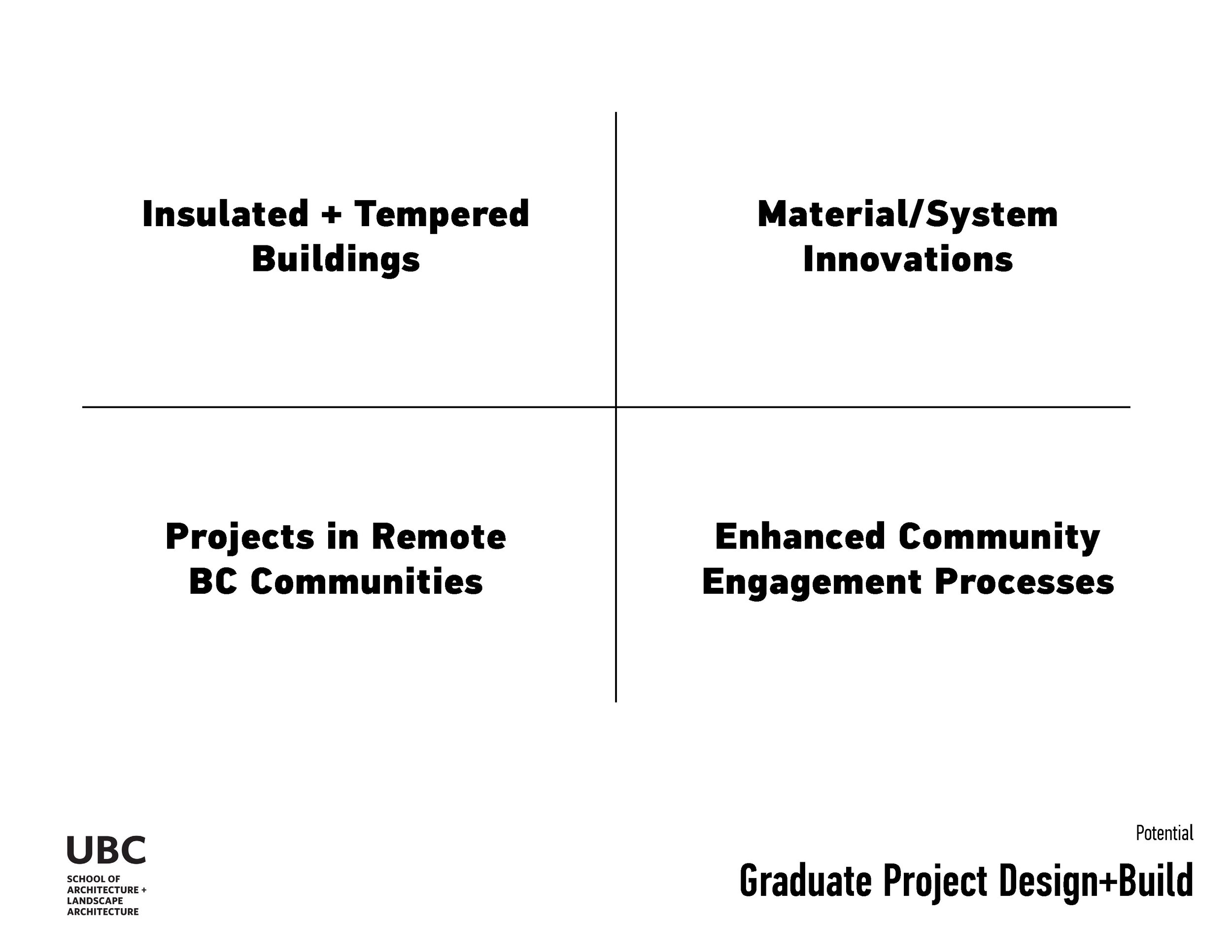
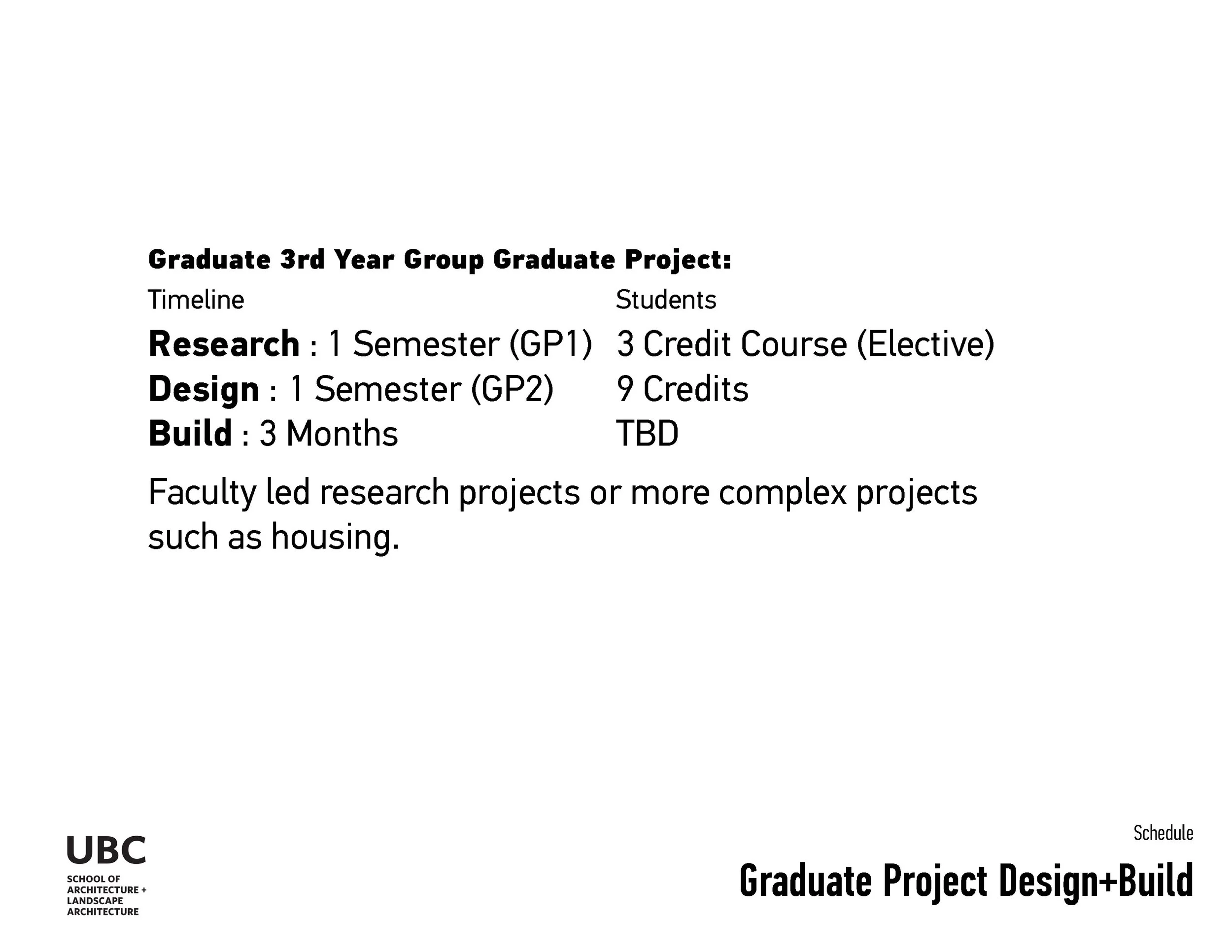
The above outlines the range of practice-based options available for the new “group” Graduate Projects beyond just a traditional design+build format. Extended community-based projects or focused research into materials with a practical focus are two other avenues of exploration available. Ultimately, the goal is to build skills and knowledge for students and partners (industry, municipalities, AHJs, etc.), as well as deliver public impact.
As a test, James built a project around Annalisa Meyboom’s research on Design for Manufacturing and Assembly (DfMA), which has long been of interest in academia but remains at the fringes of practice when one considers the totality of building projects, not just those celebrated, despite considerable investment. The course began with a semester-long seminar that introduced students to current research and specific DfMA skills that would later be useful during the design+build portion.
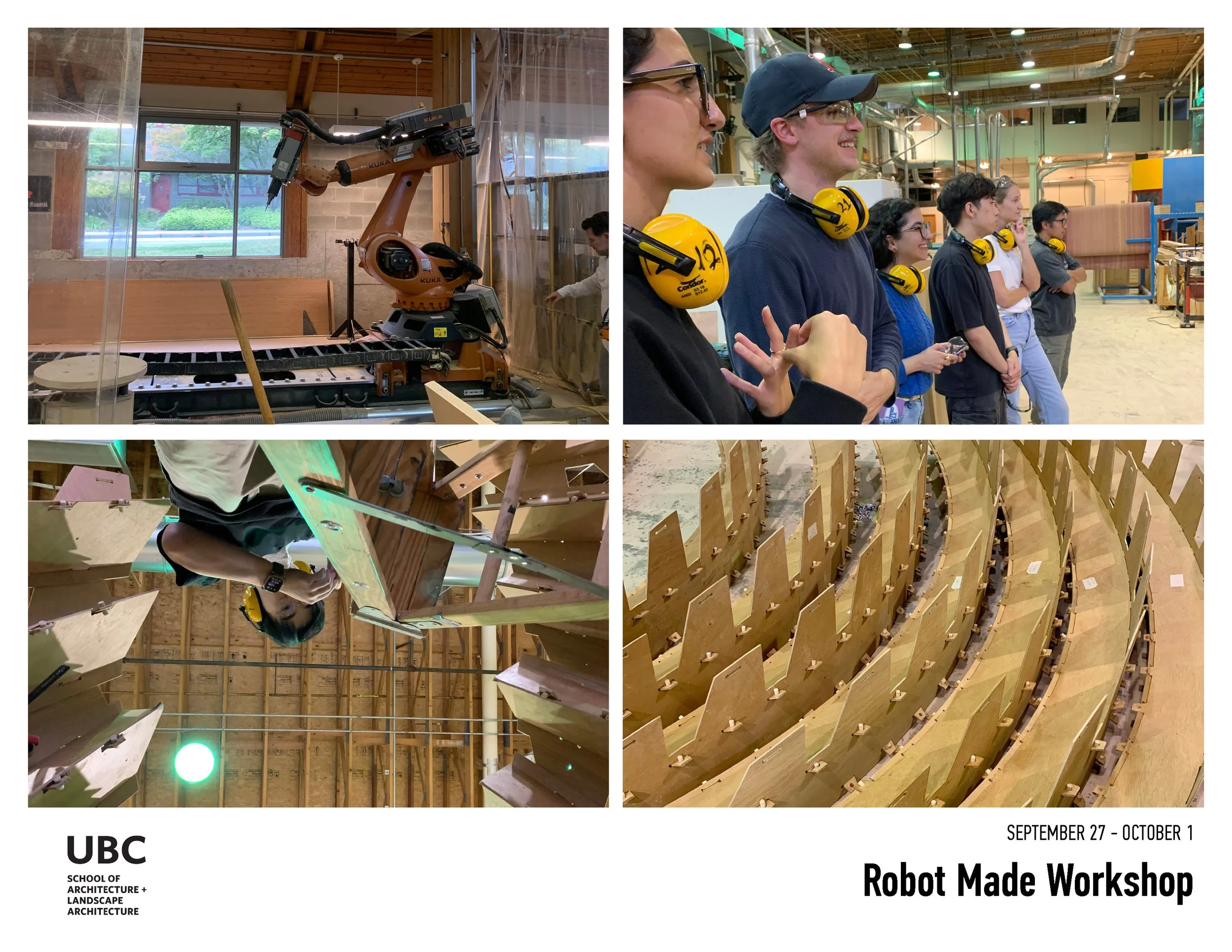
Robot Made Workshop, September 27, 2025 - October 1, 2025
The semester included a robotic workshop at the Centre of Advanced Wood Processing at UBC, where the students, together with various industry professionals, built a small structure. There was also a mini symposium that brought together individuals focused on advanced wood fabrication methodologies.
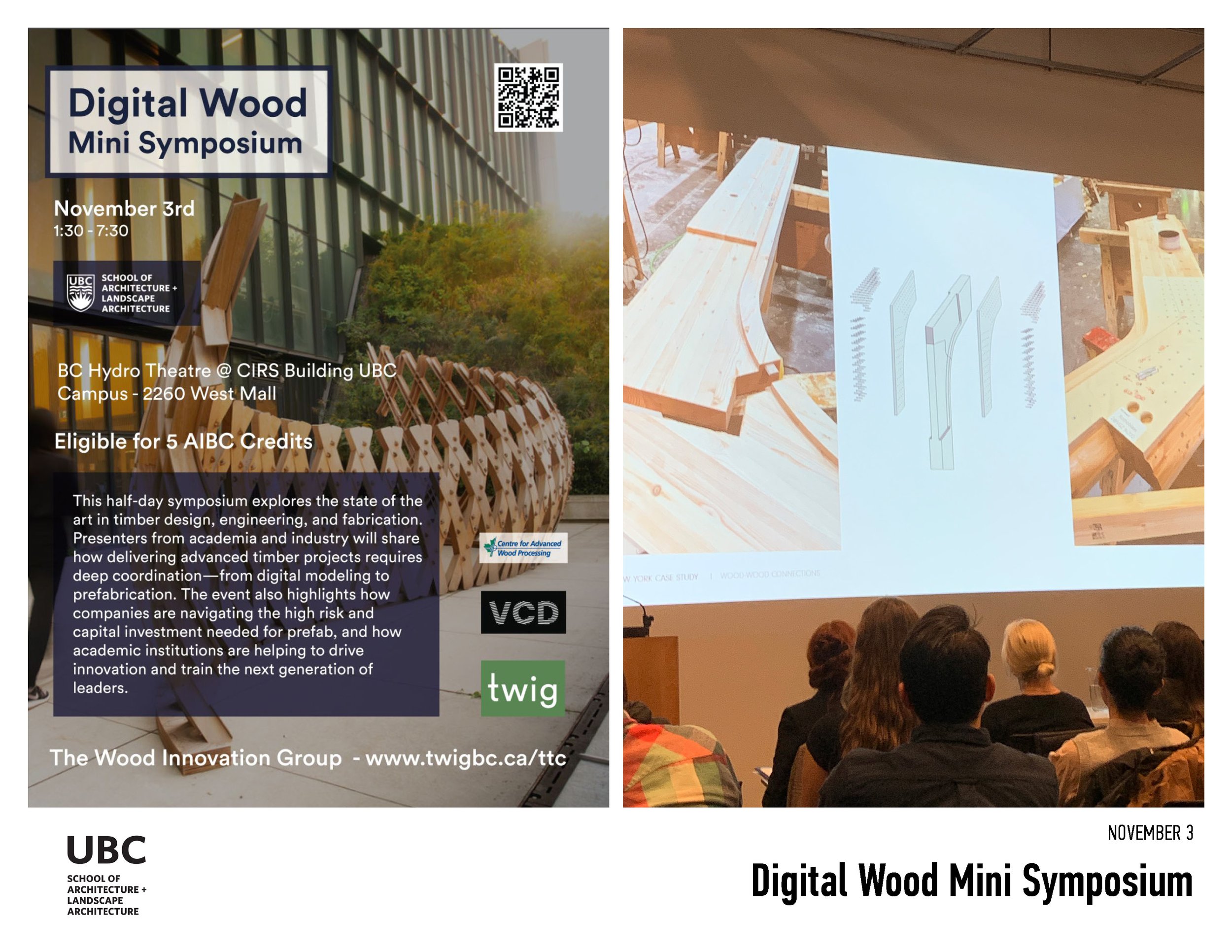
Digital Wood Mini Symposium, November 3, 2026
In January, the students began work on their project. In this case, a new bird blind/pavilion for Boundary Bay Regional Park with Metro Vancouver as the client. Both the site, just 90 cm above sea level, and the client, a large bureaucratic governmental organization, immediately challenged the students to find a durable design for the park.
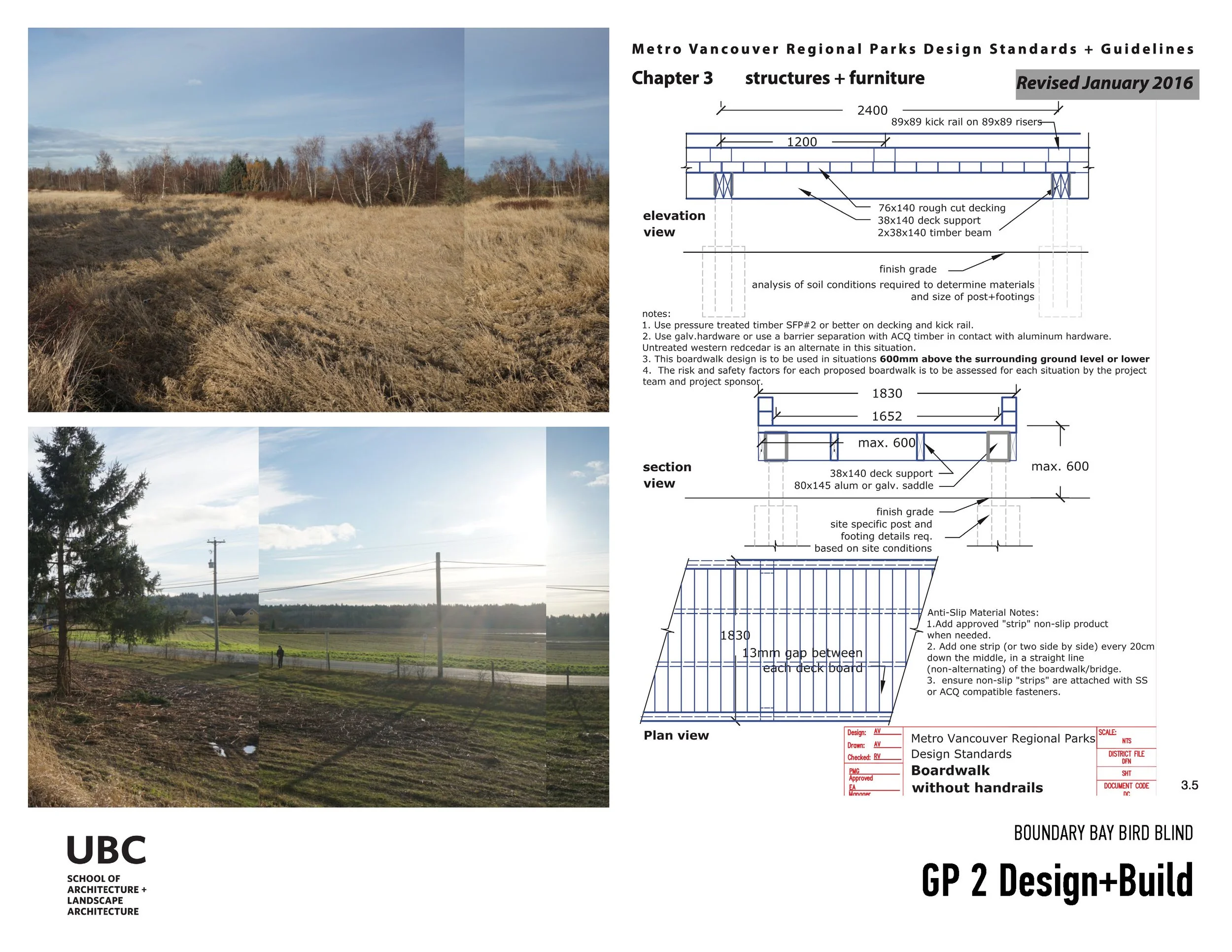
The students began with an intensive design phase over three weeks and then quickly worked to submit for permit by spring break. There, the students took a break to visit some fabrication facilities in BC and a community forest. Upon returning, the students moved to design development, fabrication and construction, which is still ongoing with a finish date at the end of the month.
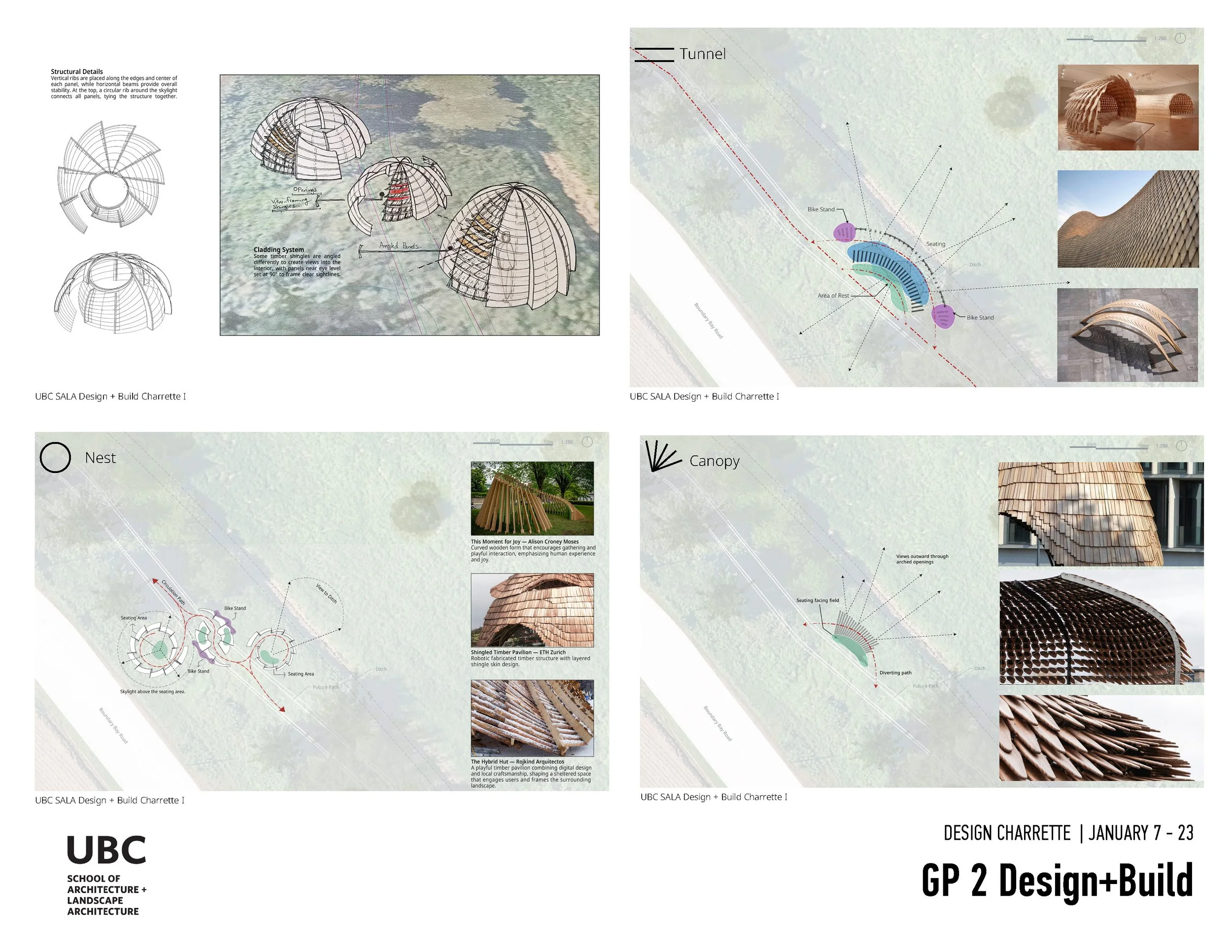
Design Charette, January 7-23, 2026
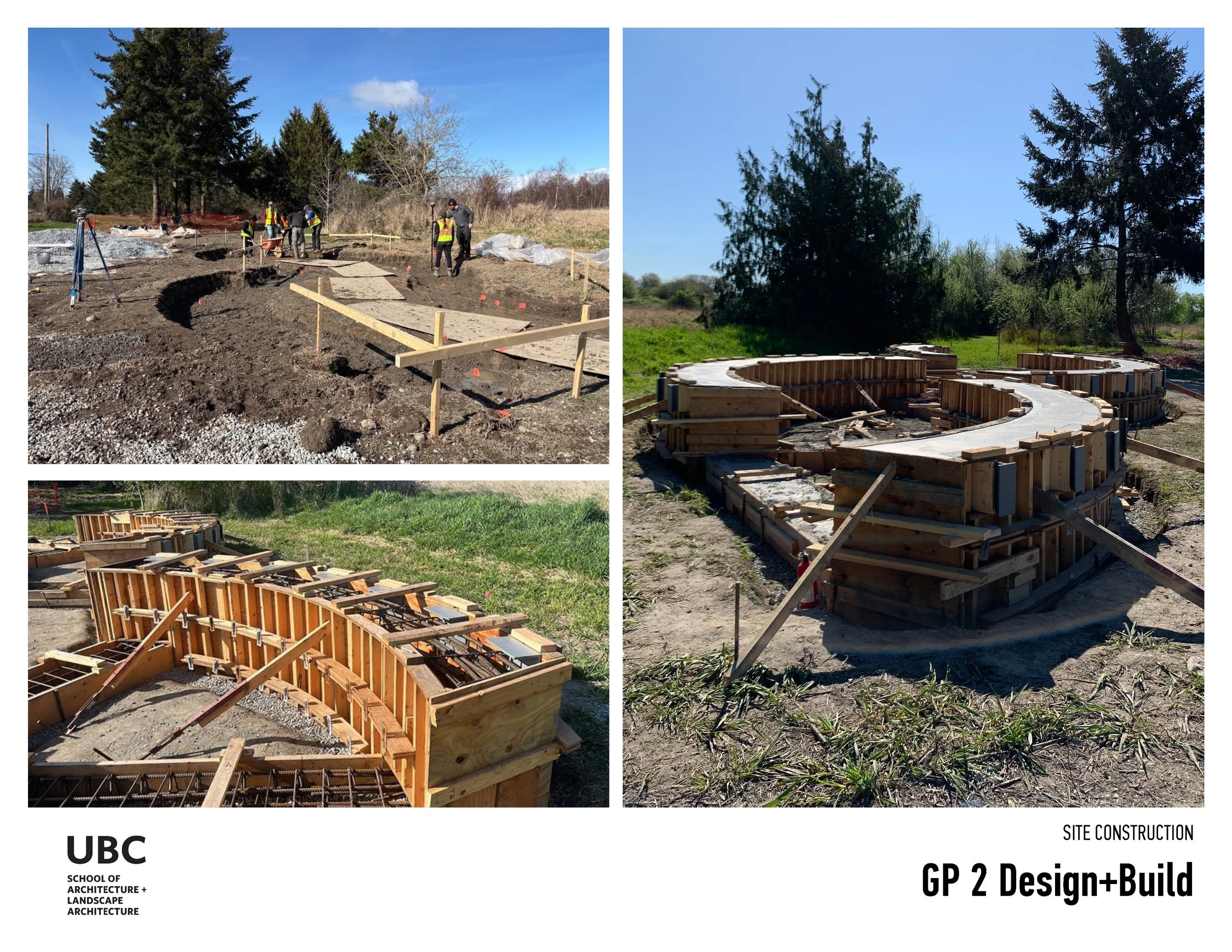
Site Construction
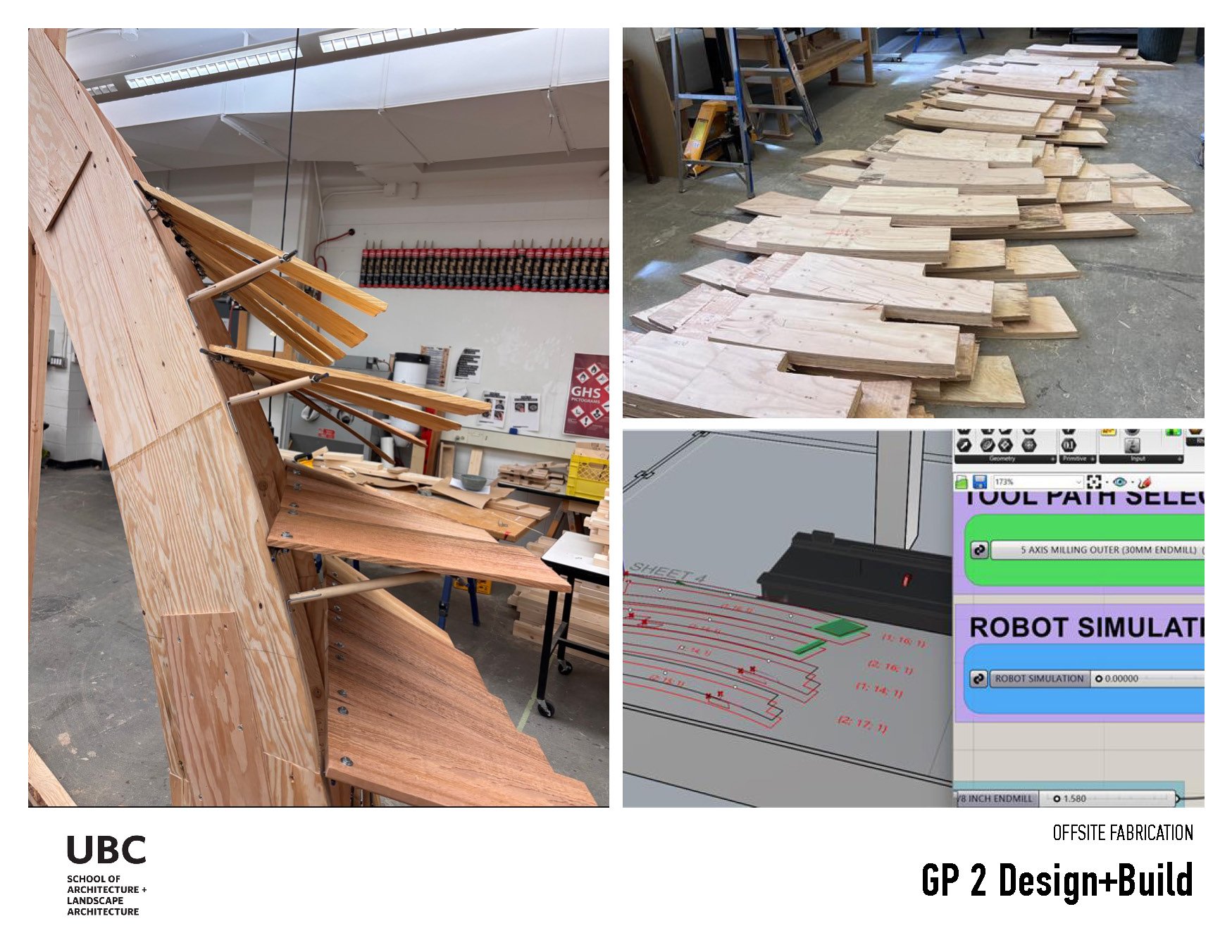
Offsite Fabrication
As a first iteration, the project has had its challenges, but James believes the learning process has been impactful for students, clients, and our industry partners.