
James Huemoeller Presents at the UIA World Congress of Architects, Design for Climate Adaptation Panel
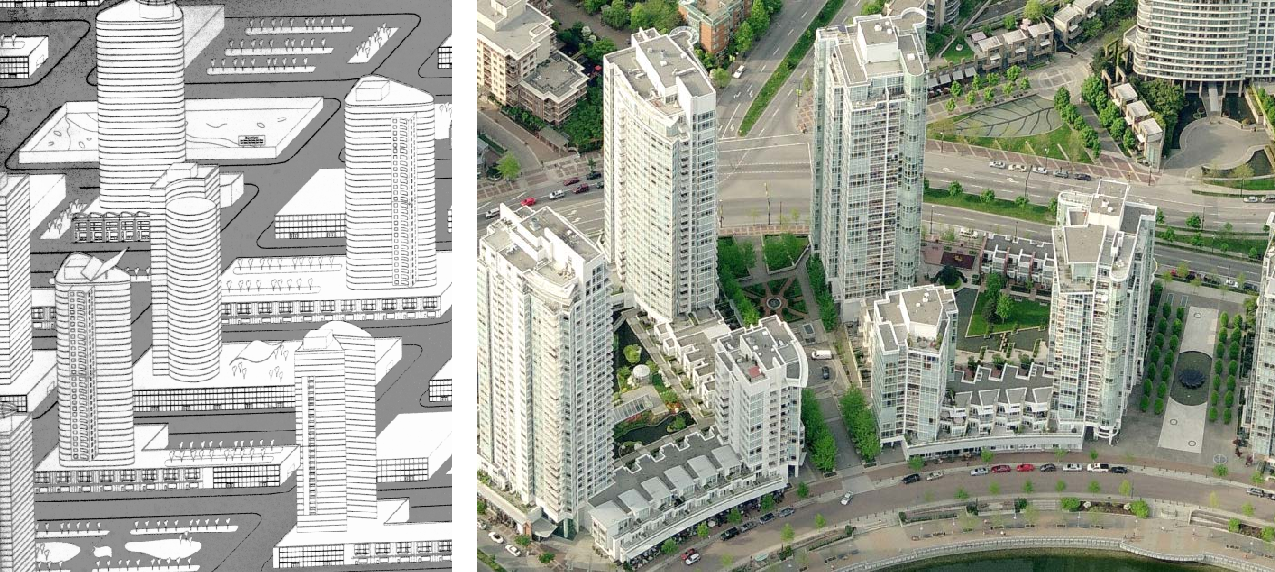
page 41, Walsh, Robert M. 2013. “The Origins of Vancouverism: A Historical Inquiry into the Architecture and Urban Form of Vancouver, British Columbia.” Thesis.
The following is the transcript for a presentation at the Design for Climate Adaptation Panel in Copenhagen.
This paper calls on architects in British Columbia to reframe their work to represent and encompass a project’s true scope, thereby supporting planners and other partners in the sustainable development of our cities.
Planners in BC have discretionary powers, a source of vexation for many designers but also an underappreciated opportunity. The Vancouver Charter allows Vancouver to directly control the form of most projects, while the Local Government Act, with limitations, provides the same for all other communities in BC. Master Plans that outline specific formal concepts are rare in BC; instead, the language of city planning is far more ambiguous. This means that designs are often negotiated and always weighed against their larger urban consequences, but without the guidance of an articulate idea of the city.
1953 VANCOUVER CHARTER | Vancouver | Unlimited discretionary powers
LOCAL GOVERNMENT ACT | All other communities | Limited discretionary powers for the following only:
protection of the natural environment, its ecosystems and biological diversity;
protection of development from hazardous conditions;
protection of farming;
revitalization of an area in which a commercial use is permitted;
establishment of objectives for the form and character of intensive residential development;
establishment of objectives for the form and character of commercial, industrial or multi-family residential development;
in relation to an area in a resort region, establishment of objectives for the form and character of development in the resort region;
establishment of objectives to promote energy conservation;
establishment of objectives to promote water conservation;
establishment of objectives to promote the reduction of greenhouse gas emissions.
For the last thirty years, two movements have had an outsized impact on these negotiated projects, which, although positive in some ways, have also failed to ensure dynamic, rich urban environments for much of the metro area. The first is Vancouverism, and the second is Energy-Efficient buildings.
Regarding the former, the provincial government is pushing to improve the performance of our buildings. An initiative everyone supports, but it is being pushed forward without recognizing that a project’s impact is more than an energy footprint. Buildings are part of larger systems that need to be considered. Surrey, for example, just finished the first public passive house building, but the project makes little attempt to reshape its urban context, despite transportation accounting for ½ of buildings' operating emissions in North America. The project accepts its 20th-century context.
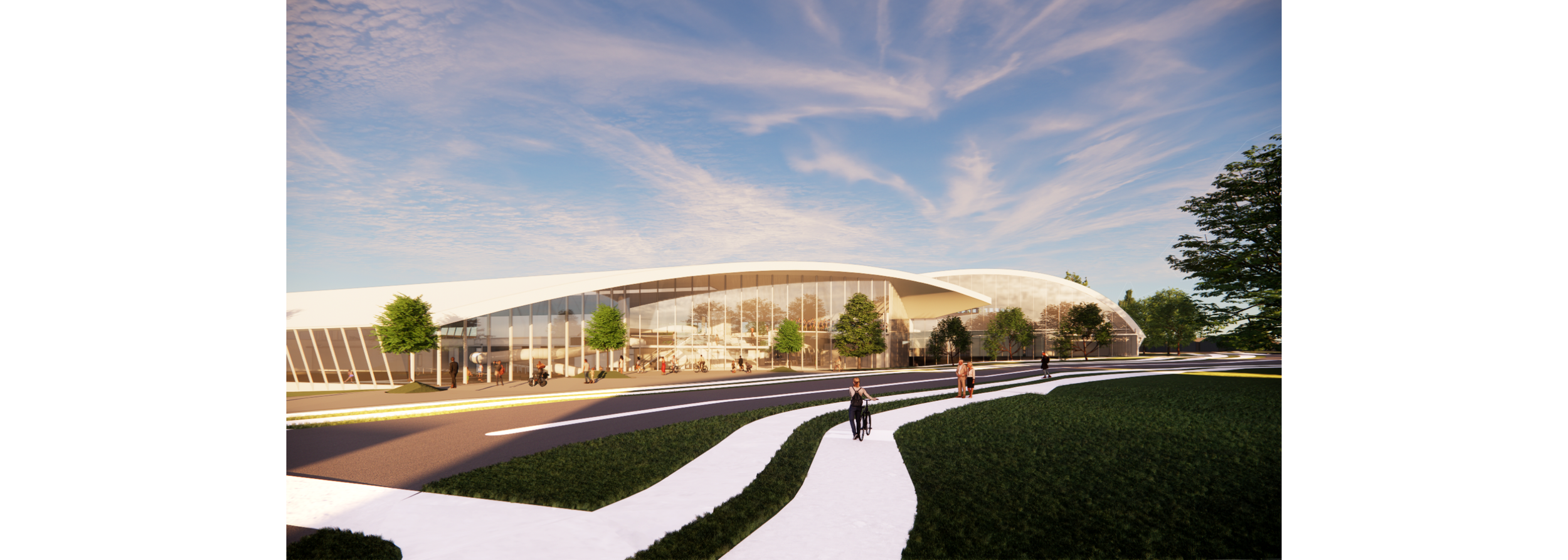
A proposed passive-house mass-timbered community centre for the Newton district in Surrey. The project was latter abandoned with a political shift in power.
Vancouverism is the term used to capture the successful redevelopment of Vancouver’s core, and the processes and ideas behind it, such as the tower-and-podium model, were lauded as exemplars of urban planning.
But the success of the areas around what is called False Creek is as much a result of location as of any planning mechanisms. Applying those same ideas to areas without direct access to the sea, which is the majority of Metro Vancouver, has been less fruitful.
The lesson of Vancouverism should be that making good cities in the 21st century means leveraging a place’s unique assets, especially in response to climate change.
This idea drove a studio we taught in Stewart, British Columbia. Stewart is a resource-dependent community, reliant on an unstable commodity market, and set within a highly volatile landscape with real risks of receding glaciers, avalanches, earthquakes, flooding, and hungry bears. For residents of Stewart, these risks are everyday experiences.
Traditionally, the town’s architecture responded directly to these risks through strategies such as elevating buildings and pedestrian paths.
Over time, these measures were replaced by hard infrastructure that often solved one problem only to create many more. The studio examined these economic and environmental dynamics and sought to develop architectural or landscape interventions that would enable the community to live in an uncertain context.
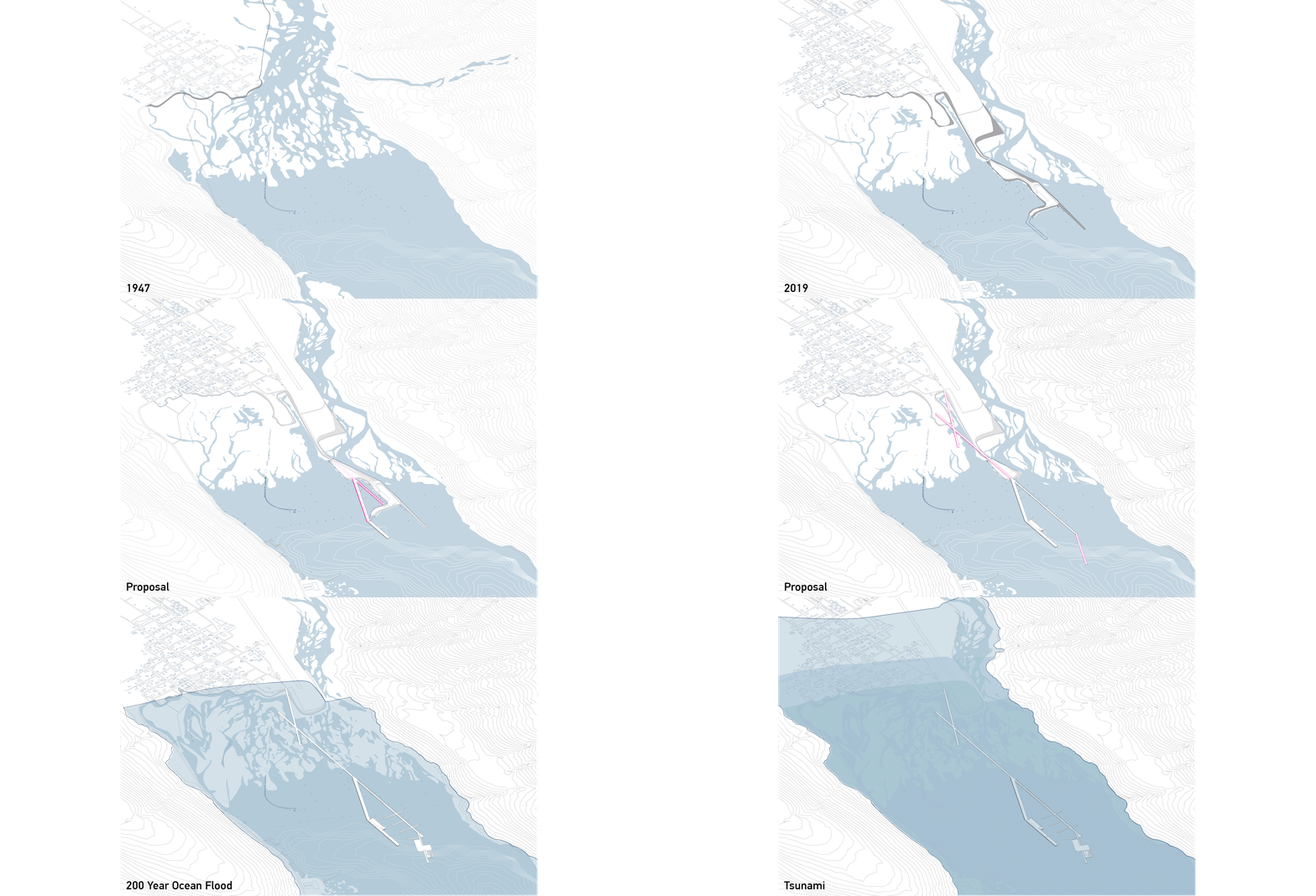
A sequence showing the development around the estuary in Stewart, a student proposal for replacing the port and repairing the estuary and its ability to respond to various flooring events.
Although urban infrastructure can mask these dynamics, they remain just as present and often only become visible during natural or economic disasters.
The ideas in the Studio were very much part of the ambitions of Landscape Urbanism, which, for the most part, is largely accepted by the design and planning community. Examples like Rome and Copenhagen show that successful landscape systems are critical to modern cities. But although cities are now integrating more ecologically minded space, architecture struggled to find its place in the Landscape Urbanism movement, with one-off landscrapers being the archetype. As such, 20th-century urban forms still dominate, largely oblivious to the opportunities at hand.
But I believe there is ground for creating sustainable communities in what Robin Dripps calls “the negotiated relationship between the figure and the residual space of the field.” Beyond the binary of Koetter and Rowe lies a far more complex relationship in which the traditional object can be subsumed by a larger landscape idea, serving as background, contributing more strongly to the urban armature, or falling somewhere in between. A second studio examined this idea more closely. The project challenged the current proposal for a new community centre in the Newton neighbourhood of Surrey, just across the street from a series of buildings with similar programming.
The proposal, a passive house mass-timber building, fails to engage its urban context or reinforce the existing conditions. Overlaid on the research from the previous studio, students created a storyboard for a future Surrey that is responsive to the impact of climate change and social inequity. This future ground gave the students an urban vision that could drive their community centre designs.

A student proposal for infilling a strip mall with a new community centre.
From there, students developed a new proposal for a community center built around that vision. A proposal that introduced a new idea not only of the building but of the city itself. Rather than an energy-efficient building in a generic landscape, the proposals were active figures seeking to reshape the city. An infill project drives a new field condition while avoiding needless demolition. Or rather than a new community centre, a figured ground that could also support an intensified core for the neighbourhood. Or a daylighted stream that could replace the street as the focal point of future development. Or replacing a building stock with a lifespan only as good as the vinyl siding that protects it with a carbon-positive, ecologically rich urban landscape.
Architecture is always a conversation, but in BC, there is currently a gap between the language of planners and the architectural objects we design. Taken together, these two studios provide a roadmap for grounding future negotiations in active forms that acknowledge the realities of our changing climate.
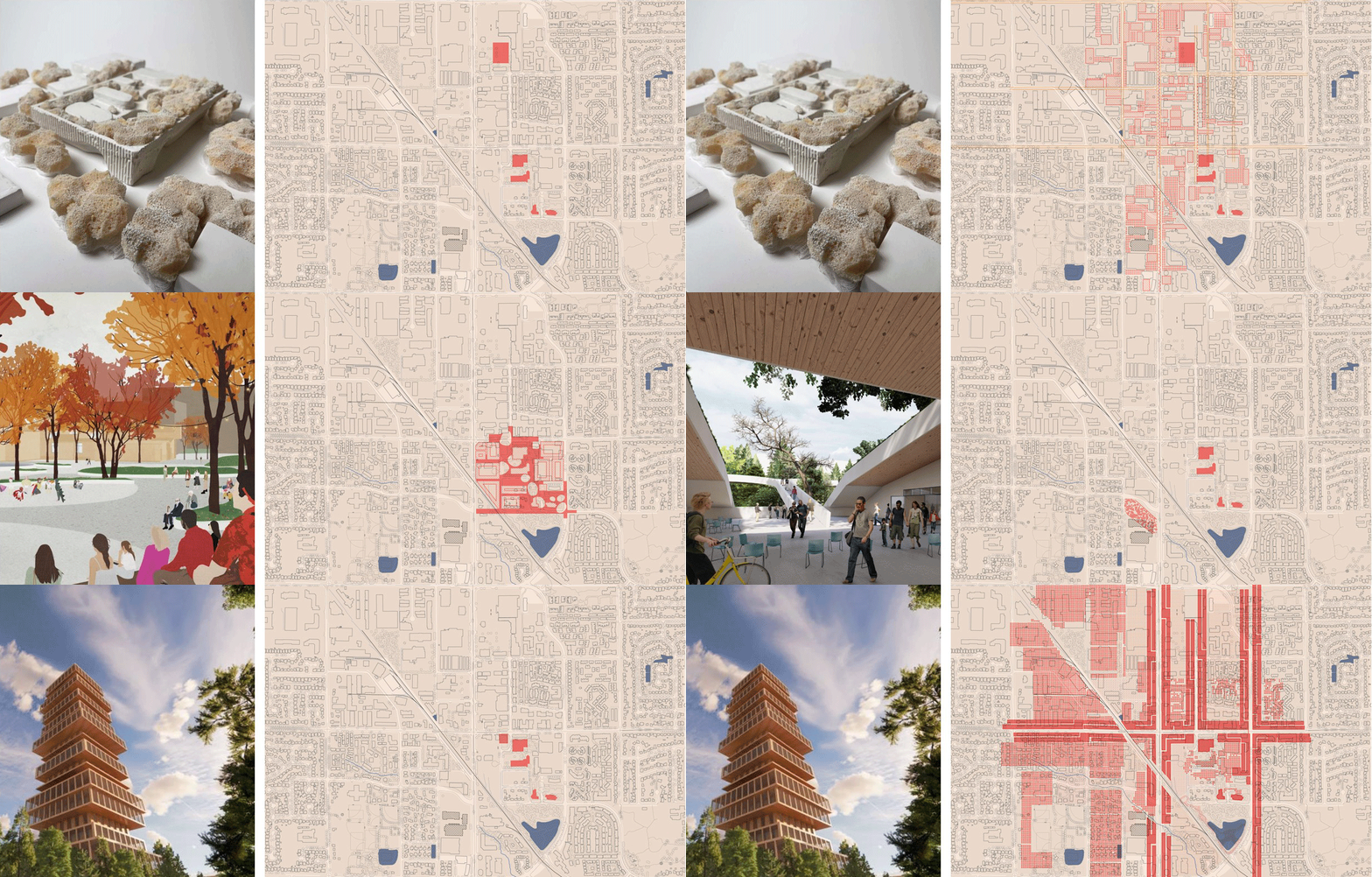
A series of community centre proposals for Newton and their urban implications.