
Can self-sufficiency also mean better connectivity?
The Grassy Knoll
Competition
Dallas, Texas, USA
2009
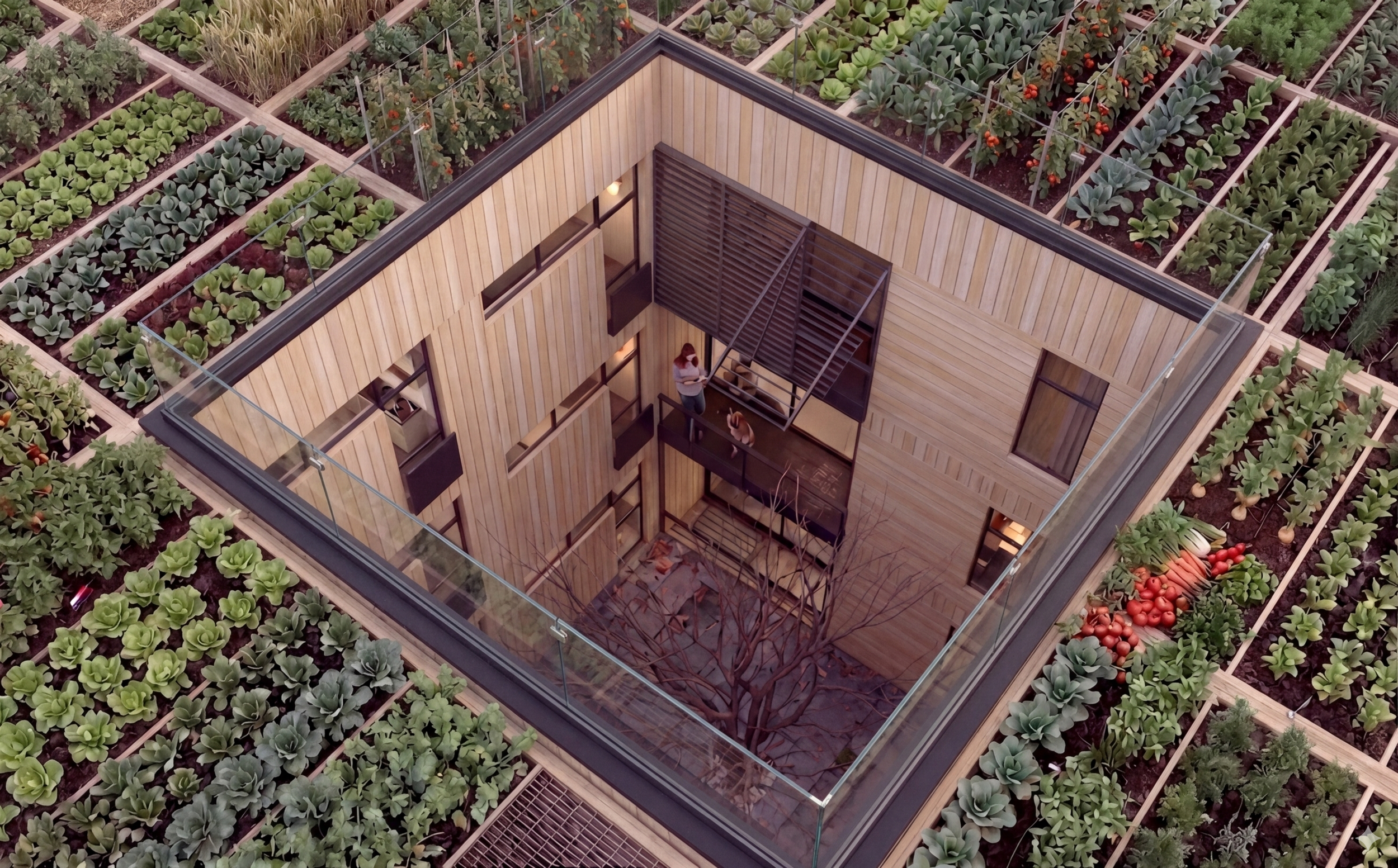
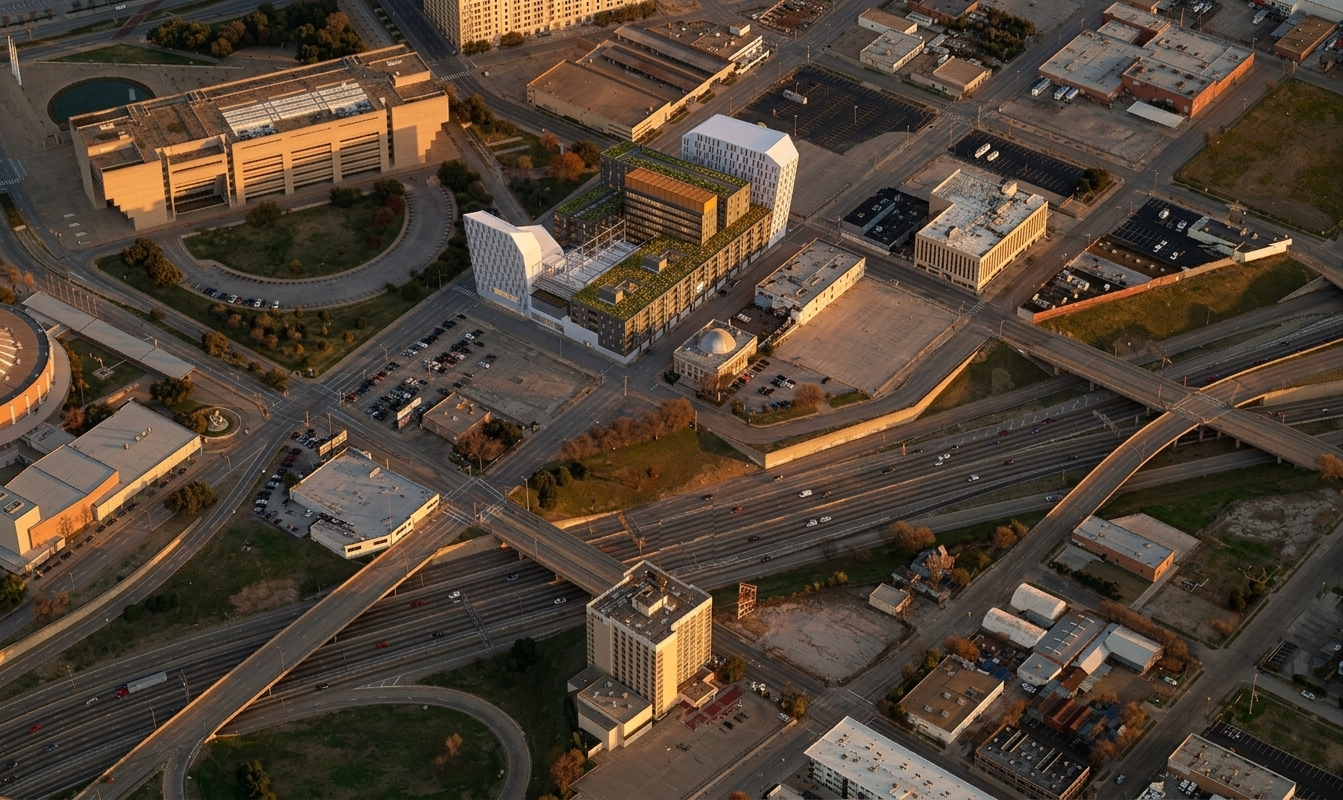
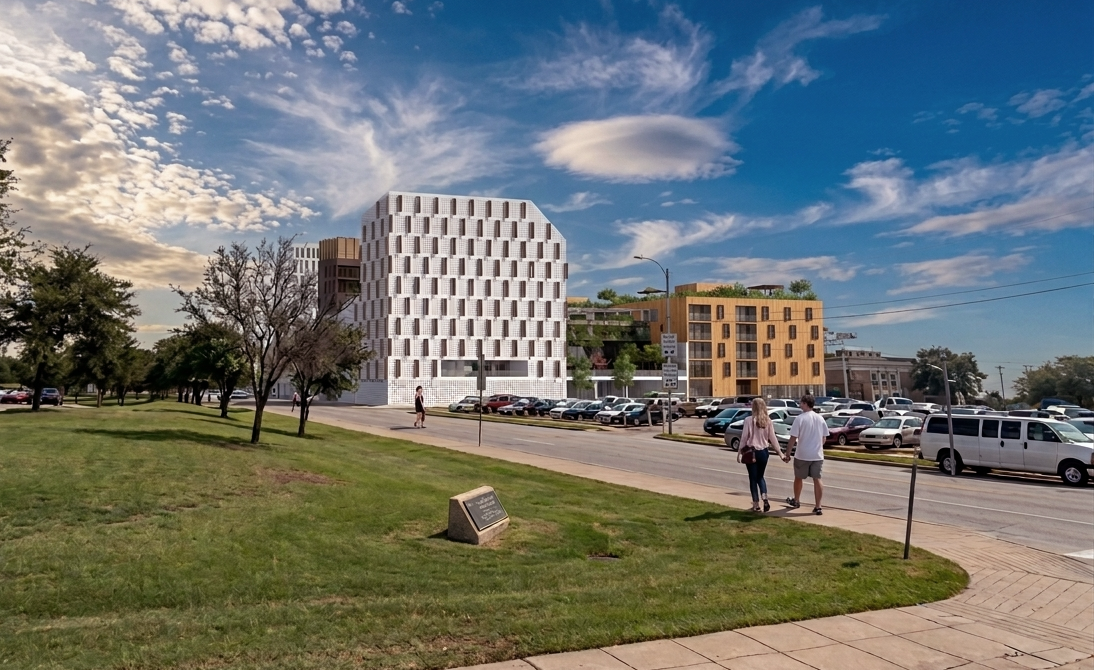
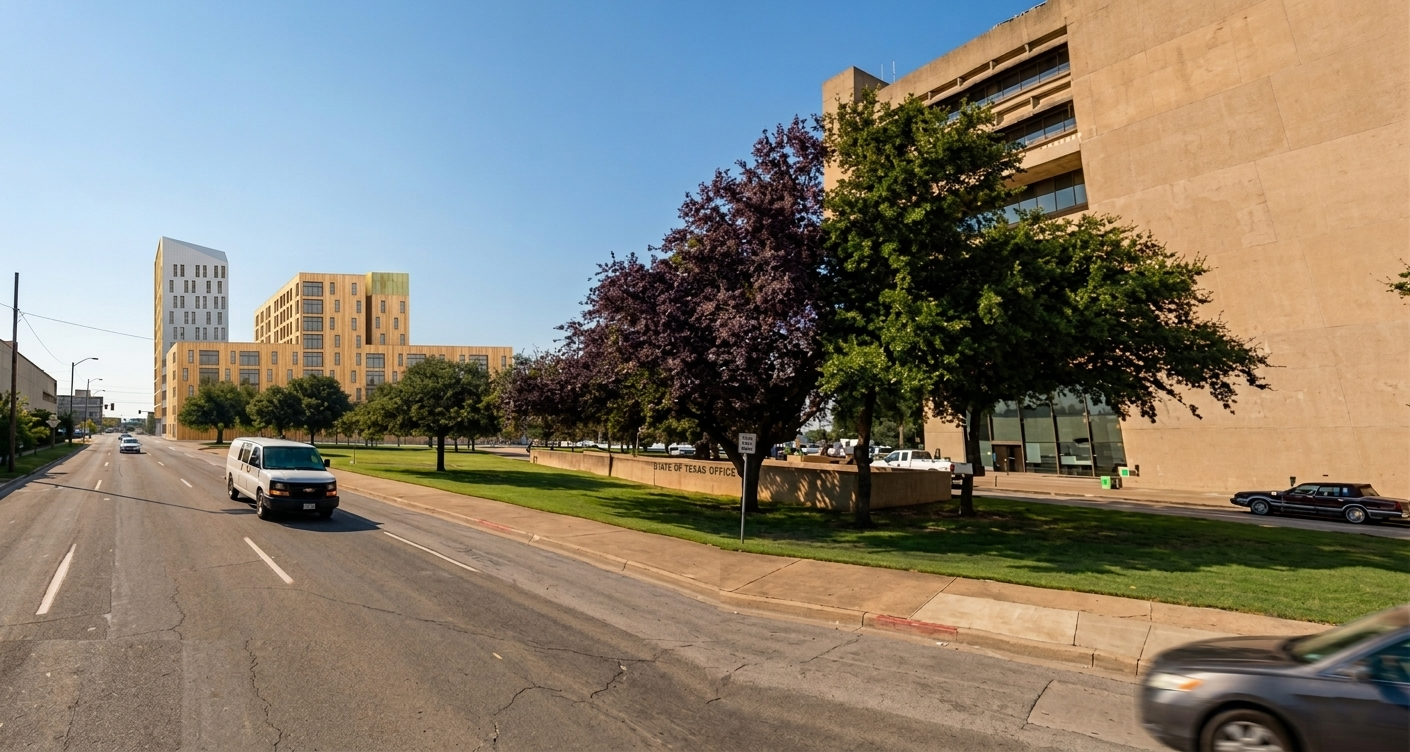
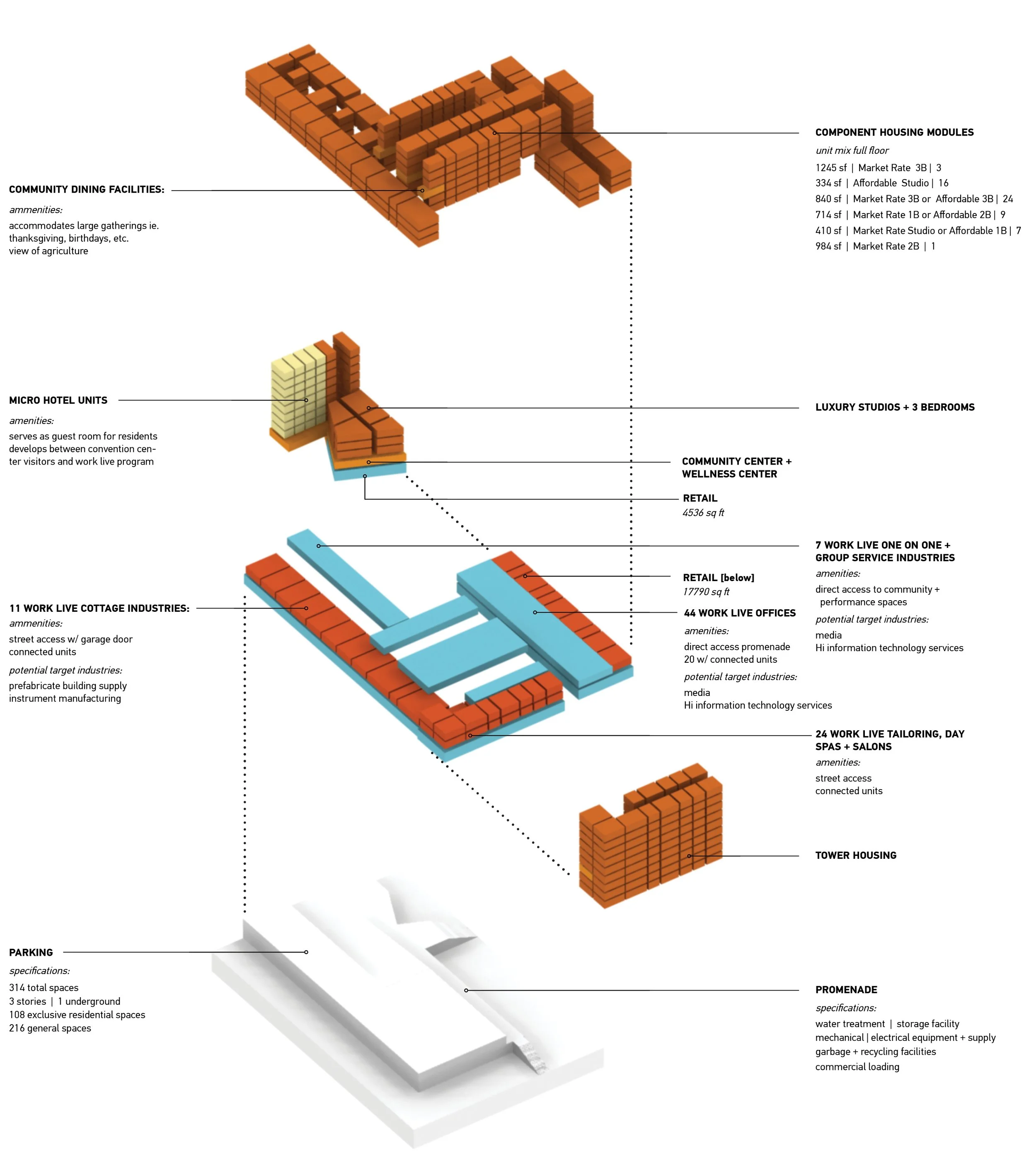
A proposal for a new self-sufficient, mixed-use affordable housing development in the heart of Dallas, TX. The project called for the redevelopment of an entire city block, representing the full potential of a sustainable urban future. The non-profit developer requested that the project be Net-Zero and provide a minimum of 50 square feet of arable land per resident.
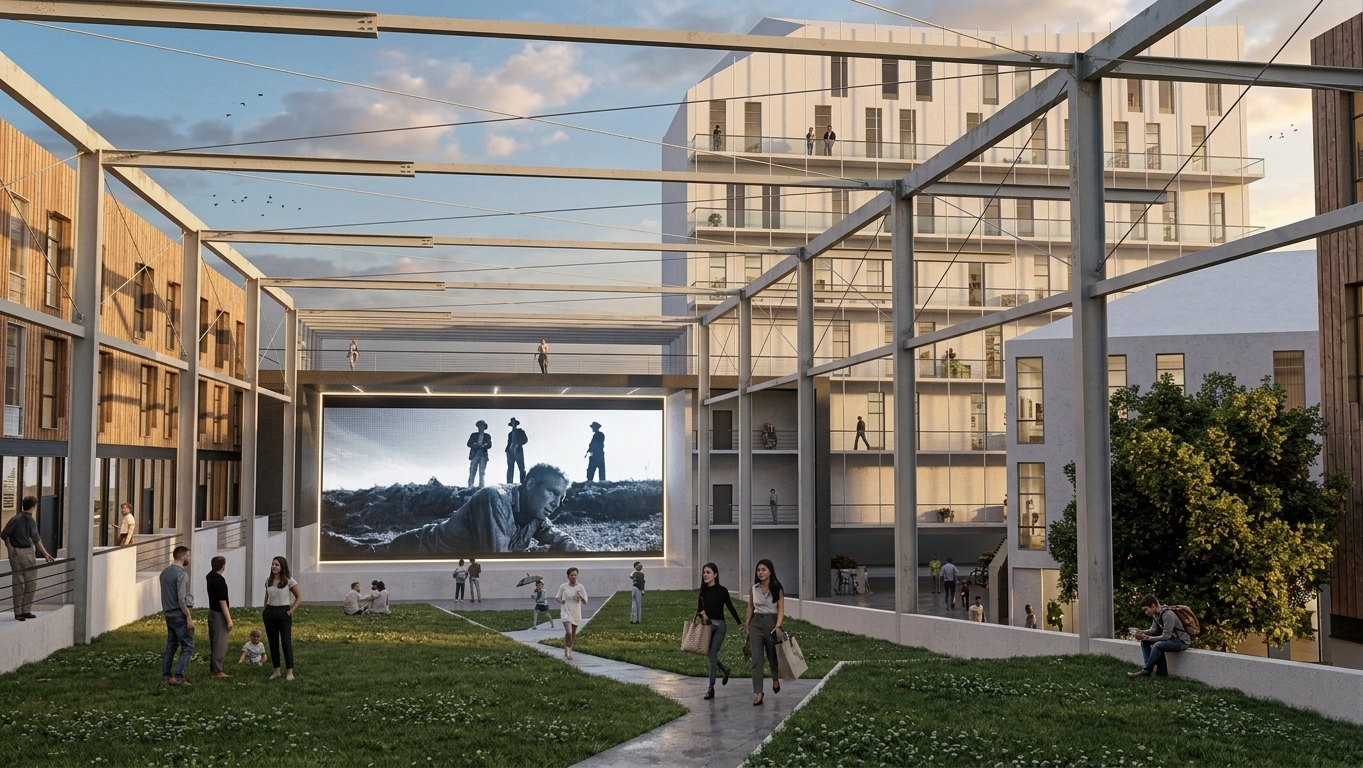
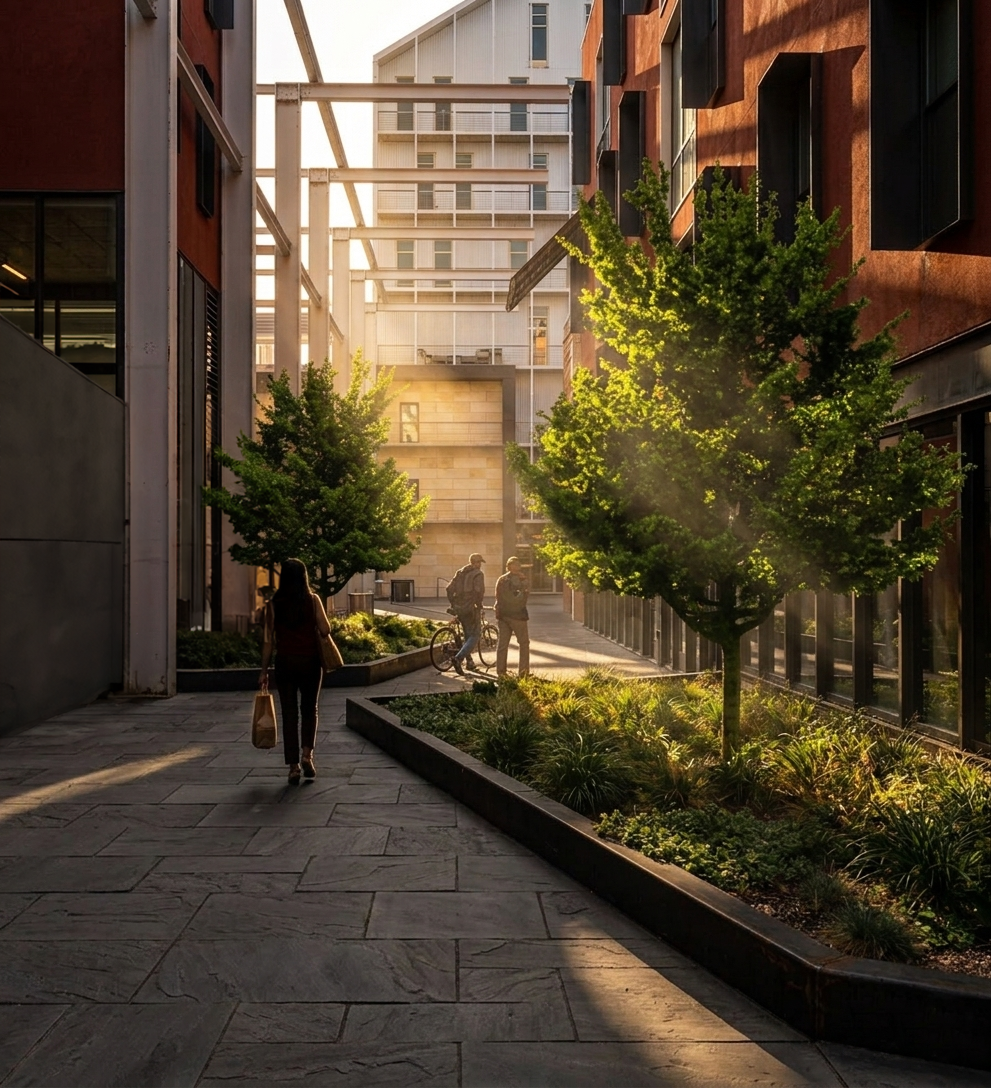
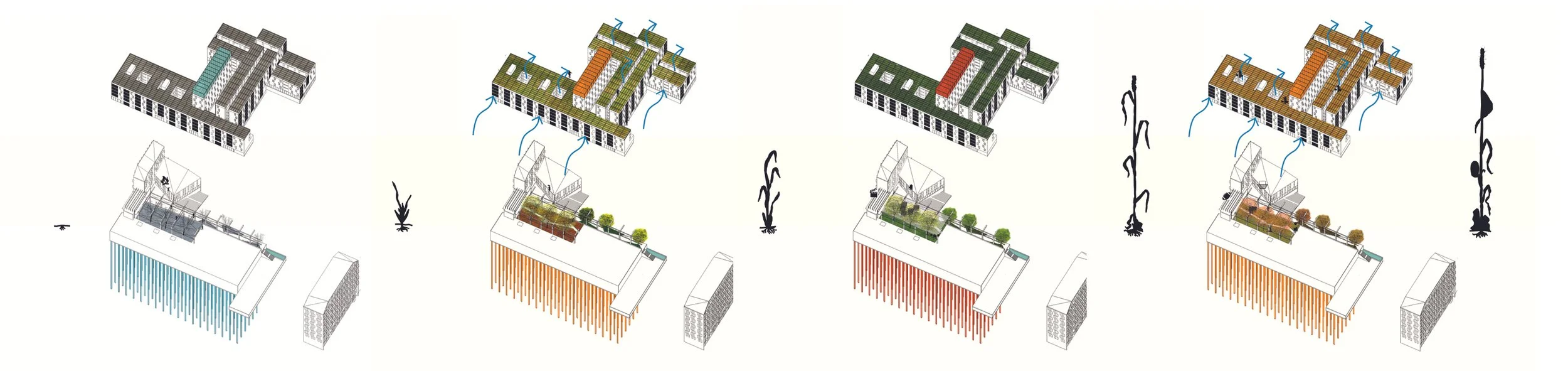
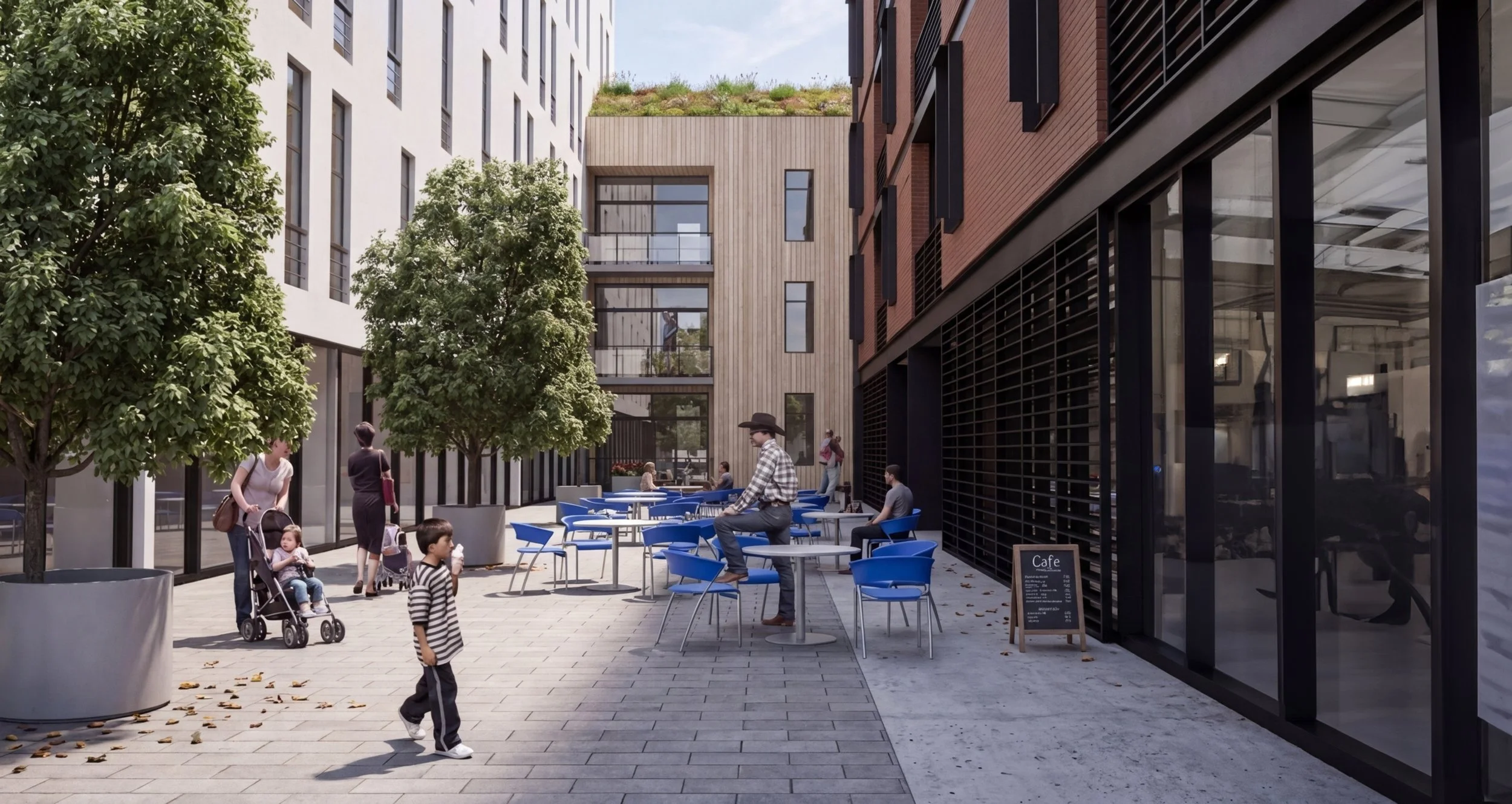
The proposed design uses the typical urban typology of the podium and tower to ground the project, while adaptable residential and agricultural components infill the rest of the site. The programming of public spaces reinforces the temporality of the context by reintroducing seasonality into the urban fabric: a dance hall for summer, a sloped landscape for winter sports, and open markets for the fall harvest.

Coding the Grassy Knoll
Taken out of context, “grassy knoll” embodies sustainability. One envisions a place deeply connected to nature that invites human interaction. For some people, interaction with nature might mean a picnic with the family, and for others, a place to escape the complexity of urban life. In short, a grassy knoll is a place that invites human occupation within the larger context of nature. It is not only a piece of the landscape, but a landscape that still involves people and their lives. In a contemporary city, this vision becomes more complex, but through sustainable design, it remains possible, even if in a different form.
Yet this term also represents the difficulty we as a society face as we look towards a sustainable future. Any idea must respond to its historical context, and sustainability is no different. We live in an energy-intensive society, and any vision for the future must take this into account. A sustainable project in Dallas, therefore, could have no better title than the “Grassy Knoll.” A title that represents an event that no one is comfortable with, but still defines a city for better or worse. Pretending it did not occur will never make the event and its relationship to Dallas disappear. In much the same way, we must view our relationship with our energy-intensive present and past. Yes, for many, it represents problems in our society, but its problematic nature cannot mean ignoring it; it means engaging with and building on it.
The term coding adds a different layer to sustainable ideas, but still along the same line of thinking. A vision of what a sustainable life could be is nothing new. Since the sixties and seventies, many designers have placed images of a life that is about integration with our larger environment. Therefore, the question we need to ask now is what a vision of sustainability might entail, but rather how we might go about attaining that vision. This project is a chance to explore that very idea, and for us, coding is the term that describes the process of realizing that vision.
Any project requires translating vision into reality, and today, this entails communicating with many different individuals. Over the last 150 years, we have created a language of measure that allows us to move from intuition to actualization. This language takes many forms, whether dimensions for contractors, equations for engineers, or square footage for the proforma. A project of this complexity and ambition must not only look towards the vision, but also towards the measurements that will bring it to reality.
The vision is important, and here is one that both represents a sustainable life and provides a structure for measuring it toward its realization. This is a realization that will require addressing both our past and our future, however difficult that might be, hence, CODING the GRASSY KNOLL.
Other Drawings
![Axon [Converted].jpg](https://images.squarespace-cdn.com/content/v1/61a29de099e4793ea9bf17cb/85744a88-221c-4162-858b-d808b17376b9/Axon+%5BConverted%5D.jpg)
-
JIM
James Huemoeller in Collaboration with John Blaylock