
“The Systemless Project: Halfmoon Bay” Studio led by James Huemoeller
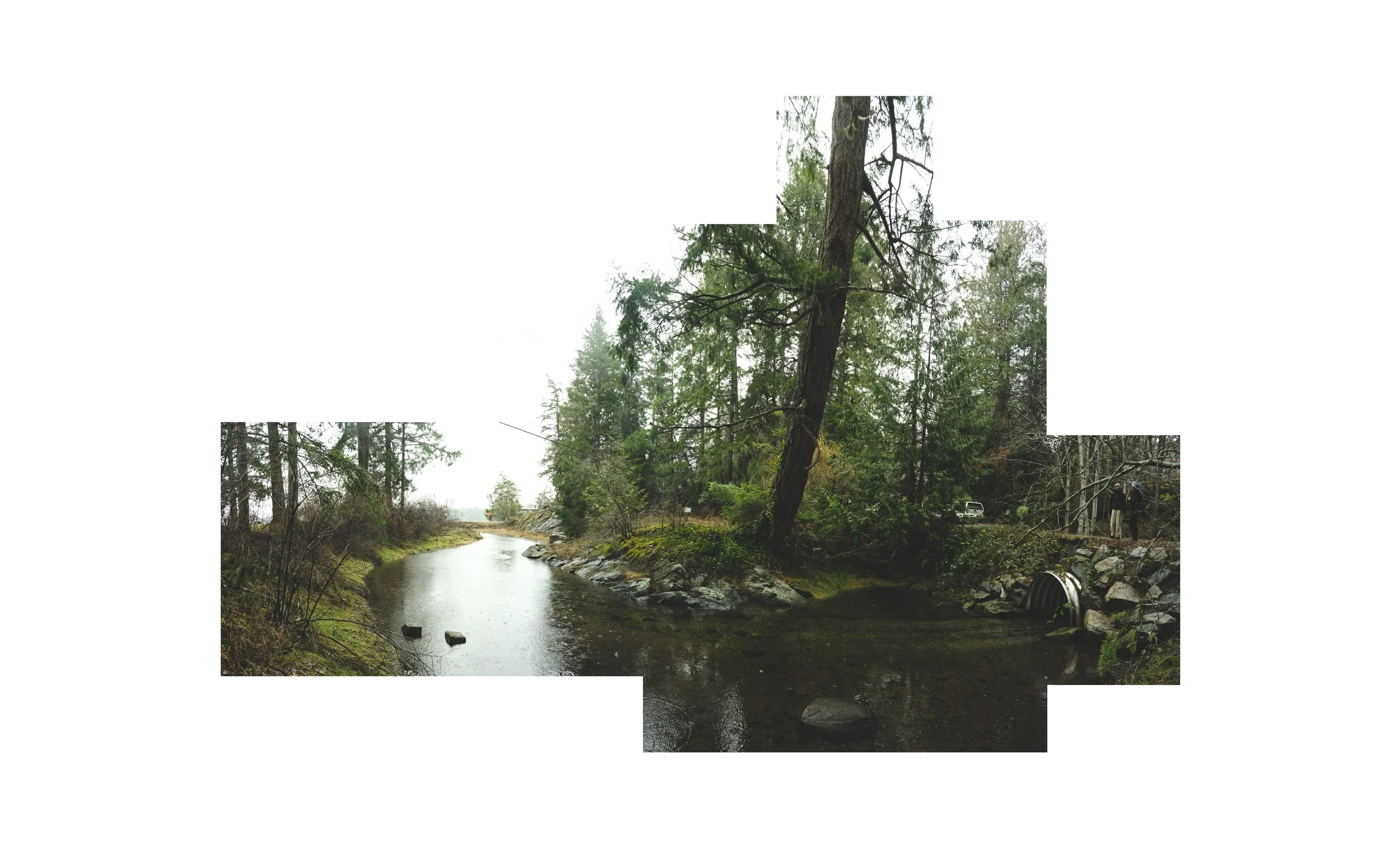
View of Halfmoon Bay Site, Credit: Marco Leung and Caleb van der Leek
James Huemoeller will be teaching the “The Systemless Project: Halfmoon Bay” graduate comprehensive studio at UBC SALA alongside John Bass, Joanne Gates, and Inge Roecker.
From wildfires to heat domes to flooding, the climate change related events experienced in British Columbia over the 18 months underscore this studio’s focus on resiliency. In response to the likely reality that carbon emissions will continue to increase -along with temperatures, sea level, and unpredictable weather events -- throughout the 21st century, the studio invites you to fundamentally rethink the systems, materials, and human behaviours embedded in buildings.
The functional vehicle for this exploration is a community hall located in Coopers Green Park. The park is in a low-lying reclaimed tidal estuary on Halfmoon Bay, along the Sunshine Coast. Like many community halls, central to it is a large, flexible gathering space that will support various uses and be extended to the outside via porches and decks. Many of the usual means of providing thermal comfort in buildings, such as furnaces, air conditioners, and fans, are not available to you in this studio, so key performative resources will be the people who use the hall and its kitchen, both of which will be primary sources of heat.
Rooted in principles of regenerative design, systemless building actively contributes to the repair of natural and human systems. Systemless building avoids the use of conventional mechanical systems for heating, cooling and ventilation in pursuit of what we call thermal and ventilation autonomy. It calls into question the take-for-granted behaviour those systems enable in a building’s users as well as our decisions as designers. How might we replace the energy-intensive materials (concrete and steel, in particular) and machines (air conditioners, boilers, and fans, for example) that are commonly used in contemporary buildings?
Harnessing heat from the human body will require optimizing how users use and move within the community hall over the course of the day, week, and seasons. How might this inform the four-dimensional distribution of activity, aid in balancing ambient temperatures within the building, and maintain user comfort?
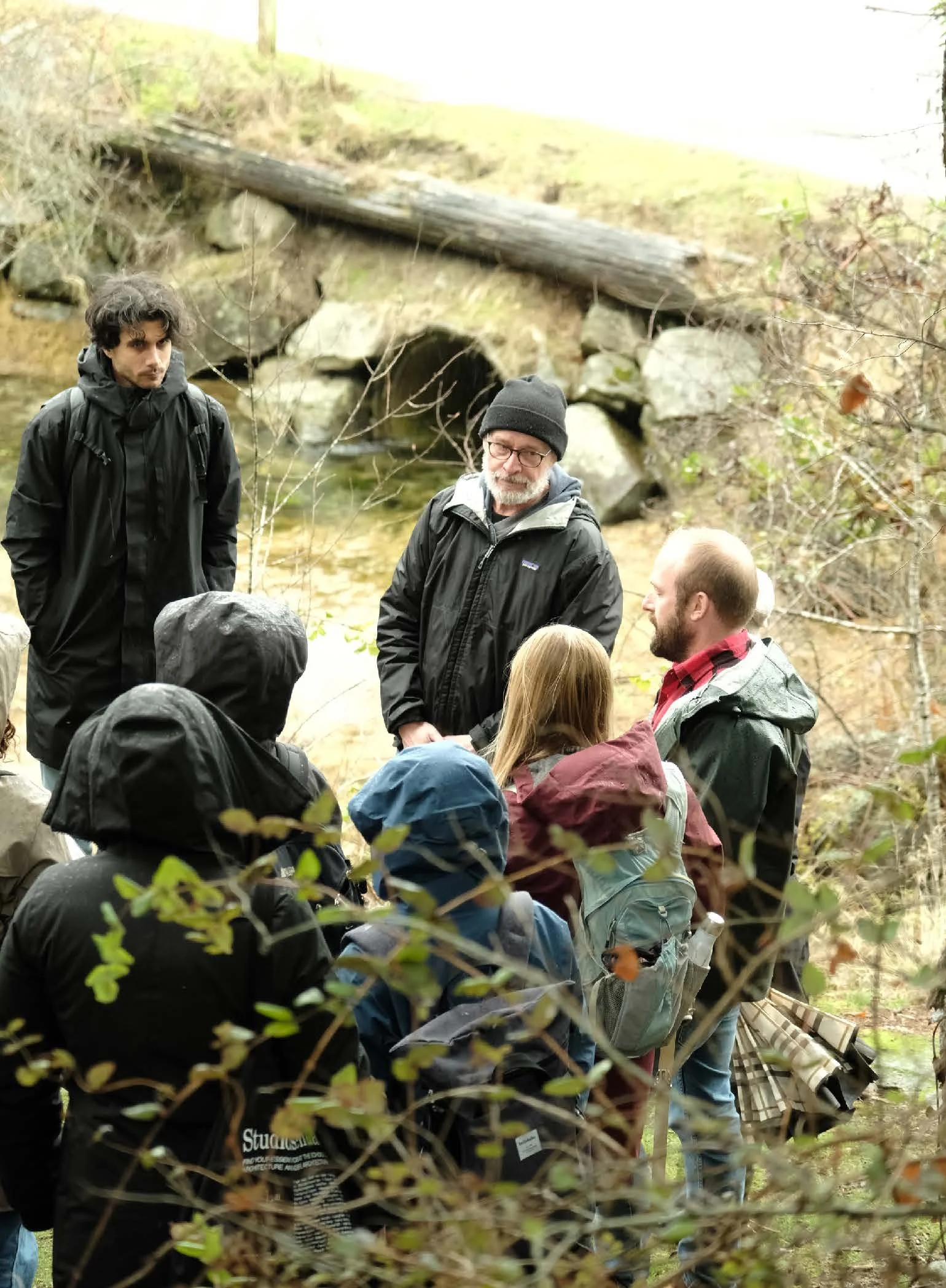
Site visit to Halfmoon Bay, Credit: Marco Leung