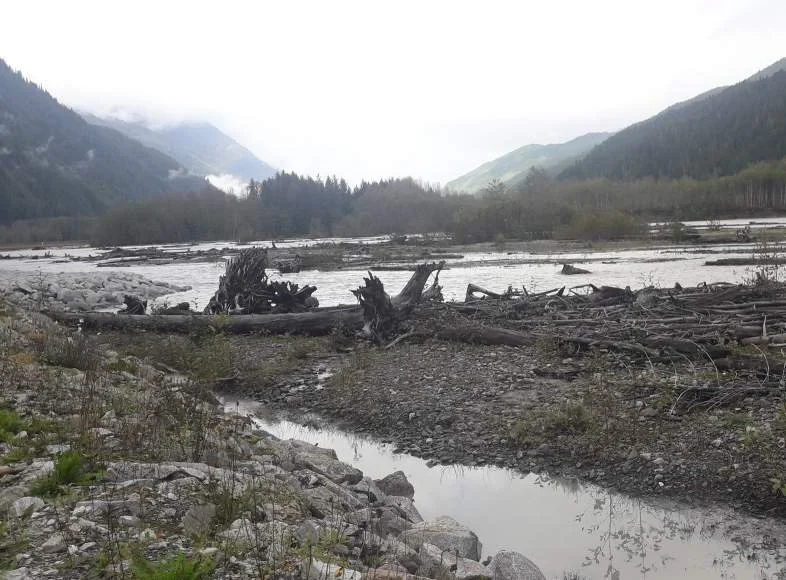
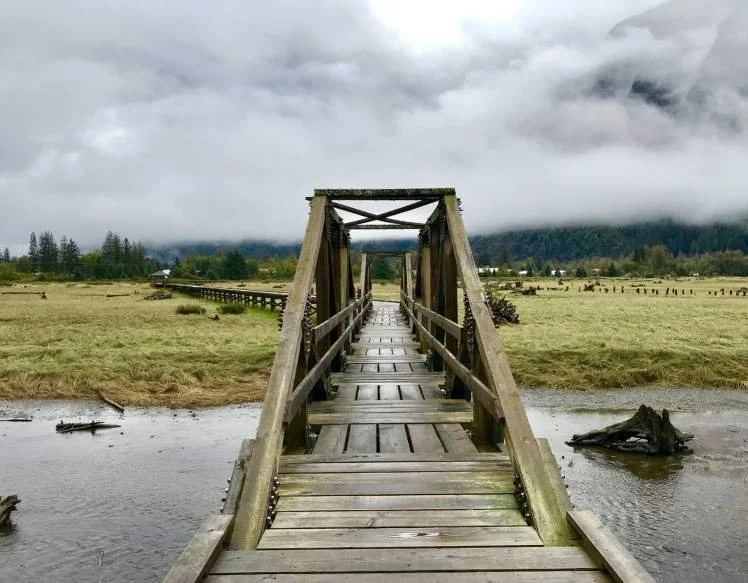
"All That is Solid..." studio led by James Huemoeller and Beryl Allen Travels to Stewart, BC
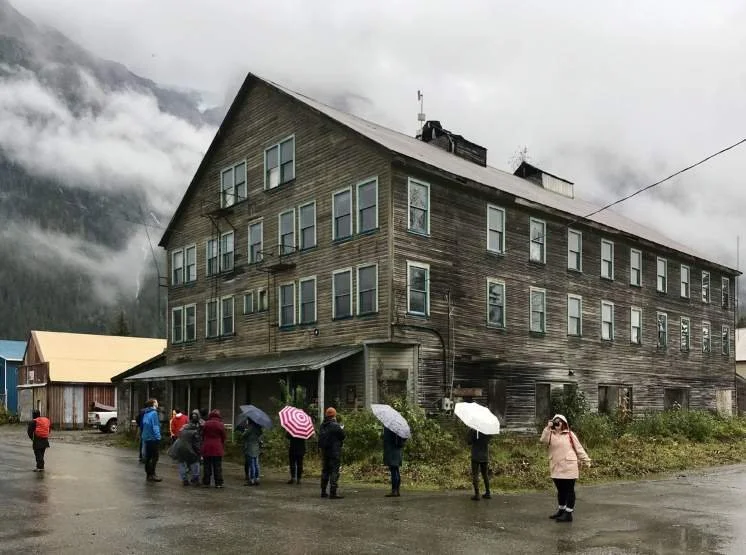
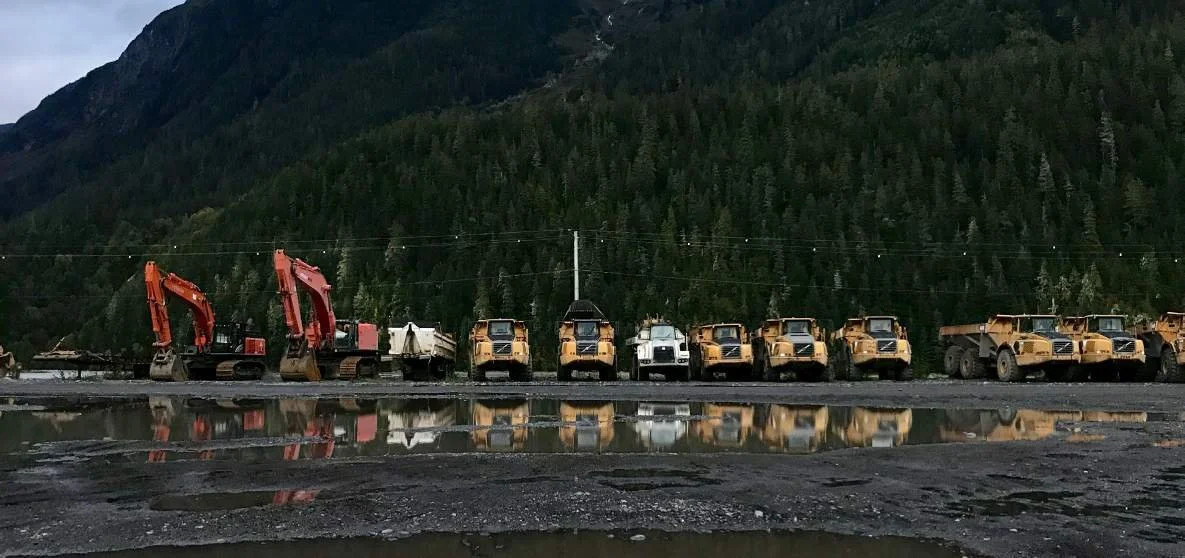
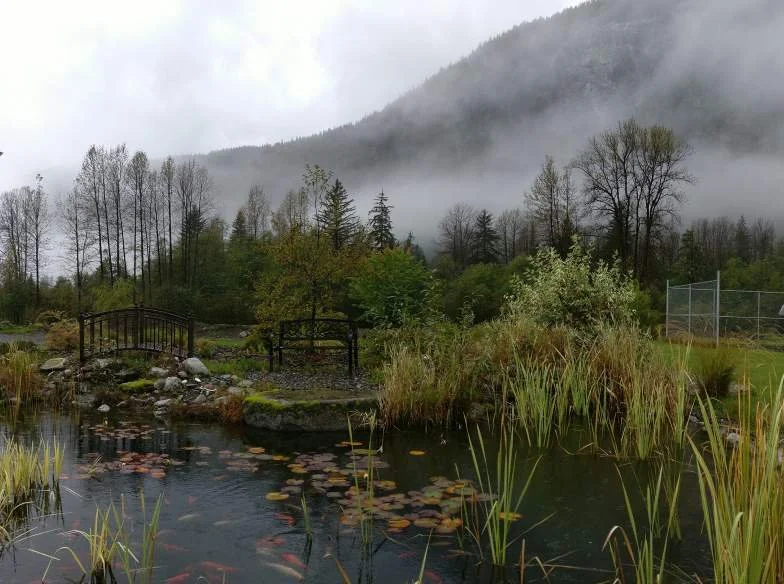
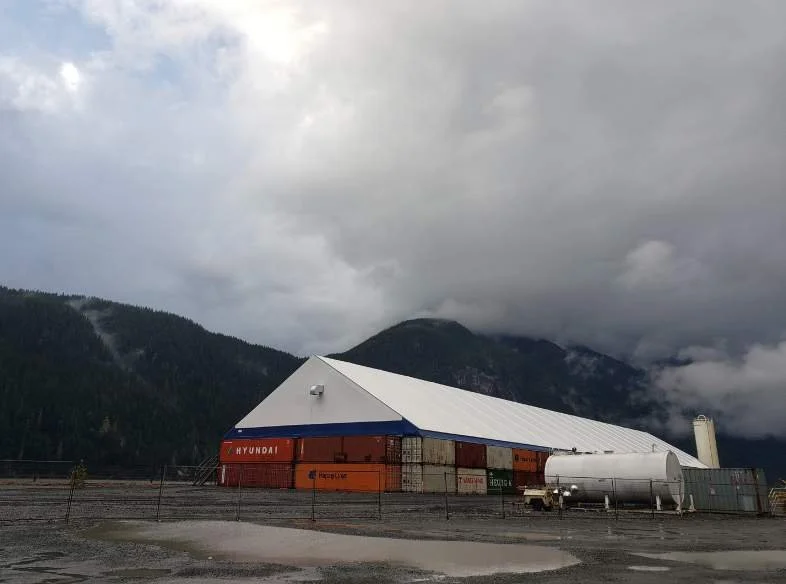
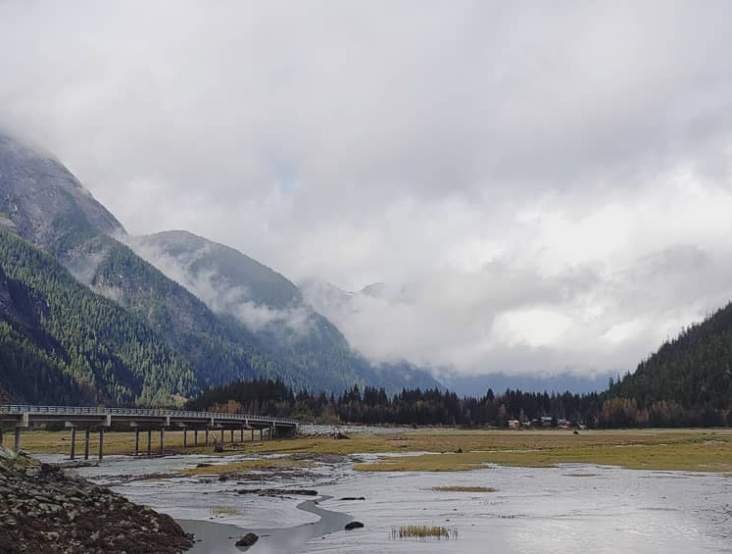
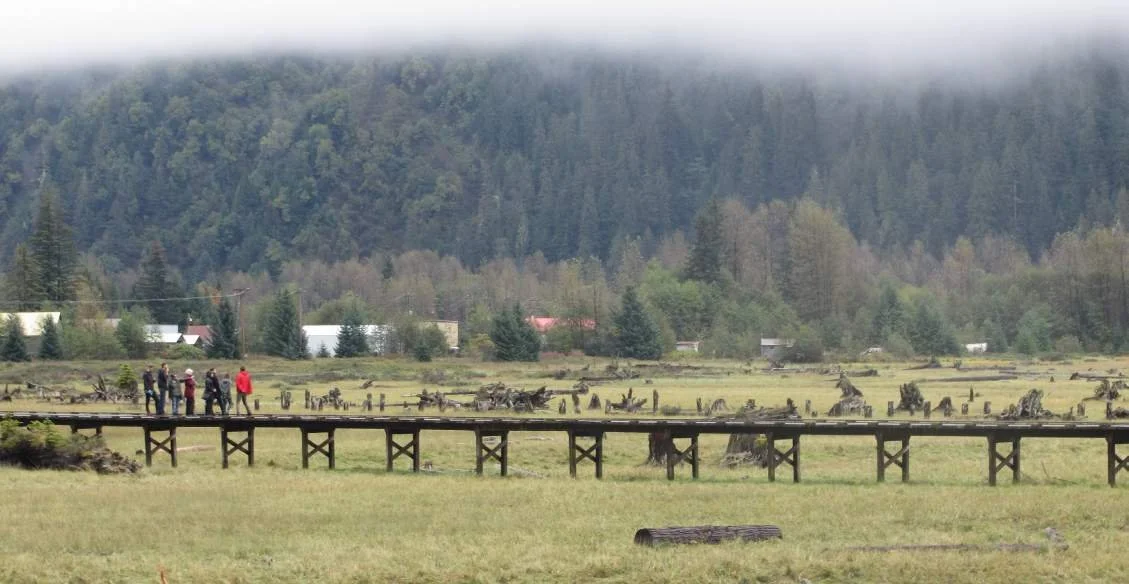
Students travelled north for a site visit to Stewart, BC as part of the "All That is Solid..." studio led by James Huemoeller and Beryl Allen.
On January 23, 2018 at 12:31 a.m. local time a magnitude 7.9 earthquake rocked Alaskans, with an epicentre in the Gulf of Alaska about 175 miles southeast of Kodiak Island. The quake sent Tsunami warnings across the Pacific and many communities within British Columbia were under mandatory evacuation including the town of Stewart. For most towns that meant going to higher ground hopefully at an emergency reception centre, but Stewart presents a unique problem. The only access to, and from, the town is on Highway 37a through a long canyon with heavy avalanche activity. In the middle of the winter, therefore, the District’s choice was between staying put in a town well below the surge elevation or driving north to an avalanche zone during a period of earthquake activity. For most people this would be a problem, for the residents of Stewart, it is a way of life. In Stewart, everything is shifting.
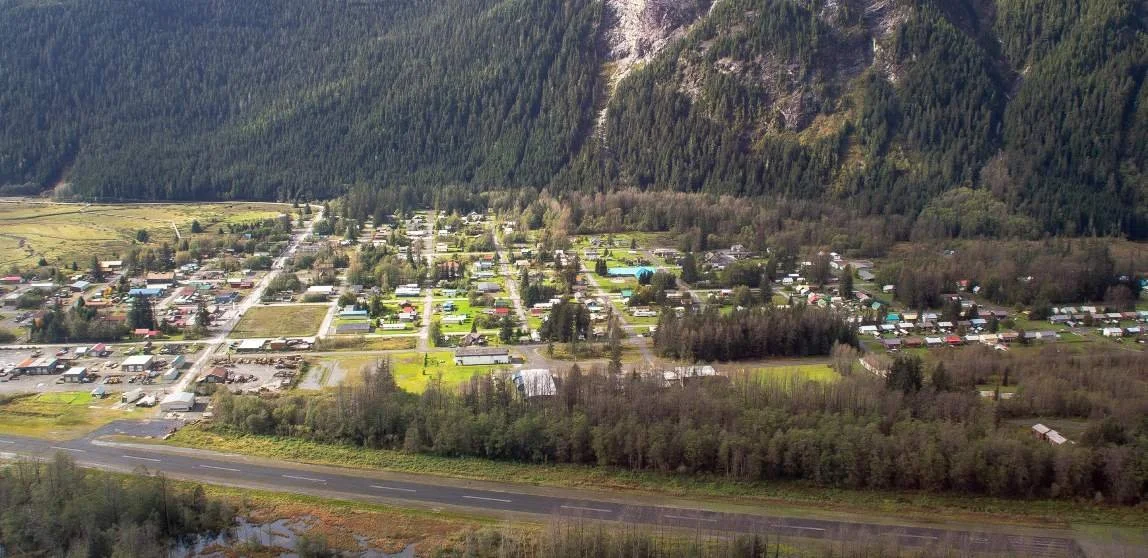
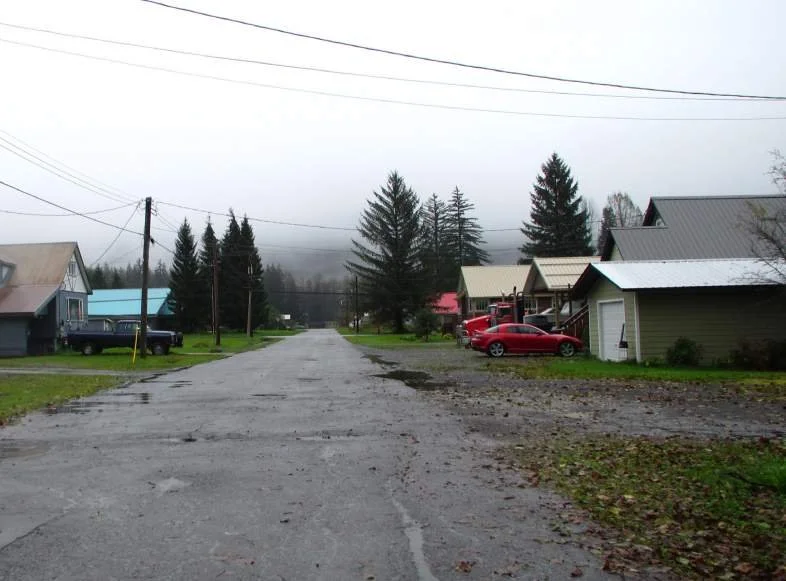
Take the sociodemographic situation. Stewart, once a booming mining town of 10,000 people, today, according to the census, it scraps by with 400 residents. However, the picture is more complicated. In its 120-day tourism season, one of two remaining viable industries, the town averages 40,000 visitors a year, over 300 people per day. Throw into the mix another 200-300 people for mining exploration, a few snowbirds, and you have an undocumented “shadow population” of 800 part-time occupants for four months a year. 800 people using toilets, electricity, and the roads. 800 people eating and sleeping. 800 people whom the Province fails to count when providing funding for emergency planning, infrastructure, and recreation facilities. On top of that at the moment the district council is hearing three different proposals for major projects including an LNG terminal at the port, a biomass plant, and a potential terminus of the BC pipeline to the adjacent town of Hyder, Alaska all of which would at least double the population of the small town. Just to add another layer half the town is abandoned housing, yet Stewart suffers from a housing shortage.
In short, Stewart is a town built for 10,000 people, with only 400 permanent residence, next to an ever-shifting river, in a tsunami corridor under mountains of sliding snow, on a seismic fault with high volcanic activity…and their biggest municipal investment in the last 30 years has been a new bar in the ice rink. Bottoms up.
This studio asks the students to design a project that addresses one of the many issues facing the town. The design intervention will be embedded in the geological, hydrological, ecological, historical, cultural and socio-economic context of the town. Emphasis will be placed on designing projects that can provide innovative ideas to help Stewart better manage issues such as environmental conditions, socio-economic instability such as the boom and bust cycles of the resource extraction industry, flooding from the Bear River, and changing population demographics Students will need to think of the community not just in its current state, but also consider a variety of specific “scenarios” that could impact the future of the town. This scenario planning methodology is used by the military and business consultants to help develop long term plans which can manage a variety of outcomes. Here it will be used to explore ways by which rural communities, such as Stewart could better manage planning for their futures.