
James Huemoeller Presents Research for the Text and Image Series at the AAR
Initially a self-proclaimed cow town, the development of natural gas resources near Pinedale, Wyoming, led to a 50% population increase by the middle of the decade. Before planning could respond, hotels became apartments, migrants outnumbered locals, and a landscape of hayfields, pastures, and mountains was layered with a network of access roads and pump pads. Soon, the inevitable trailer-filled “man camps” arrived, both informal and formal, demanding infrastructure, entertainment for the residents, and all the other necessities of a growing boomtown. Now, just as the town seems to be managing growth, gas prices have dropped, and the boom in Pinedale may be turning into a bust even faster, leaving unfinished projects, a shrinking tax base, and an uncertain future. Such is the reality of resource-dependent communities worldwide.
Project
BoomTOWN, investigates how resource-dependent communities can accommodate social and economic volatility both within the urban fabric and in the surrounding landscape. Although there is considerable research on the “boom” of urbanism, this project fills a gap by focusing equally on the downturn, asking how communities can plan for volatility rather than simply react to it. This question is particularly timely given the recent crash of the commodity market; with oil prices below $30 per barrel, for example, many of the dependent communities are seeing their supporting industries disappear overnight.
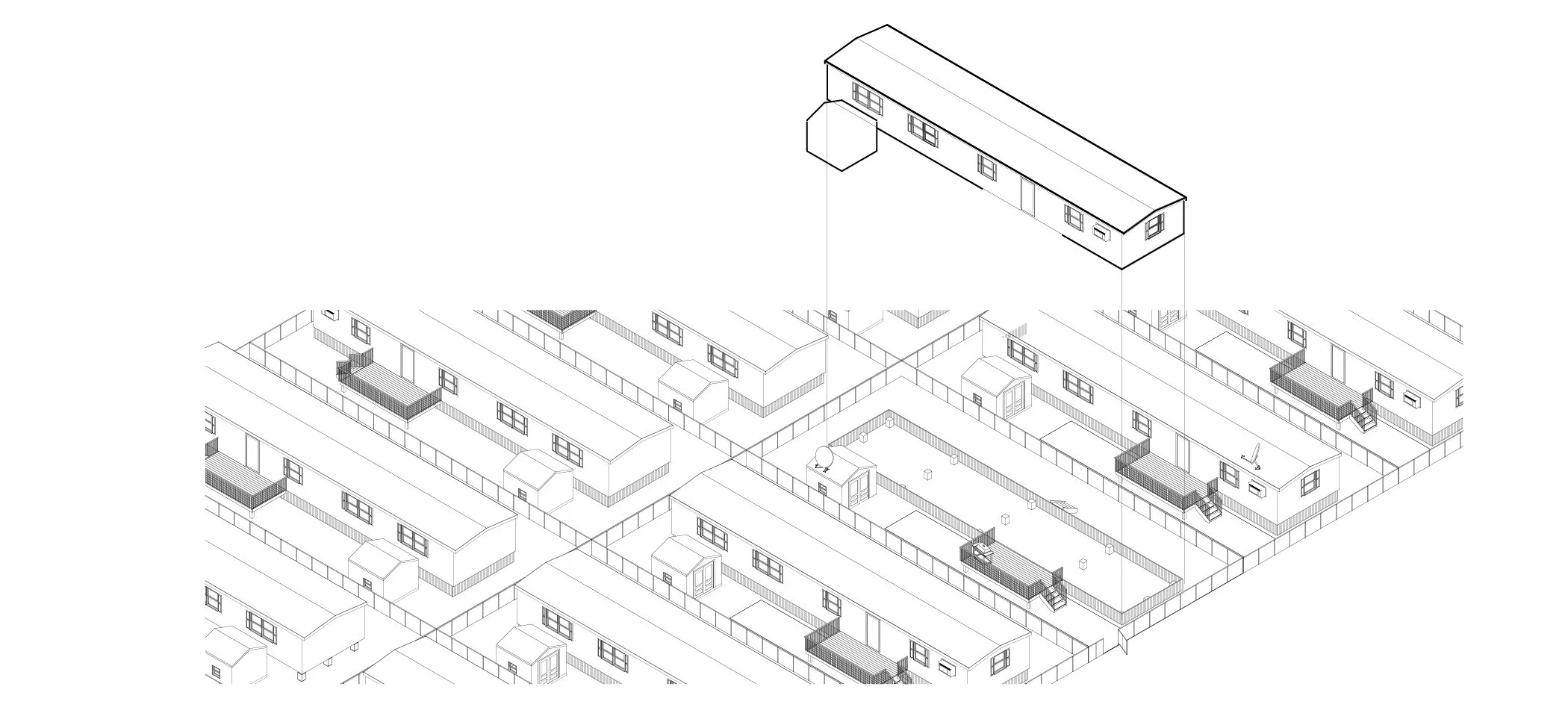
Boomtown housing typologies.
This project engages the resource-rich cow town of Wamsutter, Wyoming, as a platform for optimistic speculation about an evolving rural America. To avoid the typical nostalgic, reductive vision of “Main Street” America that permeates many “town plans,” this project utilizes recent advances in materiality, form, and systems to create new opportunities. Intensifying the relationship with the landscapes, employing deeper material structures, challenging dichotomies, and replacing development with responsive frameworks are but a few of the critical devices that now exist for creating generative possibilities in the built environment.
Five conditions common to rural communities, and especially relevant to Wamsutter, provide grounding for the project and elucidate the need for spatial interventions that challenge stakeholders to re-imagine their relationships with one another and their environment. These “pastoral” topics include the infrastructure of man-camps, accommodating landscape tourism, agriculture in a digitized world, productivity from native systems, and finally, the profitability of the nomad. Emphasizing the tensions between public/private and, in turn, the unacknowledged politicization of the existing material culture, these studies will inherently question the perceived structure of our rural communities and eventually present this new framework. The resulting five projects developed through physical and digital constructions, and purely hypothetical, will hopefully initiate a conversation that begins by seeing rural America not as a place losing its relevance, but as a place of infinite potential.
The Site
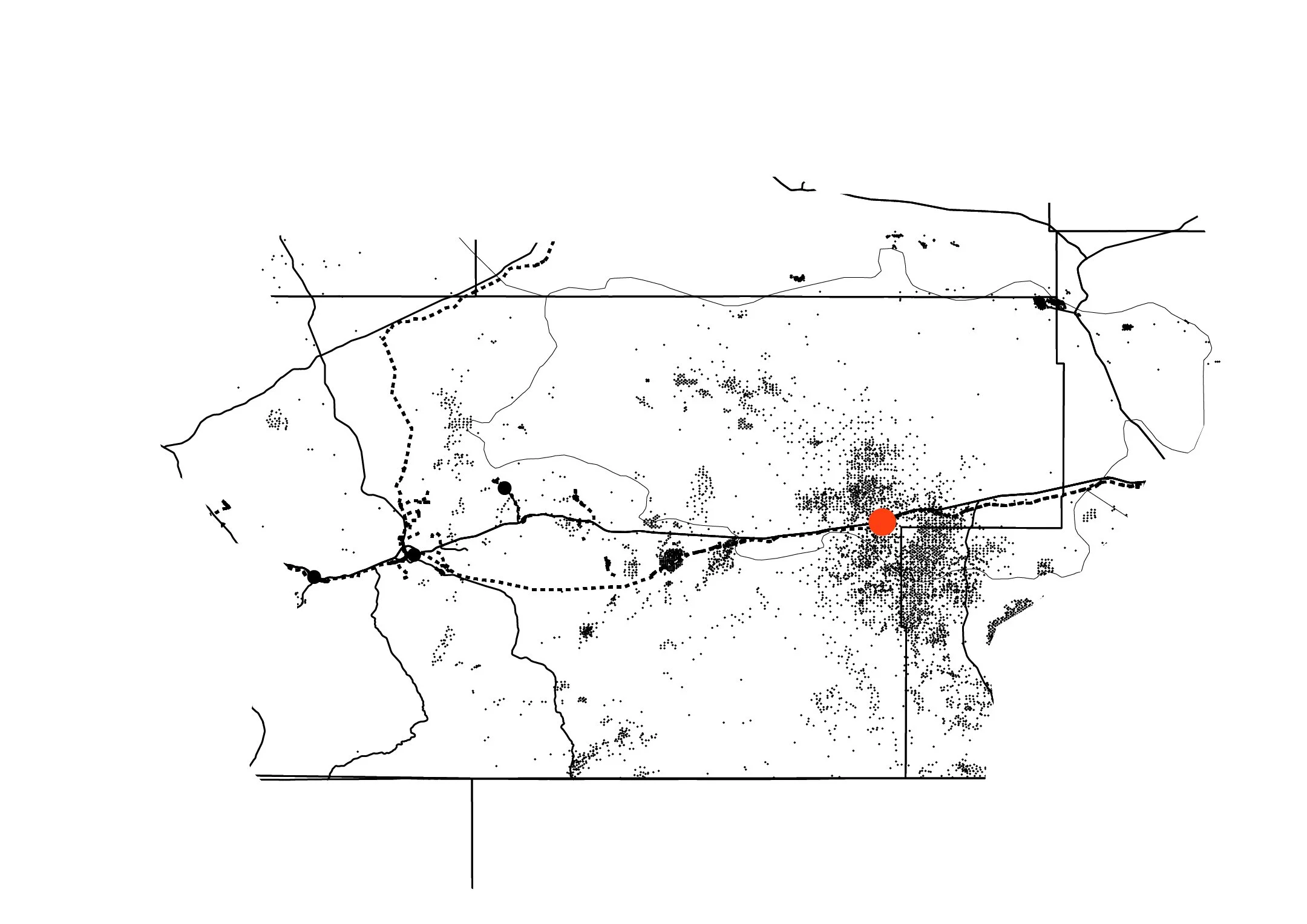
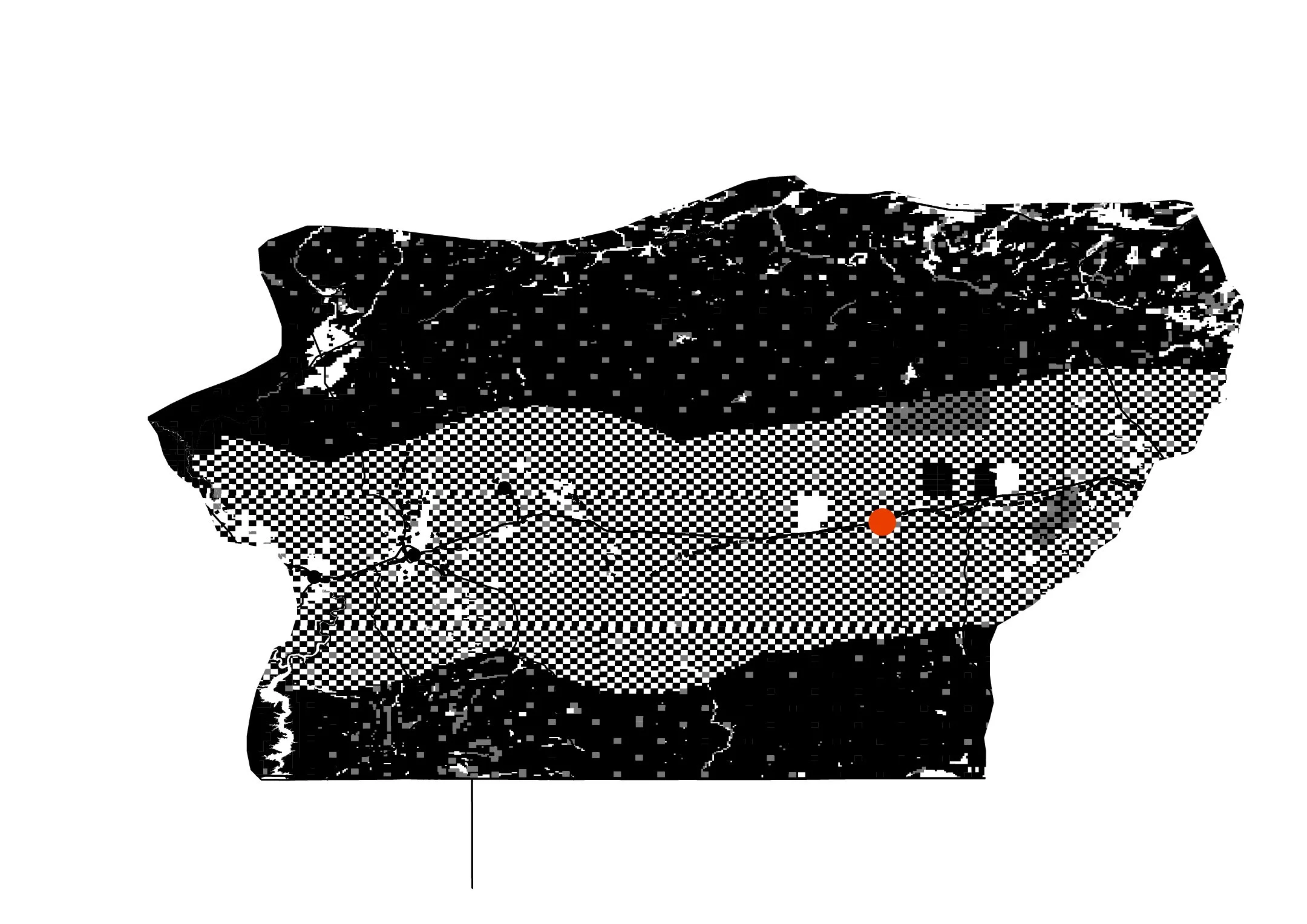
Wamsutter, Wyoming, in the Great Divide Basin, will serve as the test site for this project. A small community of 451 people and the self-proclaimed “Gateway to the Red Desert", Wamsutter serves as a supply town for the local ranches and a lonely rest stop, first for the transcontinental railroad and more recently for I-80. Over the past several years, though, the area has seen a boom in natural gas drilling that is quickly changing the town's landscape. Some now project that the population will grow tenfold over the next ten years.
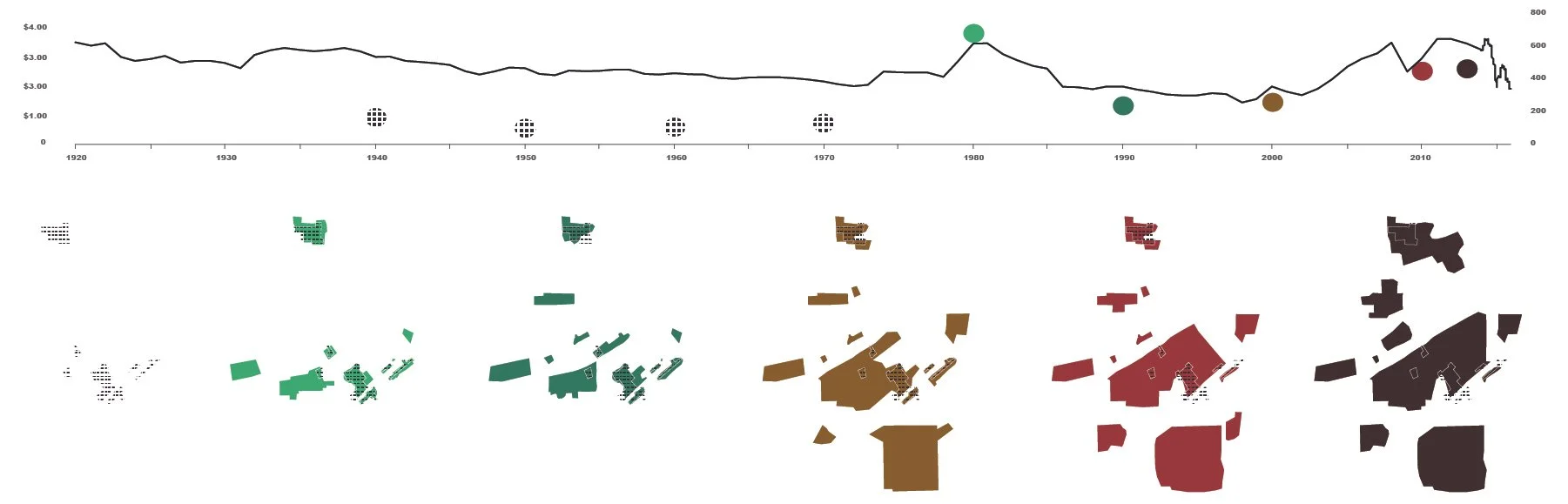
The linear town growth versus the volatility of oil prices.