
The Beauty of Pure Space
Below is an unsuccessful submission for San Rocco Magazine’s 2017 issue, Pure Beauty:
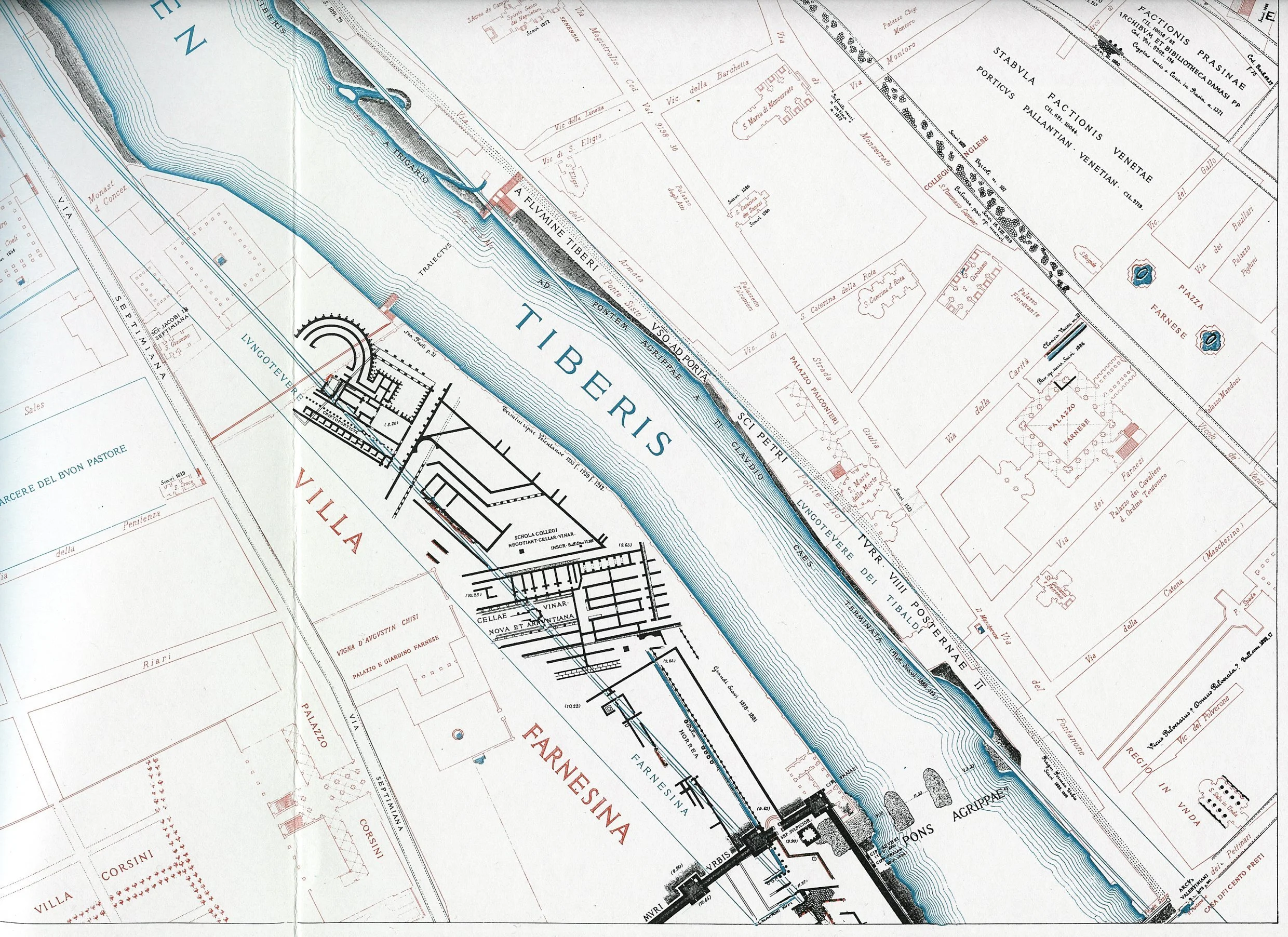
The plan of the Villa della Farnesina. The triclinium is located at the base of the arc.
Before we denounce modern architects for abandoning beauty, perhaps we first indentify the beauty that resides within architecture. By the 19th century, the traditional languages of architecture no longer carried any social meaning; industrialization and commodification rendered humanism irrelevant. Responding to this, architects at the beginning of the 20th century did not abandon so much beauty as re-found its source within architecture: space. With this in mind, rather than lament the loss of a surface beauty to L'Oréal©, perhaps we should focus on the beauty of space within architecture, especially before that word, too, loses its political weight through overuse and misappropriation.
Instead we argue, any idea of beauty in architecture resides within the contested terrain of space, illustrated through two painterly engagements with space. The first is Roman wall painting during the rise of Octavian, specifically the triclinium at the Villa della Farnesina that sits on the edge of the Tiber. By the end of the second style, the representation of architecture transitioned from an idealized, but believable tectonic organized by linear perspective to, as Vitruvius disparages, a tectonic of lightness that coincides with a flattening of the picture plan and the introduction of the colour field. The Rothkoan use of colour fields engages the wall surfaces more directly with the “real” space and acts as a framework for idealized inhabited landscapes that exist far away from this actual villa suburbana. The result is a complex, anachronistically modern discourse on space within the social context of the emerging empire.
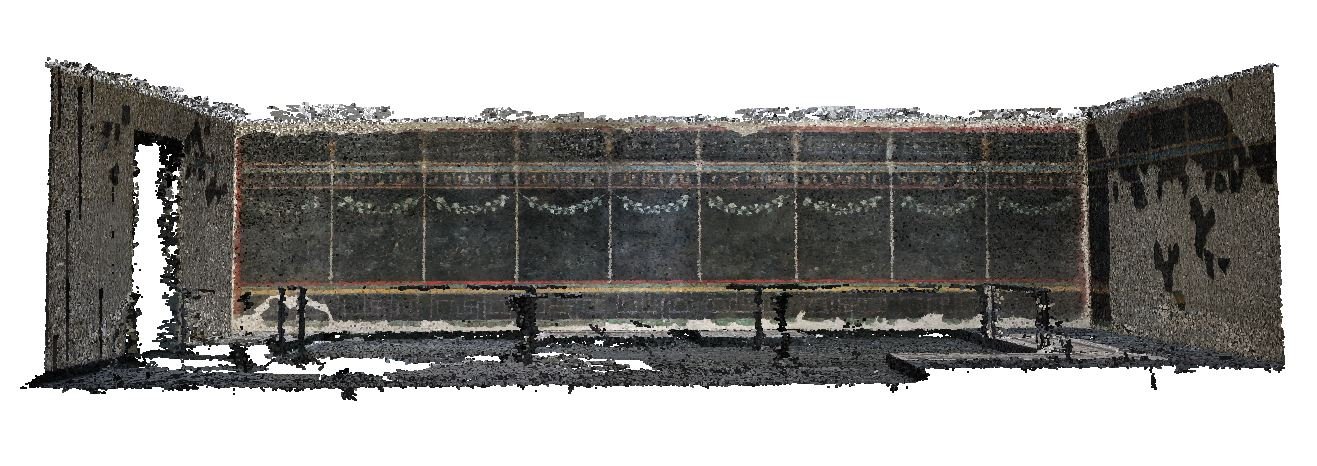
Model of the Villa della Farnesina triclinium wall painting
Roughly 1,950 years later, Yves Klein, a complex and often problematic artist, began a project at the age of 26 that continued until his death 12 years later, challenging contemporary political and social ideals through the medium of space. This began with painting his aunt’s ceiling a monochrome blue as an ode to atmospheric perspective and as a symbol of his initiation into a search for "pure space." Later works, such as the Void and The Leap into the Void, all represent a desire to complete his engagement with space, culminating in Architecture de L'air, where the only medium left is space itself. As with the Roman wall paintings, the beauty of Klein’s work comes from his direct engagement with space, both real and idealized.
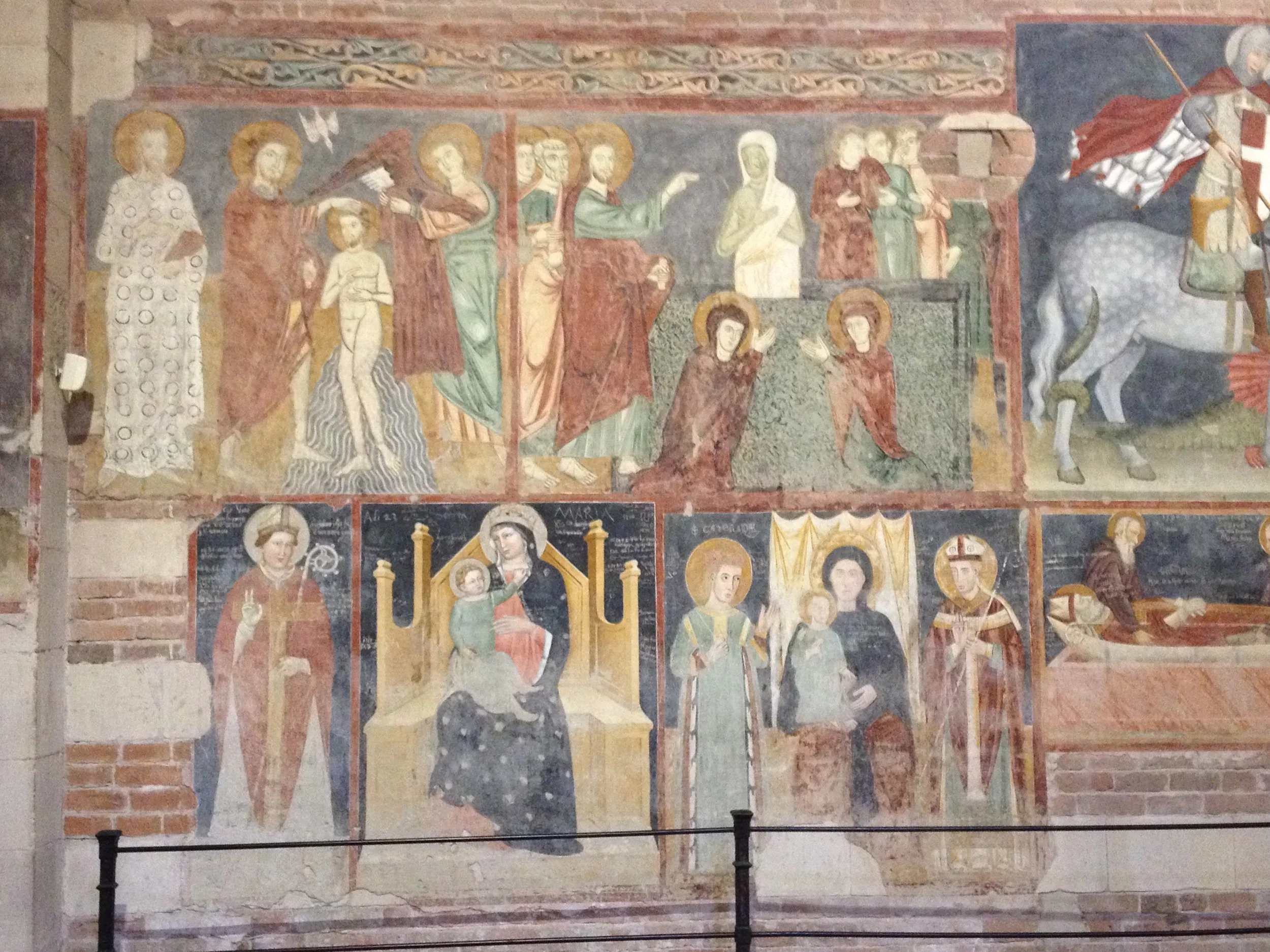
Frescoes from Church of Santa Zeno, Verona.
The growing fetishization of the envelope, with recent movements such as the Passive House standard, which focuses on super-insulated, airtight envelopes, or the development of abstract skins generated by algorithmic processes, challenges the aesthetic center of architecture by deemphasizing space in the name of function or surface. Not to condemn these changes, but placing either into the context of the modernist project of “pure space” will give both more value. As Lefebvre argues, the days of communicating ideas of beauty through representation are past, and we need to recognize that the future of architecture’s ability to convey meaning lies in the spaces we work in and shape. Bernard Tschumi says one realizes that “the architecture of pleasure lies where concept and experience of space abruptly coincide...” and, if that is so, any idea of beauty in architecture needs to be in the service of space... pure space.
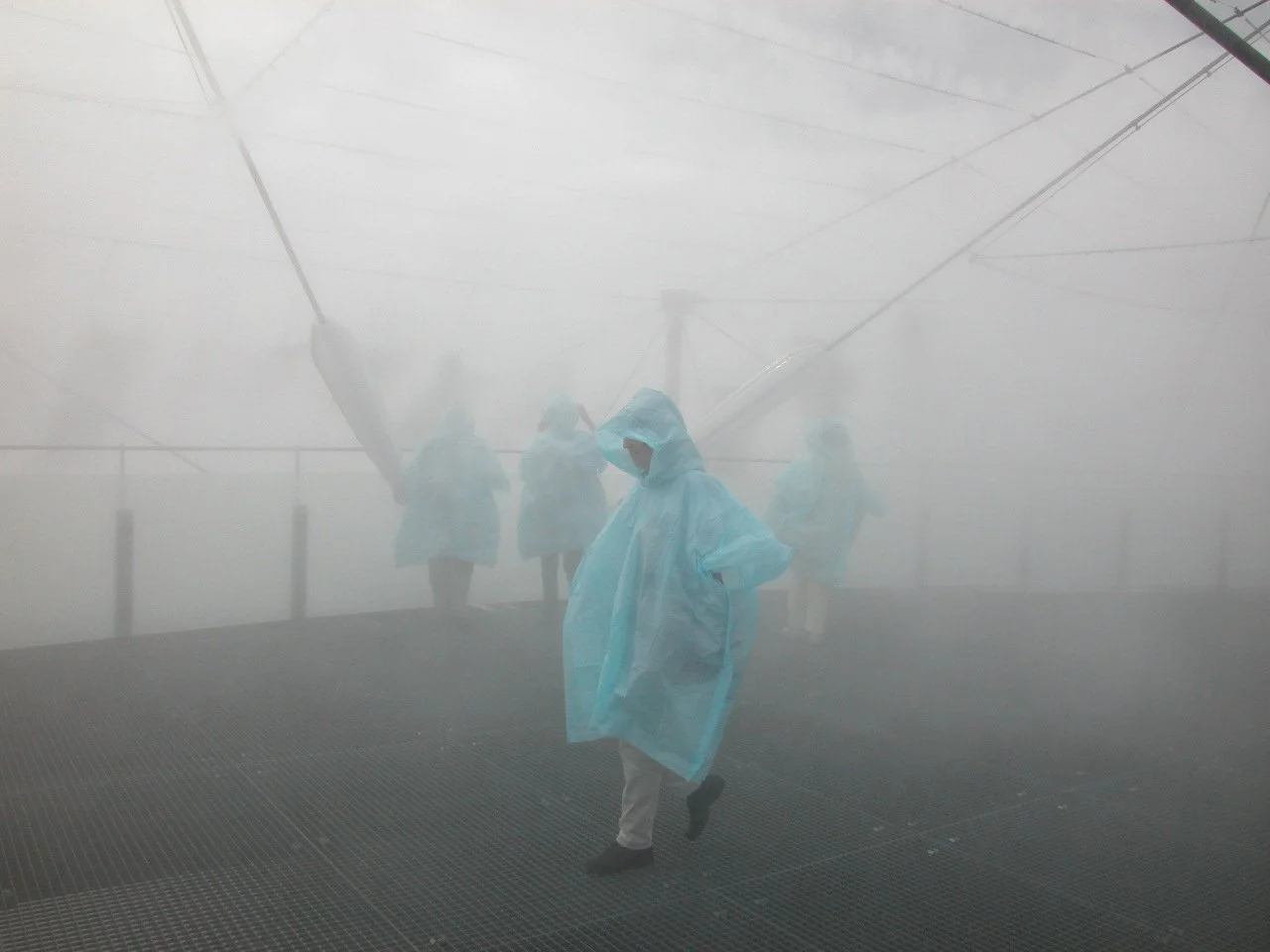
Surfaceless architecture - Diller and Scofidio’s Blur Building