True Images
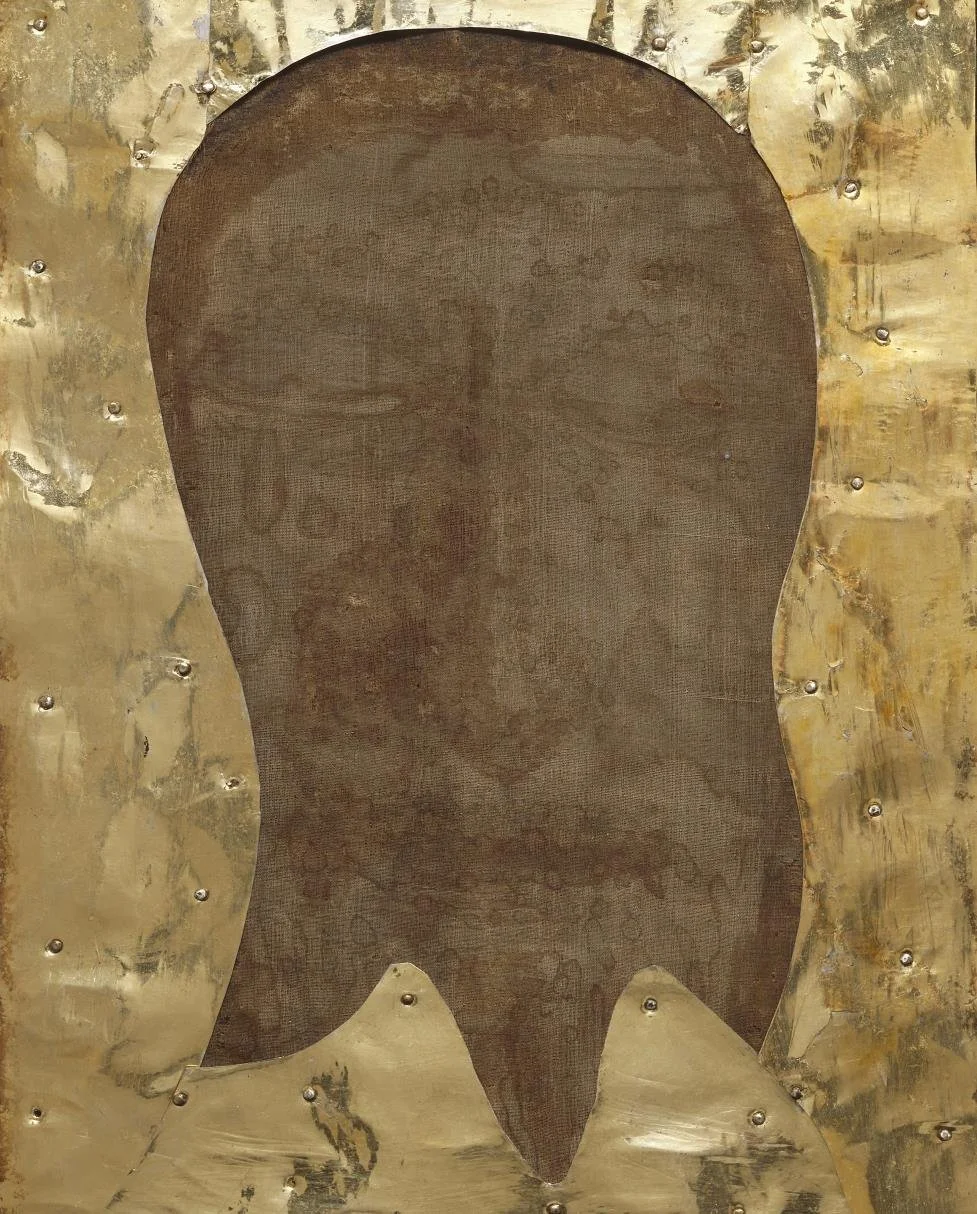
Icon of the Veronica, 1617 copy of late medieval original. Geistliche Schatzkammer, inv. D 108, Kunsthistorisches Museum, Vienna.
John Lansdowne, James F. Huemoeller, and Bryony Roberts
True Images poses the premodern fixation with how to represent the “true” face of Christ as a lens through which to consider the various ways in which today’s images are made, copied, and authenticated. Unfolding from the story of the Veronica, the “true image” par excellence, this project uses processes of mechanical reproduction to highlight the shifting notions of “real” that underlie contemporary views on authenticity in works of art.
Truth in representation is perceived. The relative realness afforded the depiction or reproduction of a subject hinges on variables within a value scale in constant flux. Volatility in the determining criteria for authentic representation is nothing new. It was especially apparent in the devotional practices of the later Middle Ages, when competing cult-images, deemed “true” on the basis of wildly divergent standards, stood in opposition.
First among these venerable images was the Veronica at St. Peter’s in Rome: a portrait icon on a linen cloth supposedly contracted from physical contact with the blood and sweat of Christ’s face while on his journey to be crucified. This was the representation of Christ against which all others were formally and conceptually compared. First mentioned around the turn of the twelfth century, the original icon of the Veronica is thought to have been lost in the sack of Rome in 1527. Thus the prototype for one of the most widely reproduced iconographies in western art survives only in its copies, which, according to historical sources, might maintain the efficacy of the original.
The truth perceived in the Veronica proceeded from its legend. Late medieval and early modern viewers believed it to be one among an elite category of so-called acheiropoietic images, “not made by [human] hands.” Onwards from ca. 1300, the value afforded a sacred image—and works of representational art in general—became increasingly pegged to authorship. In the case of the Veronica, however, it was precisely the lack of any traceable artist that certified the image as “true.” Venerated both as a portrait and as a physical relic, the Veronica became a touchstone for discourse on the relationship linking copies and originals and an allegory for the concept of truth in representation, as its name, a play on the phrase vera icon (“true image”) implies.
True Images returns to the concept of the acheiropoetic image as a means to reconsider truth in representation as understood today. Showcasing several modes of mechanical reproduction, from digital scans and topographical mapping down to analog processes like silicon molding and plaster casts, the project charts the creation of a new series of Veronicas, made with human agency but not made by human hands.
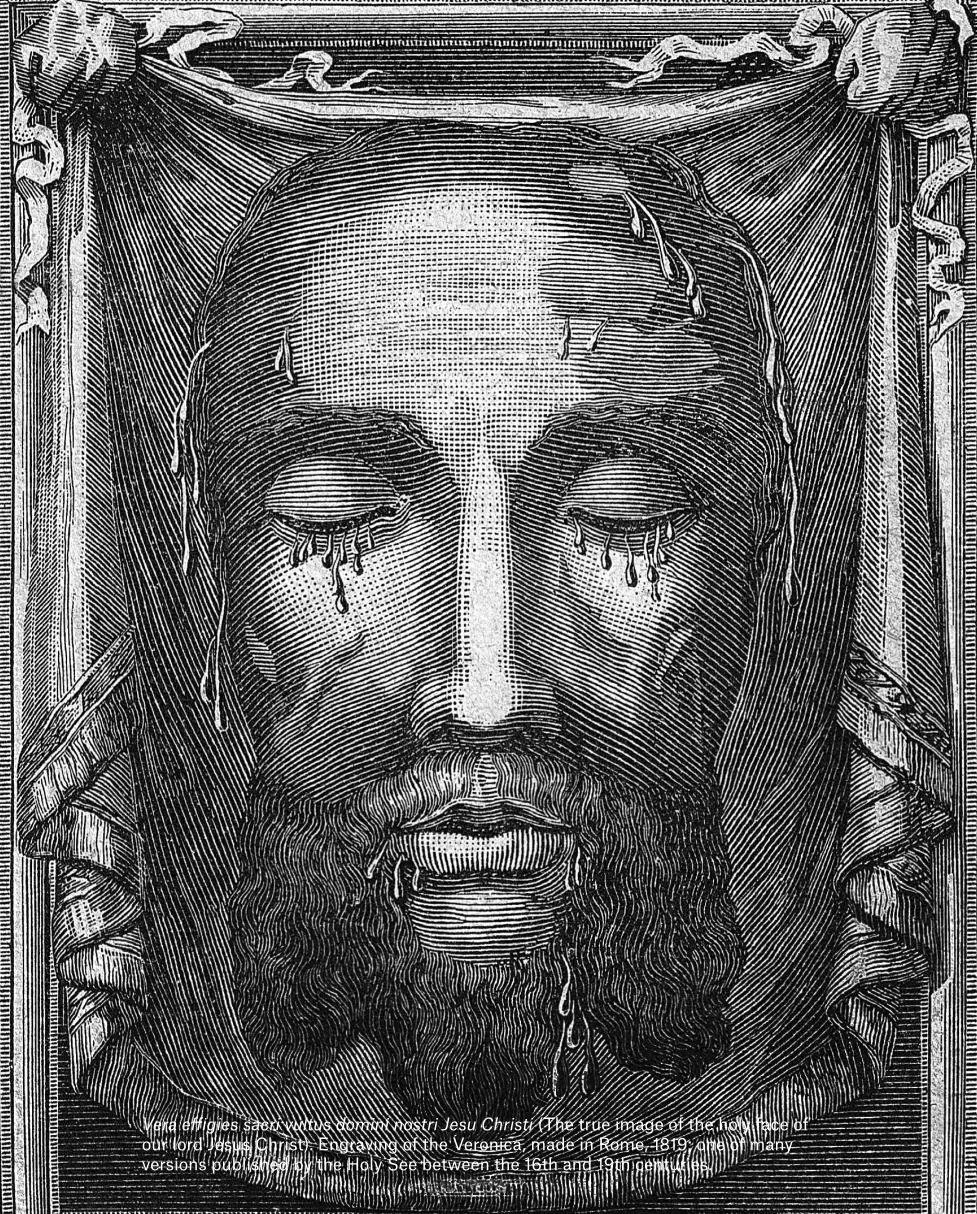

A numeric representation of a Digital Surface Model (DSM), an image type developed to capture the topography of surfaces. Here, each value represents the height of each pixel in a 3D model of the face of Christ at a specified resolution.
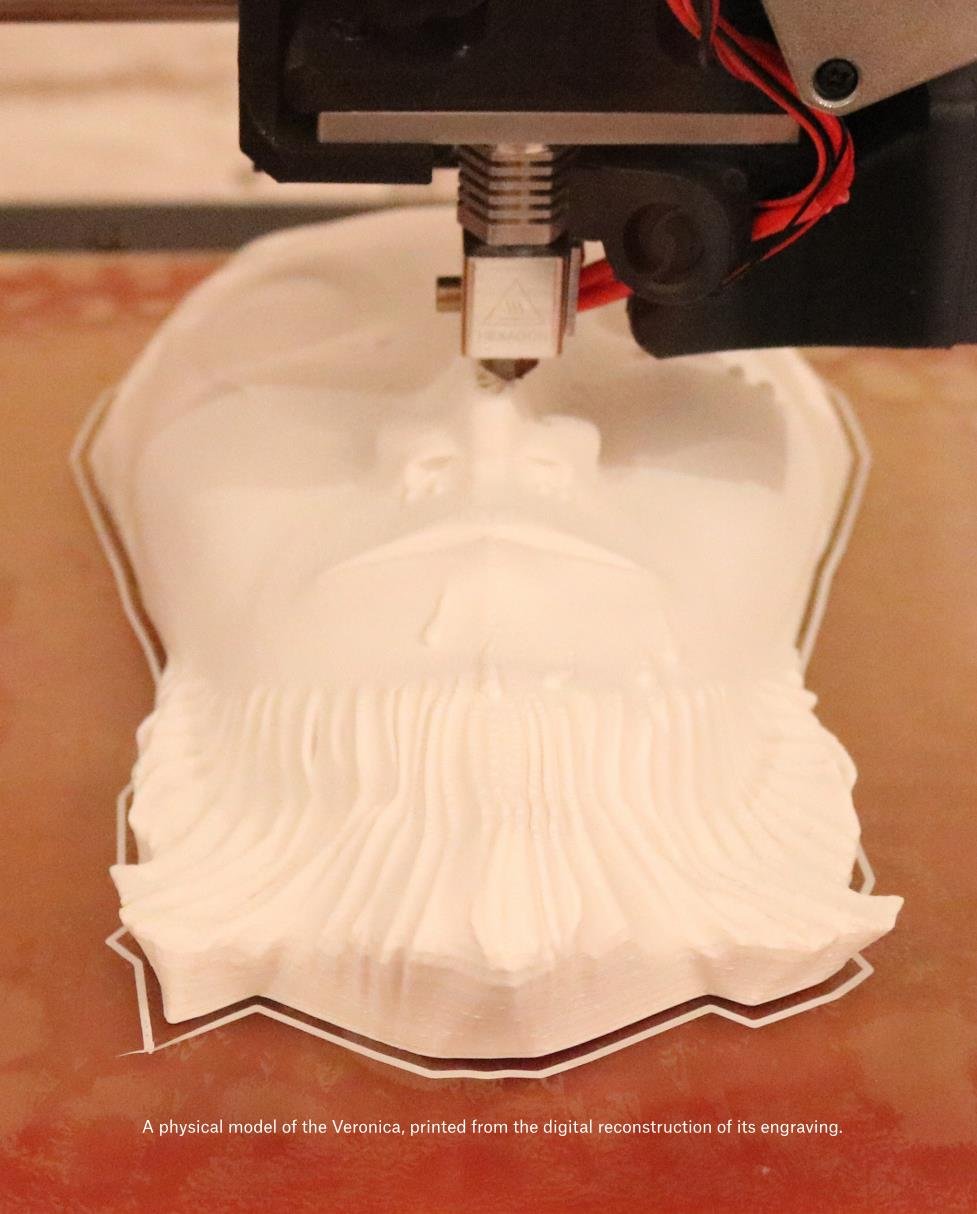
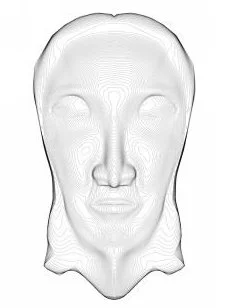
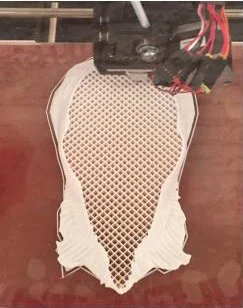
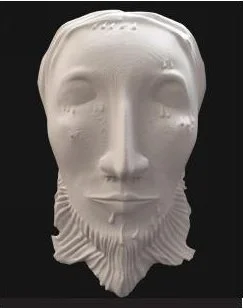
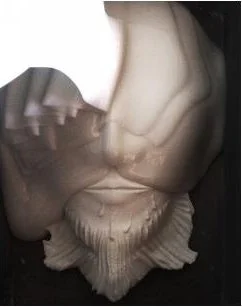
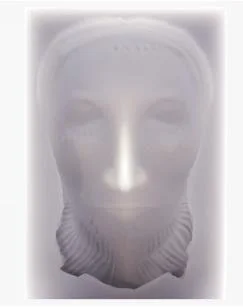
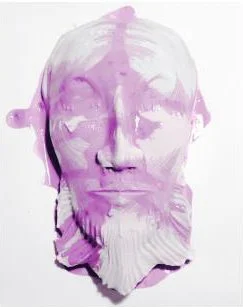
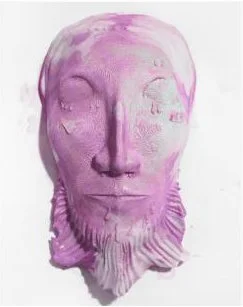
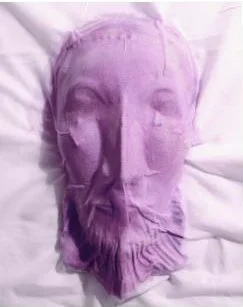
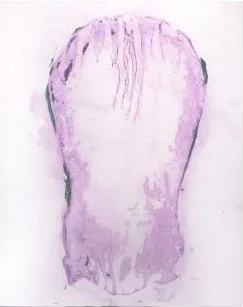
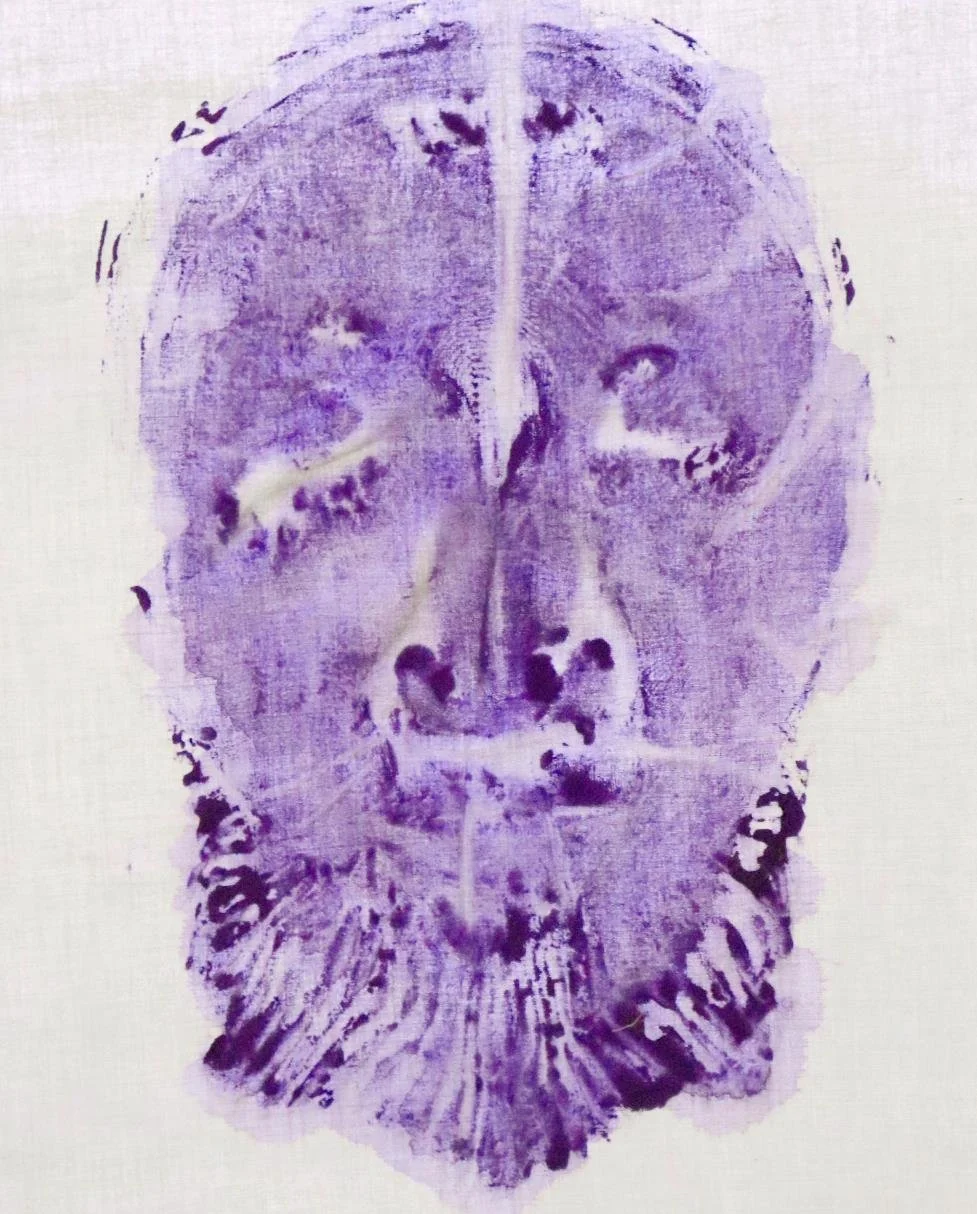
Through a succession of material experiments, the Veronica is mechanically reproduced. Building from a 3D digital print, the processes of molding, casting, and dying generate a new series of reproductions through the direct imprint of one surface onto another.