
Students Present Ideas on Building Cities for Our Aging Population to Vancouver Residents
Our Aging Network, an architecture studio taught by James F. Huemoeller, considers how the built environment in Canada can accommodate a rapidly aging population. But instead of considering the conventional issue of housing, the studio challenges students to find new ways of addressing the problem by incorporating social and familial networks in an urban landscape.
As a part of the studio, the students were able to consult with seniors at the Brock House Society and present their ideas.
Note: This feature story appeared on UBC SALA’s website on May 03, 2017.
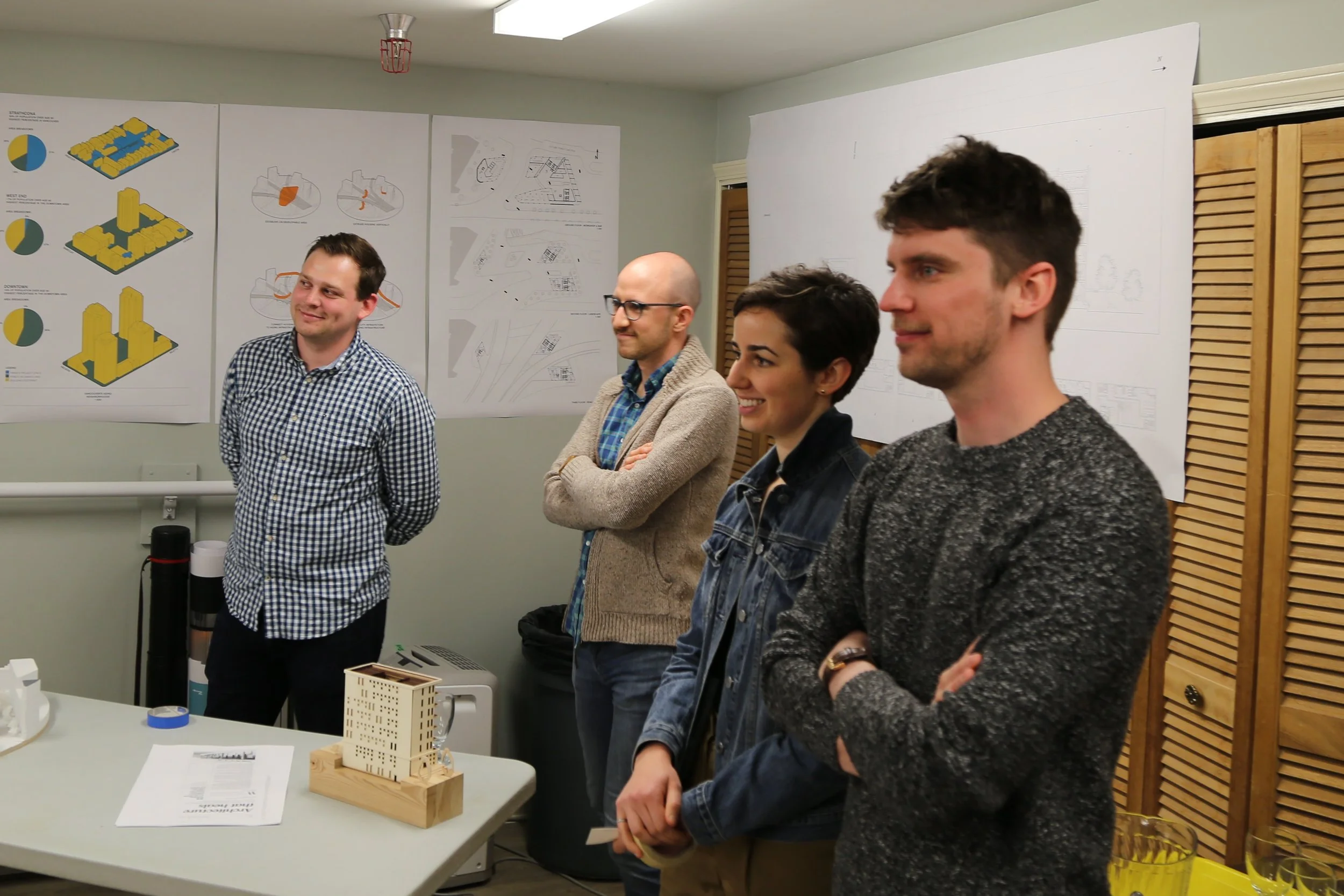
The students are recognized in a speech by Glenys
A studio gets input when designing the built environment for an aging population
“Our Aging Network”, an architecture studio taught by James F. Huemoeller, considers how the built environment in Canada can accommodate a rapidly aging population. But instead of considering the conventional issue of housing, the studio challenges students to find new ways of addressing the problem by incorporating social and familial networks in an urban landscape.
For one of the projects in the course, students consulted with seniors at the Brock House Society. “I loved the first part,” said Glenys. “They were asking the questions and we were doing the talking.” The students used the opportunity to open a dialog with the seniors that informed their projects. They returned last week to present their ideas.
Alex’s project uses an inter-generational approach. Under the existing Cambie Street bridge, he proposes a series of community centres without a centralized building. This uses space that is otherwise wasted and connects the waterfront of False Creek to Vancouver’s downtown core. The community centre spaces are also designed to tap into an existing knowledge network, where an older generation can provide training to a younger one.
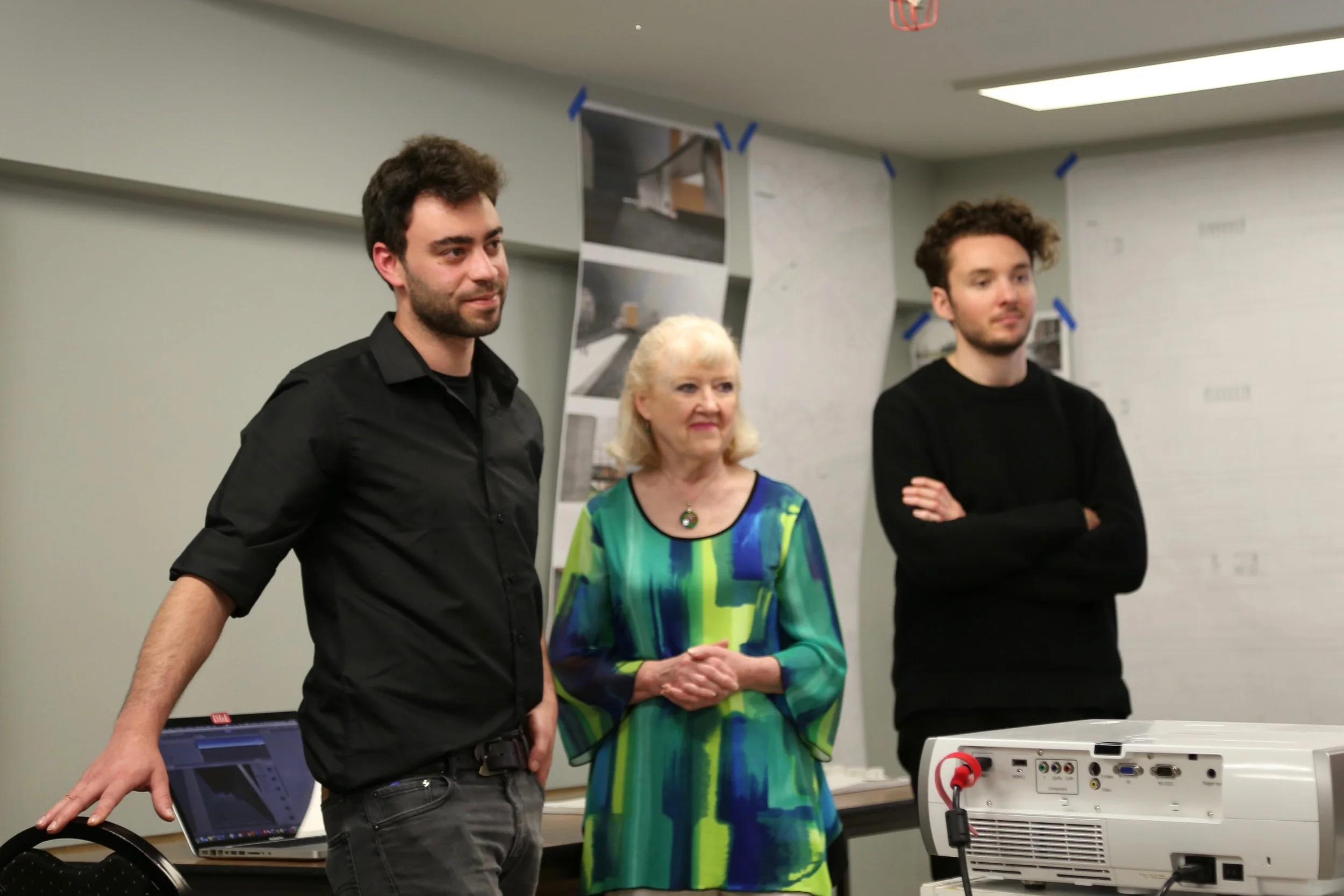
Glenys, Cameron and Felipe
“It would be nice to have an inter-generational community because we can all gain from each other,” Caroline said about Alex’s project.
Amina, an architect from Pakistan, who was at the final presentation at Brock House, said that she enjoys that the projects are “about everyone in the community” and “about being inclusive.”
Adding another level of engagement to the course, James invited an instructor from the Sauder School of Business to the studio’s final reviews. This introduced a new perspective on the economic feasibility of the projects that Cameron said was a valuable addition to the course.
All of the projects were well received by the members of the Brock House Society, who applauded their efforts, the initiative, and presented James and the students with tickets to an upcoming lecture.
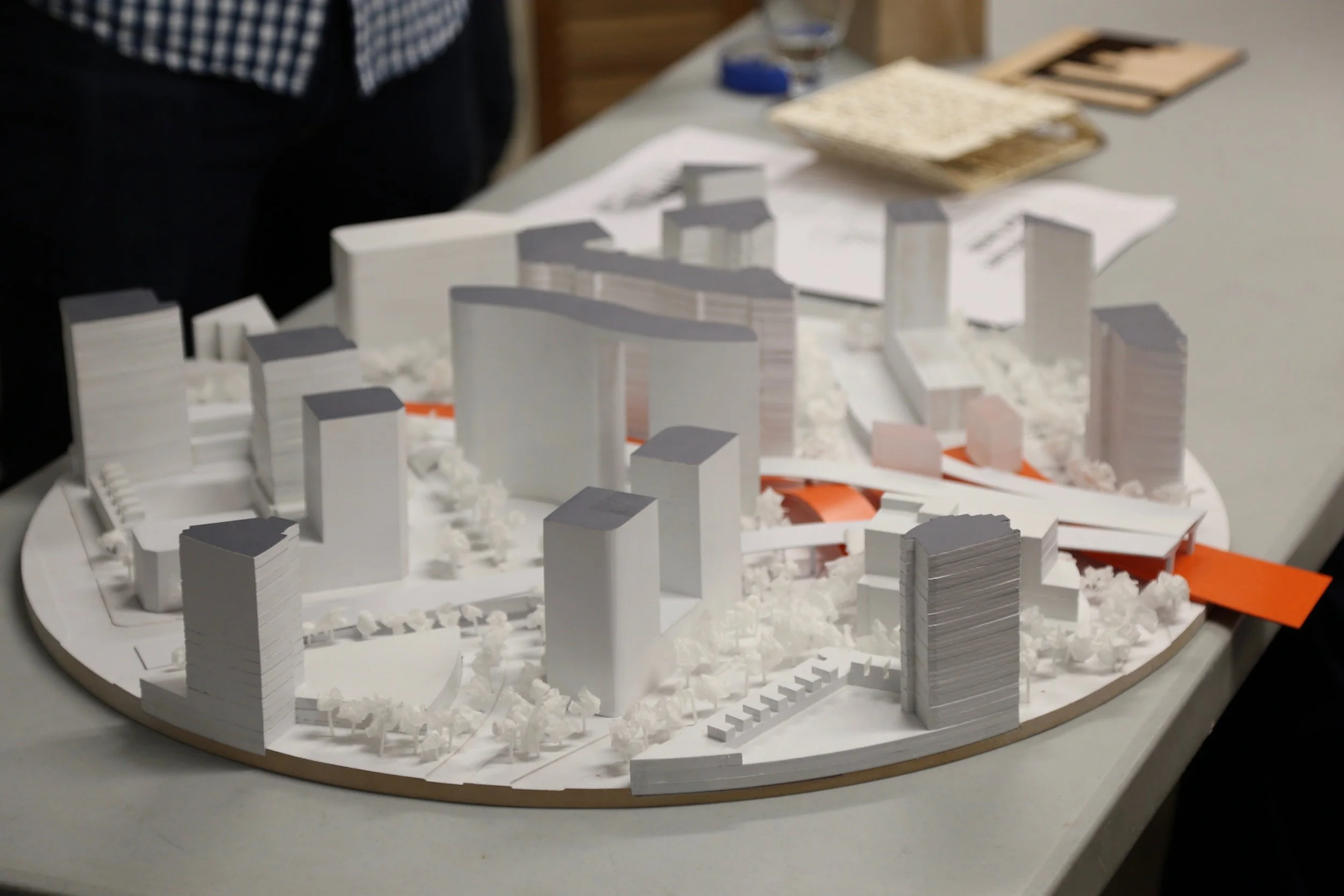
The model for Alex’s project, which proposes a series of community centres on the downtown side of the existing Cambie Street bridge
For the full article, click here