
Observations on Communities with a Resource Dependency
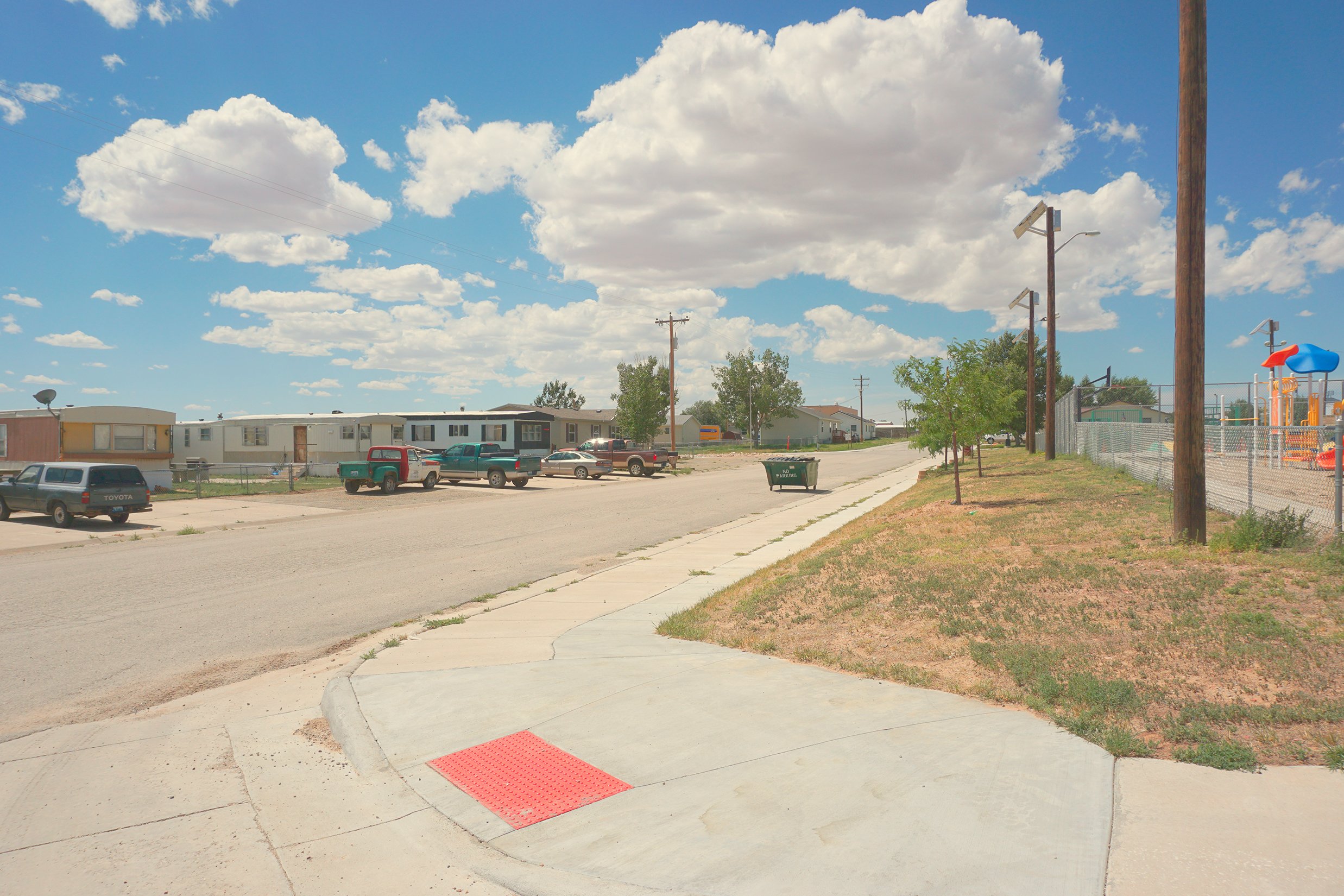
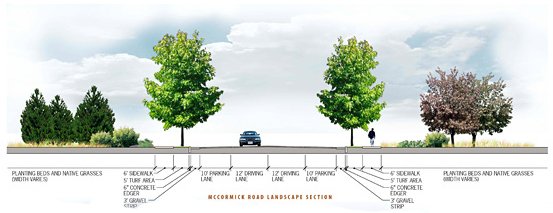
A line of trees roughly ten feet high are spaced every fifteen feet for a block, sitting in-between a new playground and a concrete sidewalk[1]. A concrete curb negotiates the grade change from the sidewalk to the road. Sloped ramps with tactile warning devices cap either end of the block providing accessibility at the street crossings. Finally, solar powered lights rise high above the street and playground ensuring that the roads stay safe throughout the night. If you look almost any other direction the scene starts begins to look very different. Surrounding this everyday moment is a community consisting exclusively of trailer homes and manufactured buildings with dirt as the primary paving surface. The lack of a sidewalk on the other side of the crossing nullifies the accessibility furnished by the designer of this space. This semblance of normalcy sits in the small town called Wamsutter, Wyoming, a resource-dependent community with a population of 600 souls on a good day. The project, a reward for the bounty of natural gas found in the nearby Wamsutter Gas Field.
This setting is typical of planning in resource-dependent communities in North American. With the boom comes an influx of money as well as a demand for infrastructure. The town responds by hiring consultants who bring their best urban planning or civil engineering proposals. Good streets, some trees mixed in with some worthy goals of greater accessibility and sustainability[2]. The result borders on farcicality. Resource-dependent communities like Wamsutter desperately need tools to respond to volatility, to withstand, in other words, the dynamics of fluctuating markets. With the right resources, these communities could provide the necessary short and long-term housing, install public services that are responsive to change, build a stronger relationship with the surrounding landscape, and ultimately find ways to secure a long-term plan all the while maintaining their sense of community. What they do not need though is some idea of normalcy.
Beautiful Pictures from High Above
Since the publication of James Corner’s “Taking Measure across the American Landscape,” and likely before, architectural publications are filled with images of the resource extraction industry, usually full bleed aerial shots of the devastating effect on the landscape[3]. They are unnerving and humbling, and for those who have spent time within those landscape, barely begin to capture the full extent of the scale of these projects. Those images illustrate the implications of our current global situation, but it is a detached view of the problem ignoring the full complexity of the subject. What is often missing in those images are the communities; the people that live on the front lines. The conventional narrative focuses on our exploitation of the natural landscape and rarely are the rural, conservative, communities engaging in the industry represented in that dialogue.
A strong case can be made that we should be looking deeper because in fact, these problems are merely a reflection of our contemporary urbanisation, and the challenges facing Wamsutter are not too different from those of your favourite metropolis. Only here size accentuates the problems of dependency because the effects of instability are so profound within the towns. Just like the construction industry is a good indicator of a tight credit market, resource-dependent communities display, in the lives of the people, the effects of our global situation. Unfortunately, a byproduct of highlighting problems is that the failures of us as designers and planners in responding to a volatile world are nowhere more apparent than in these communities. As evidence, I offer a few observations.
The Demographic Models we use as the Basis for Planning are Broken:
Underlying the Wamsutter example is perhaps the largest problem with the planning of resource-dependent communities. The demographic analyses that support our planning principles do not accurately represent the condition. A 2012 planning document for Rock Springs, Wyoming illustrates this point well[4]. After the typical review of the town's current situation, the document outlines the basis for the report’s proposed planning objects, the growth projections, showing a gradual increase of 1.6% per year to an overall increase of 10% in the population after ten years. The rest of the document concentrates on ways to manage that anticipated growth.
Ten years for a resource-dependent community is an eternity though. For one it is always hard to understand the trends of a boom when you in the middle of it. A burst can become an endless flood. More likely though, is that instead of growing, the town shrinks. Between year one and year ten, the town could easily see 10% drop in population once or twice as our demand for oil changes, or some other country independently decides to flood the market with cheap oil. These possibilities are just as likely as a stable growth in population, but planning mechanisms rarely are willing to take those less predictable options into account.
The “who/what” are equally problematic when looking at demographics. It is well-known amongst boomtown mayors that these demographic numbers rely on flawed government data. A common culprit is the “Shadow Population”. Shadow populations often live in man-camps[5] that appear as either formal or informal community for workers in the Industry. The informal communities are RVs parked anywhere. The formal communities include proper trailer parks[6], or temporary housing set up by Industry. These formal camps are often, but not always, dry and are located outside of town, closer to the drilling rigs[7]. The company strictly controls the two or three weeks a worker is at the camp with a typical day being a 12-hour shift from bed to rig, which at its most extreme includes hot bedding[8]. Regardless of the configuration, these undocumented workers create strains on the local communities, but demographic analysis rarely captures these subtleties. Even if the growth projections are right, how much does it matter when growth comes at us in so many different ways?
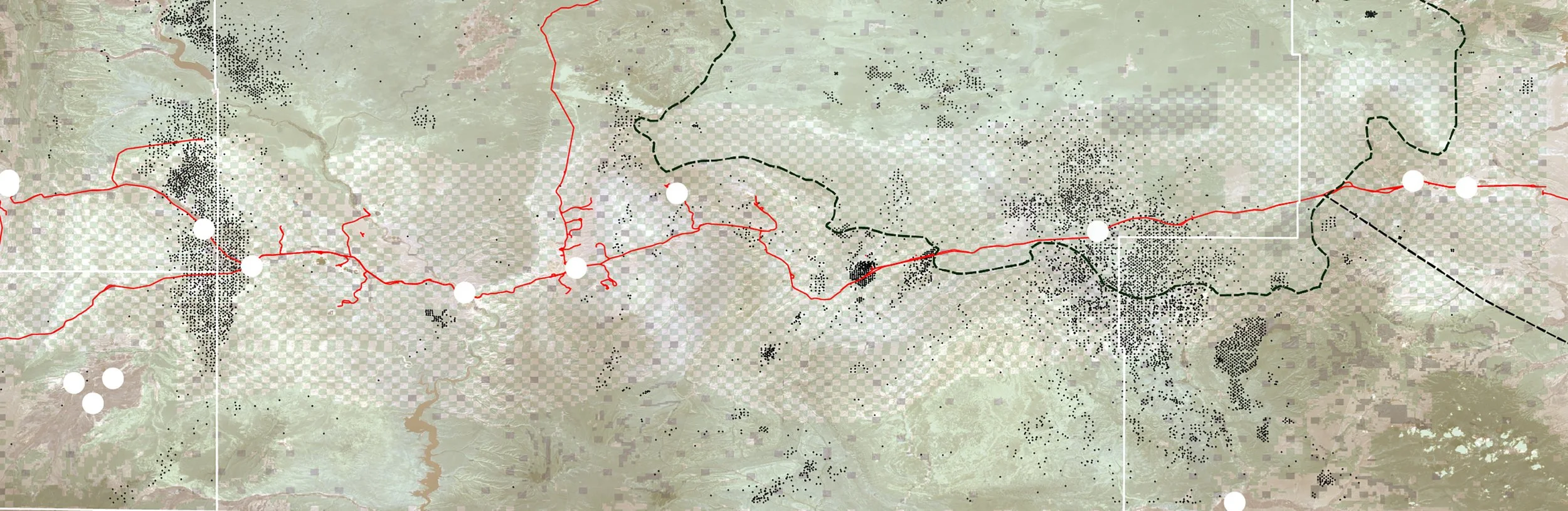
The I-80 Corridor - The checkerboard pattern is a result of an agreement stemming form the transcontinental railroad where the US government gave every other plot to the railroad as payment for completing the line.
From Generic Planning to Reactive Zoning:
Even if we resolved some of these demographic issues, there are still problems with the zoning and planning documents that are at the core of any projection. Take Williston, North Dakota the epicentre of the Bakken boom[9]. A year or so ago, the city banned mobile housing and man camps through a zoning amendment. A few months ago, a new planning document came out, and it provides some interesting contradictions. Naturally, there is a prediction for growth. Unfortunately, growth that comes from an oil industry dependent on temporary workers who understand that volatility is the nature of the business[10]. Why uproot one’s families for a job that’s unquestionably short term?
The plan fails to take this reality into account, which gives one the sense that everything that comes after is irrelevant. What the planners want to see is stability, because that is what they know. However, merely stating that all housing should be formal, does not make it so. Instead, it leads to the shadow population we mentioned earlier and in turn overtaxed infrastructure. Of course, not that better counting would solve the problem. What happens when the inevitable bust hits; for one, underutilised infrastructure.
The problem with the typical planning documents is not just due to their unstable foundations. They also represent a “future” that I can only define as the generic present. The keeping up with the Joneses of futures through your favourite new urbanism ideas. The better ones acknowledge some of the unique challenges facing resource-dependent communities, but none ever take the giant leap of providing potential solutions to the actual problems. The only means for responding to the volatility then is reactionary zoning.
Identity is Comfort Food:
Resource-dependent communities rarely want to be recognised as such. After the over zealous 70’s every Boomtown is in the process of diversifying their economy. Everyone is aware the resource extraction business is a short-term game, and the future of the towns will depend on other sources of income. Intimately tied to the hunt for diversification is a search for identity structured around who they were and whom they want to be. As if answering that question alone will give them the stability they so desperately seek.
The most common trajectory is a turn towards tourism. Almost every rural community has visions of a growing tourism industry. Partly dependent on natural landscapes via active recreation, ironically always at risk due to the current economic driver[11], and partly a search for history. It becomes pertinent that each community, in competition with the other boomtowns, boosts its case for tourism by creating a clear sense of self that it can advertise to the urbanite tourists. A communal identity, which in North America unfortunately often centres around some myth of initial settlement of white Europeans mixed with another tale of the yeoman farmer/rancher. If the community is lucky, they can mix in some Dinosaur bones for good measure[12].
However, the track record for tourism to sustain any place is poor at best. Failure, the more likely scenario, success, usually leading to fetishisation. Despite this, communities, partly led by well-meaning planners and designer, continue the search giving you the sense that the pursuit of identity is less about economics and more about finding some stable ground to stand on.
Program is weak:
The program, traditionally defined, is rarely going to be a reliable generator for design in these communities. For one, volatility makes programming challenging. Programming, even when flexible, depends on stability to have any meaning. No one tailors a project to specific programs unless one thinks it is going to be around for awhile[13]. It is why so many officials in these communities turn to developments like industrial parks and their accompanying prefabricated structures. They are open-ended. Do you need a shop during the boom? It works. You need a microbrewery with a little bar to accommodate some wealthy tourists for the bust. It works there too. A big open space created by an efficient structure, a big concrete slab and maybe insulation all at a low cost. The no-frills solution to accommodating whatever the world brings.
Two, rural communities with their low density cannot accommodate a bulk of program; there are not enough people around to “activate” the built environment throughout the day. Transmission line corridors are just one example where a heavily managed landscape demands more program than is feasible, but its managed nature also prevents it from becoming a robust ecology, leaving an invasive species filled landscape instead. Rural buildings are another example. Unlike in a dense urban fabric where a void has a conspicuous presence, in small rural towns voids are the norm. As any fairground represents, it is customary for buildings to sit there and do nothing for a bit. The point is that vitality cannot necessarily be equated with activity, at least in any traditional sense.
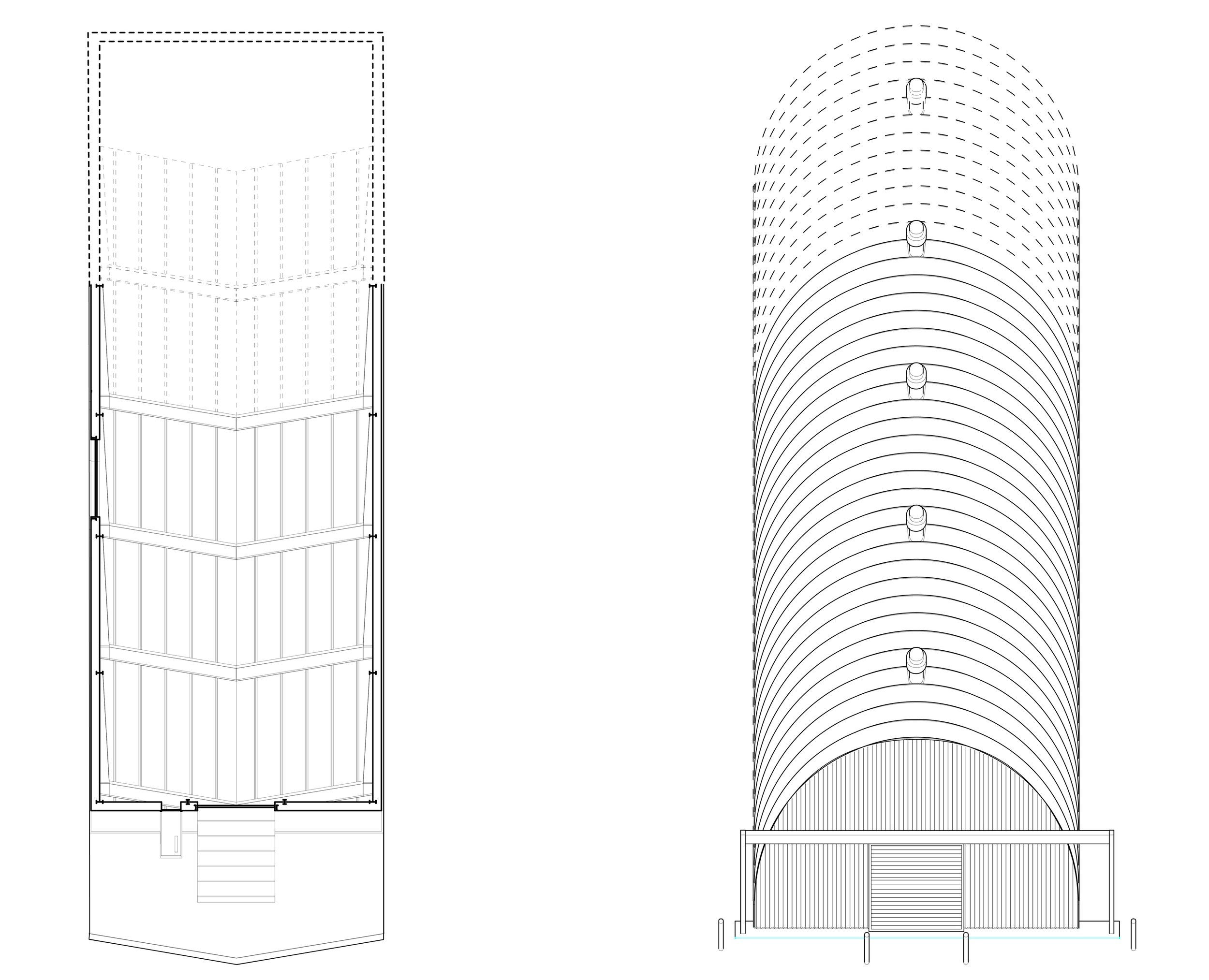
The Extendable Frame | The Extendable Surface
We Already have Adaptable Typologies; they are just Ugly:
Resource-dependent communities in North America consist of mainly three building typologies: trailer homes, manufactured industrial buildings, and those things architects design. The architectural ones are by far the least adaptable in practice. The prefabricated building, we have looked at already. The trailer home, or more accurately the mobile unit[14], serves as both home and office in rural communities. On the residential side, a recent archaeological survey of these units in North Dakota broke their distribution into three separate categories[15]. The formal community, the informal and the semi-informal. If we take the latter two, the standard installation is a trailer core set in the middle of a lot, connected to utilities, and surrounded by the ephemeral detritus of life. This detritus includes at least one truck but probably four or five, a patio or entry vestibule depending on the climate, a shed for storage, a grill, some chairs, and a slew of other things. You have some coworker looking for a place to crash; there is always space even if it is the built-in bench at the kitchen table. If none of this sounds particularly attractive, I agree, but it works well precisely because it is not precious. It is just a dumb box and doesn’t try to be anything else, humbling a hundred years worth of architects trying to come up with something better.
Those Things Architects Design:
In rural communities, public buildings are rare events. For a small town, a new public building might happen once every 50 years. In 1904 Sheridan, Wyoming, the self-proclaimed “Denver of the Northwest,” built a county courthouse JB Jackson would have loved, sitting at the top of a hill at the end of main street. Sixty years later they built a new library. There are some hotels sprinkled in there, but the point is that few building with “architectural pretensions[16]” are ever constructed in rural communities, and you could safely say the same with public landscapes. It also means that when they are, they have an outsized impact on the community. As the mayor of Ft. St. John, British Columbia said, “you must get it right because you are not going to get another chance.”
For boomtowns, this means the buildings and landscapes that have the strongest impact on the development of the community are public projects, and maximising their potential is necessary for the success of a community. Whatever dumb boxes are being built around them they are the foundation that holds it all together. Rather than hoping to get the demographics right, these projects should embody the vision for how a town responds to its social and economic dynamics, just as the county courthouse did for another era. This should empower designers, but whether they recognise it is a different story. Rural public projects are rarely the centrepiece of any firm’s portfolio.
As I said at the beginning though, the conversation is not about Boomtowns alone. These communities are where issues like the significance of public spaces are readily apparent, and their failures the most obvious. They allow us to see how communities respond to different dynamics. To illustrate this idea with the public space example above; one could argue that the public sphere is equally important for communities in cities. The magnitude, though, often is hidden by the density and intensity of urbanity, and the effect of public projects are harder to isolate. As a result, at least in North America, instead of building more quality small public spaces for more people, we just build the county courthouse bigger and hope its impact is twice as big. If we pay attention though to a more observable case, we might see that it is not the location or size of the courthouse, but how it transforms the town around it that matters.
There is a strong argument that the divide between rural[17] and urban[18] is probably less relevant than it used to be[19]. The engagement of resource-dependent communities, both in practice and in research, can guide living with the volatility of our urbanising world. Resource-dependent communities have existed throughout history, but the particular form that they take now only came into being with the industrialisation and urbanisation of the 19th century. As a legacy of these two processes, they exemplify the challenges that they created and still create today for both scholars and practitioners. Nothing in our contemporary landscape perhaps better represents the oft-quoted passage from Marx and Engels that with modernity “all that is solid melts into air.” Maybe, however, we do not need to be antagonistic towards modernity and its volatility. Perhaps we need to look deep for ideas for living with volatility, for accepting it, while still building healthy communities, relationships, and a sense of stability. To get there though, probably requires having your boots, and camera, on the ground;)
[1] Sidewalk: “pedestrian obstacle course. daytime open air homeless storage facility” bruja, April 22, 2005, http://www.urbandictionary.com/define.php?term=sidewalk
[2] Ignoring for a second the source of the wealth.
[3] See Brenner, Neil, Eds. “Implosions/Explosions - JOVIS Publishers.”, Corner, James, and Alex S. MacLean. Taking Measures Across the American Landscape. Yale University Press, 1996, and Bhatia, Neeraj, and Mary Casper. The Petropolis of Tomorrow: Fabricating Place within the Floating Oil Frontier. Actar, (November 30, 2013). The later does take the conversation further along the lines this article discusses.
[4] Rock Springs Planning & Zoning Division. “2012 Master Plan: Today’s Plan for Tomorrow’s Future.” The City of Rock Springs, September 3, 2013. http://www.rswy.net/egov/documents/1421944312_707092.pdf.
[5] Man-Camps: “A house where a bunch of guys live. They must drink a minimum of 5 beers a day, watch porn, live in a shitty ass house, never say sorry and rip on each other every day all day. They can’t have cable, must steal movies from Wall Mart and hate frats. The (sic) communicate with other man camps through beer can communication.” tron69, October 07, 2007 http://www.urbandictionary.com/define.php?term=Man%20Camp Lodges, family camps, or work camps are the more politically correct terms.
[6] Trailer Park: “A Small community of people who live in trailers. Contrary to popular stereotype-driven belief that all trailer parks are full of white trash losers, there are plenty of perfectly decent blue collar people who live in them that, for one or another set of circumstances, can't afford to live in a regular house.” D-Shiznit August 31, 2007, http://www.urbandictionary.com/define.php?term=trailer+park.
[7] The drilling rigs require roughly 26 workers and each pad can contain up to 30 wells. Maintaining a well after drilling is complete requires substantially less labor so the job is temporary unless you are in management.
[8] Hot Bedding: “where one bed is shared by two people who work "shift work", they sleep at alternate times, as one wakes up, the other goes to sleep, hence having a "hot bed" longducdong, August 16, 2010, http://www.urbandictionary.com/define.php?term=hotbed
[9] SRF Consulting Group, Inc. “Williston/Williams County Regional Plan: An Update to the Williston Comprehensive Plan and Transportation Plan.” DRAFT. NDDOT & the City of Williston, January 3, 2017.. The Bakken Boom refers to the oil boom in western North Dakota that began in the early 2000’s and ended roughy three years ago when, as Boomtowns call it, the “correction” happened.
[10] There is typically no local labor supply as, for example, North Dakota hit unemployment levels of 3% during the boom.
[11] There is considerable faith in restoration after the extraction of resources, but the success rate of restoration is mixed partially because the very idea of restoration caught up in an intractable debate, what do we restore the land too?
[12] Tumbler Ridge, British Columbia did just this and survived a devastating bust in the coal industry in the 1990’s.
[13] Except of course the Olympic Games.
[14] Mobile Home: “Perfectly respectable alternative dwelling primarily found in the United States. Cheaper priced and often manufactured for less, these dwellings (and thusly their inhabitants) are often looked down upon by the greater society. Truly, mobile homes and their residents are misunderstood and wrongly categorized (sic) as 'trashy' because of long running stereo types dating back to the 1950's. Indeed, the modern mobile home and their owners have evolved beyond the 'white trash hick' stock characters others try to force them to be, but remain overshadowed by the ignorant and those who need to grow up.” StarOnion February 09, 2007, http://www.urbandictionary.com/define.php?term=mobile+home
[15] Caraher, William. The Bakken Goes Boom: Oil and the Changing Geographies of Western North Dakota. Grand Forks, ND: Digital Press at The University of North Dakota, 2016.
[16] Jackson, John B. “Country Towns for a New Part of the Country.” In Discovering the Vernacular Landscape, New Haven: Yale University Press, 1984. (78)
[17] Rural: “Used to annoy people who use the word ‘urban’...” Maar10 January 16, 2008, http://www.urbandictionary.com/define.php?term=rural.
[18] Urban: “City-like. From the Latin word ‘urbs’, which means ‘city.’” Anonymous September 28, 2003, http://www.urbandictionary.com/define.php?term=urban
[19] See anything by Brenner, but I also point you to Freudenberg whose work is the foundation for much sociology research on resource-dependent communities and paints a more complex picture of the rural/urban divide that I will attempt to summarize.. See, Freudenburg, William R. “Rural-Urban Differences in Environmental Concern: A Closer Look.” Sociological Inquiry 61, no. 2 (April 1, 1991): 167–98, and Freudenburg, William R., Scott Frickel, and Robert Gramling. “Beyond the Nature/Society Divide: Learning to Think about a Mountain.” In Sociological Forum, 10:361–392. Springer, 1995.
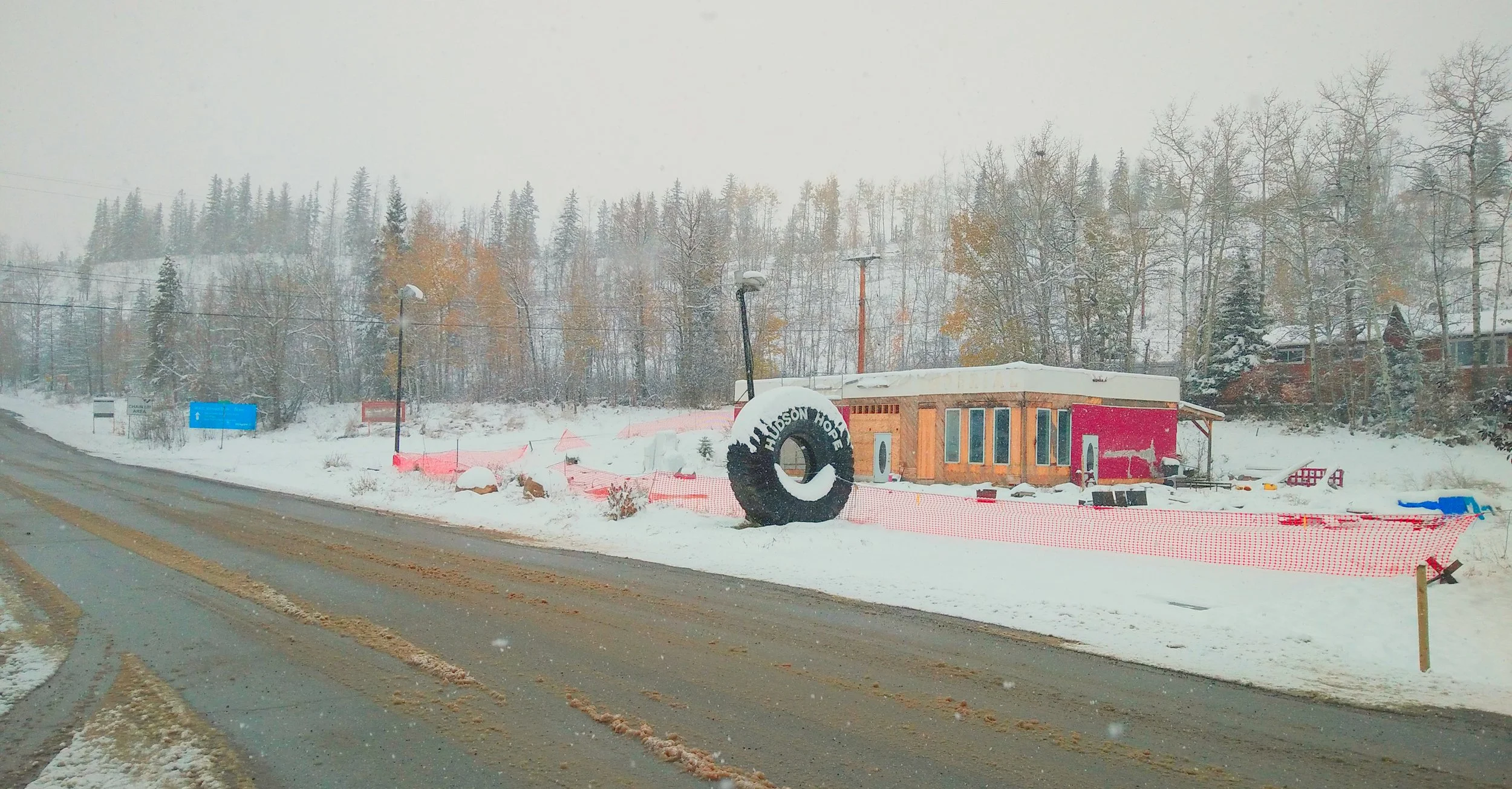
Hudsons Hope, British Columbia | Gabriel Lacombe
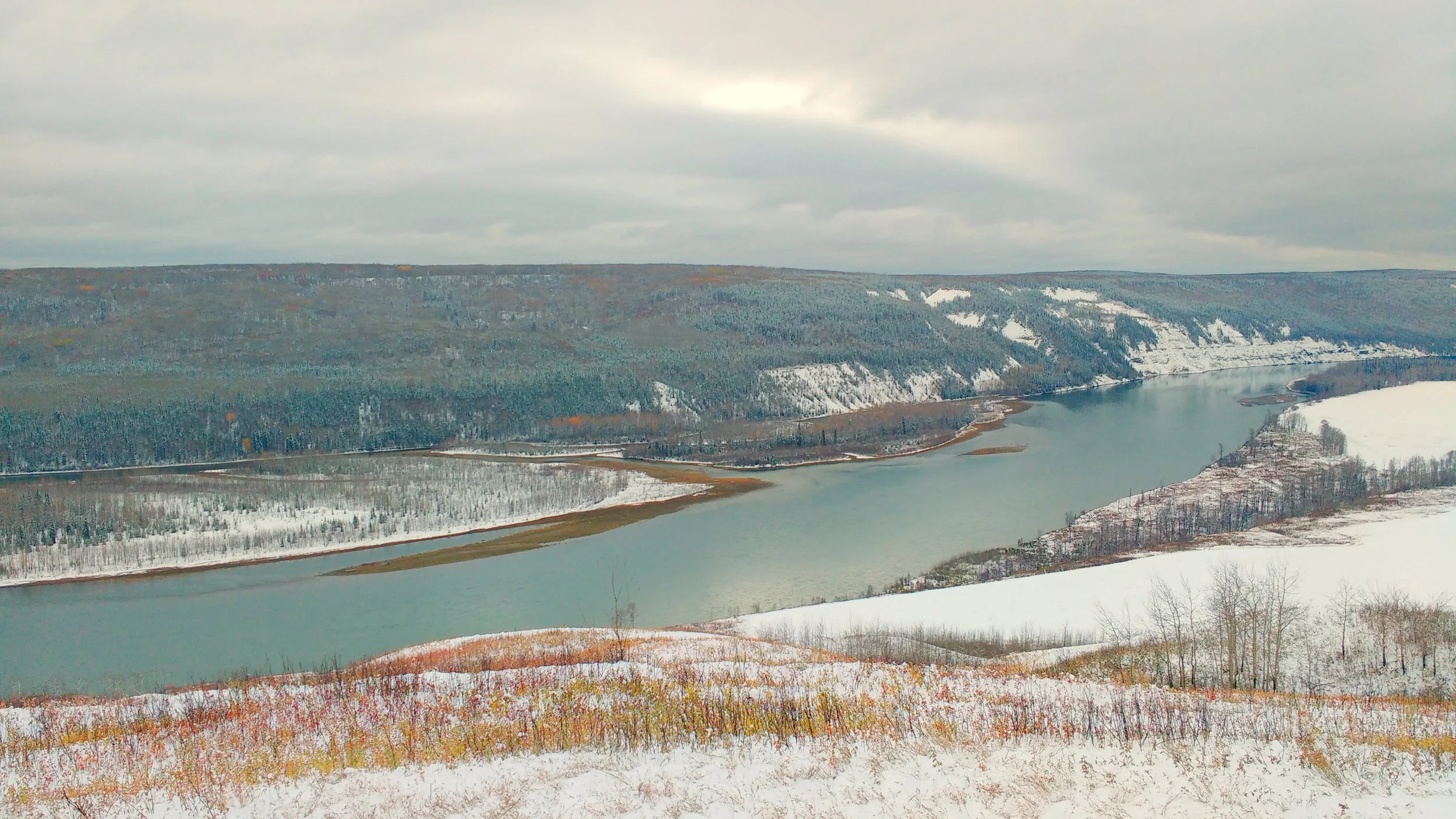
Future Location of Site C Dam on the Peace River, British Columbia | Anna Thomas
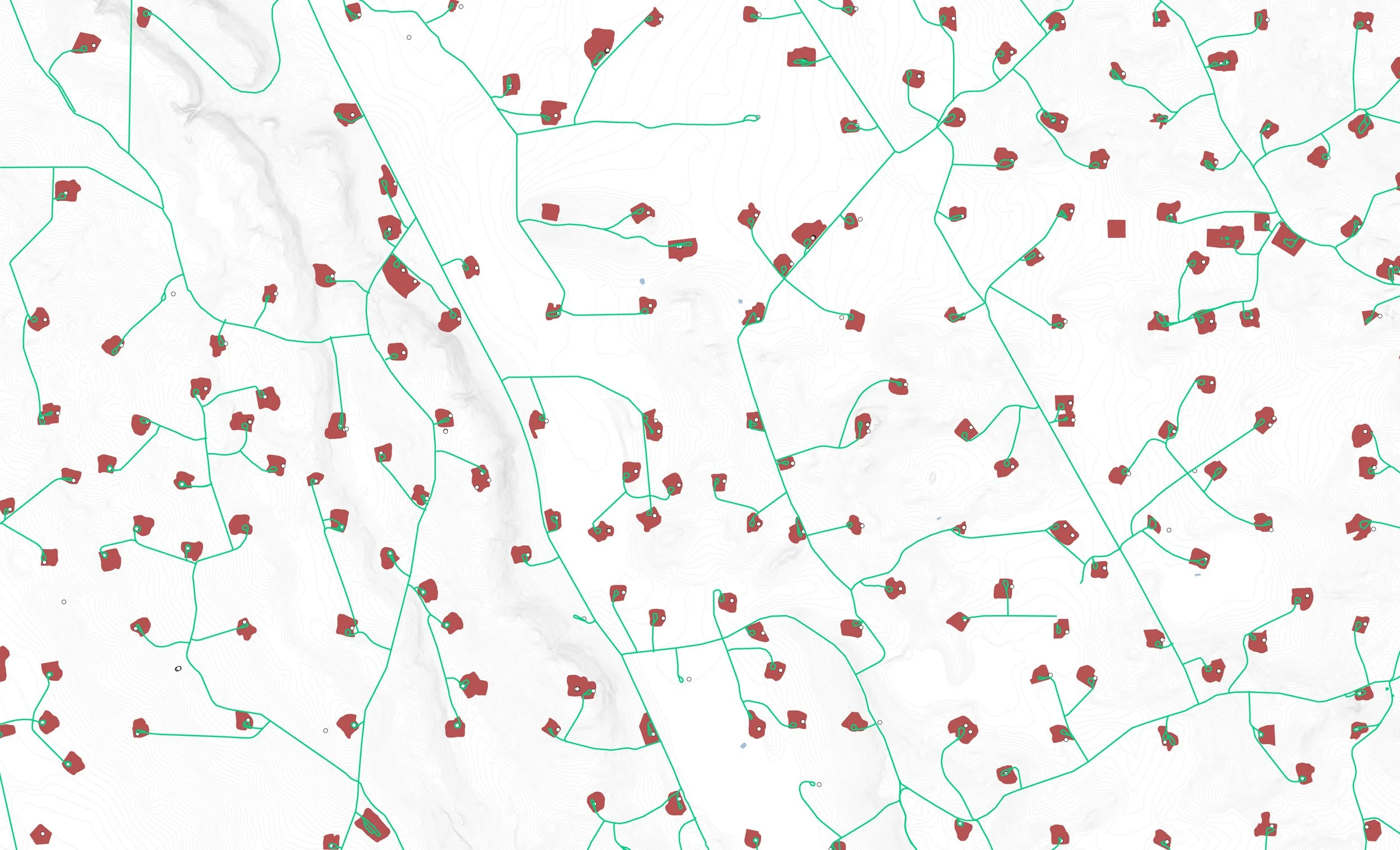
The Fracking Landscape



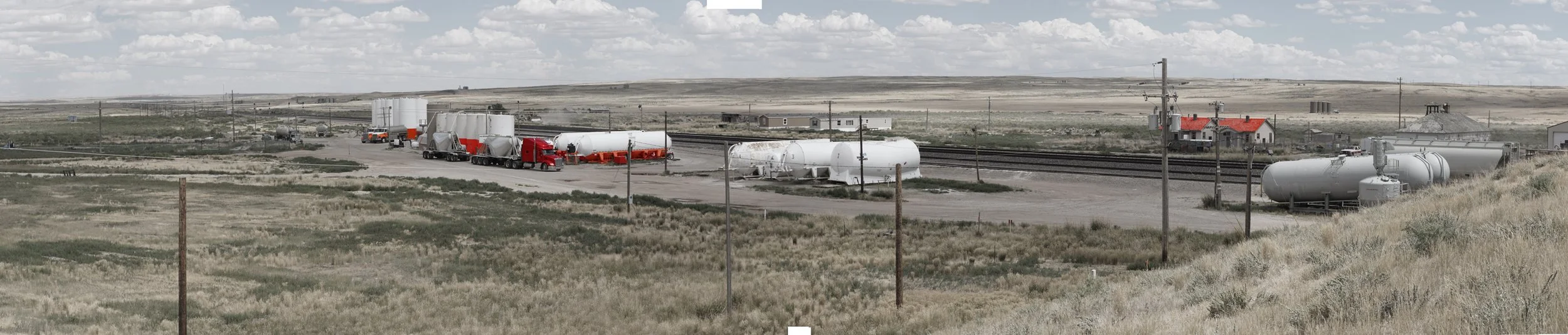
The Views of the Fracking Landscape