
Students Work to Create a New Framework for Resource Dependent Communities
Note: This feature story appeared on UBC SALA’s website on Oct 26, 2016.
A small town faces some big city problems.
When a group of architecture students drove the 13 hours to Hudson’s Hope this October, they weren’t exactly there for tourism. For many, it was their first time travelling to the North. They battled through dangerous winter driving conditions and broken-down vehicles. They made the long, arduous journey to offer some practical solutions to the real issues facing the small town of Hudson’s Hope.
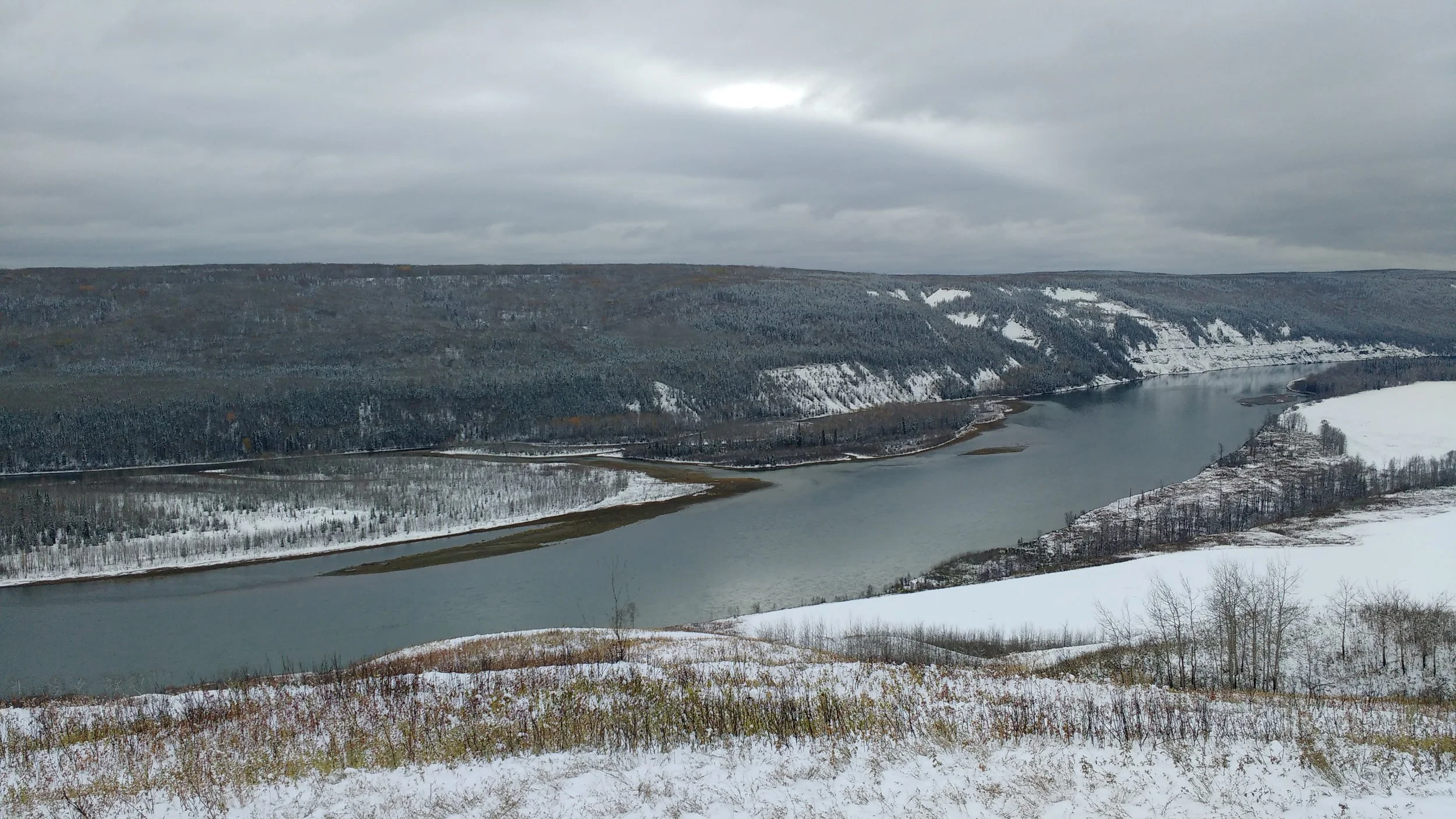
View of Peace River valley, future home of the Site C dam.
The problems facing Hudson’s Hope are remarkably similar to those facing major metropolitan cities. The town experiences a seasonal influx of workers that doubles its population, burdens its infrastructure, and strains its housing supply. In cities, these issues accumulate over decades, but they are accelerated by the rapid growth of resource-dependent communities. Upon arriving at work in the energy sector, workers don’t pay taxes to Hudson’s Hope and are not counted in census data. When the job is over, they leave. And when the resources are gone, the industry leaves. The highway between Vancouver and Hudson’s Hope is dotted with towns that have already completed the familiar journey between boom and bust.
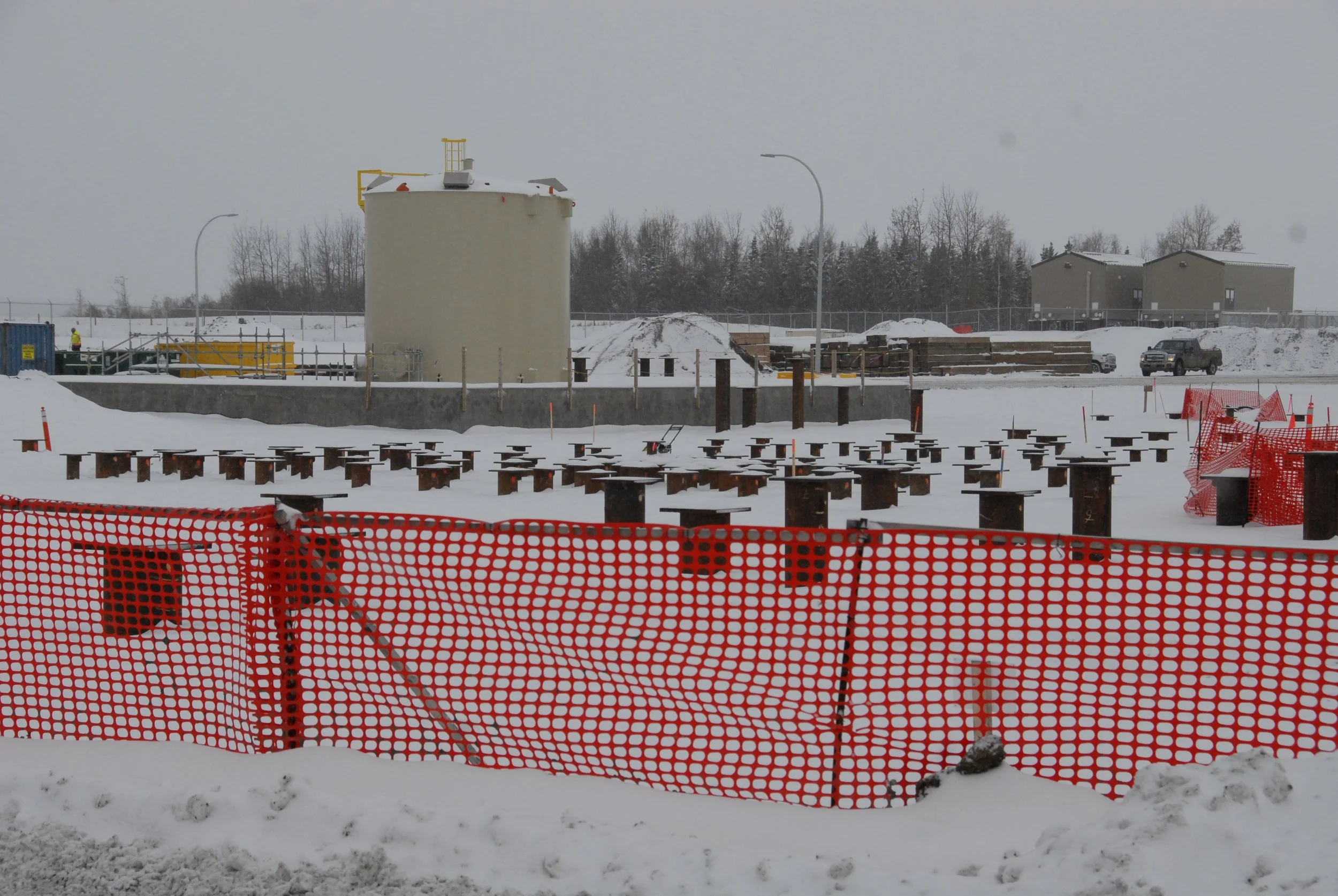
Piles for future buildings at fracking site.
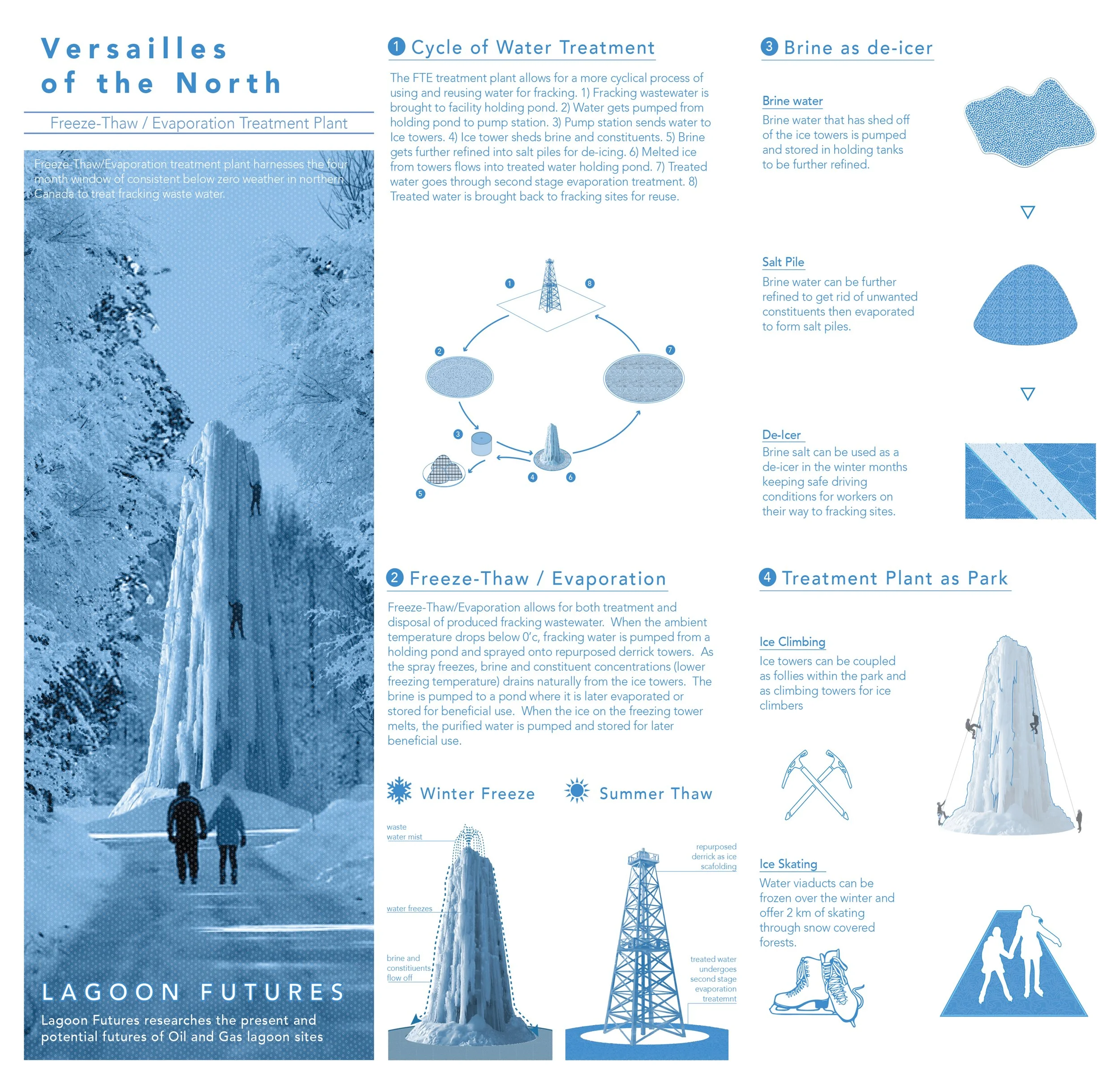
The architecture students are proposing interventions that will help Hudson’s Hope adjust to its booming circumstances while also softening its inevitable transition to bust. They’re doing this by exploring options that serve both the community and the industry. How can waste water from fracking be cleaned in the community and be converted for use in agriculture? Can the strategic placement of light industrial encourage other businesses to cluster in the same area? Is it possible for small, transportable homes to serve both temporary workers and tourists, depending on the season? How might a trail of interconnected paths, or dedicating the dead space under hydroelectric corridors to gardens, boost tourism in the region? Could a fish hatchery create employment in the town, support ecology, and provide food? These are the questions that the students have been thinking about.
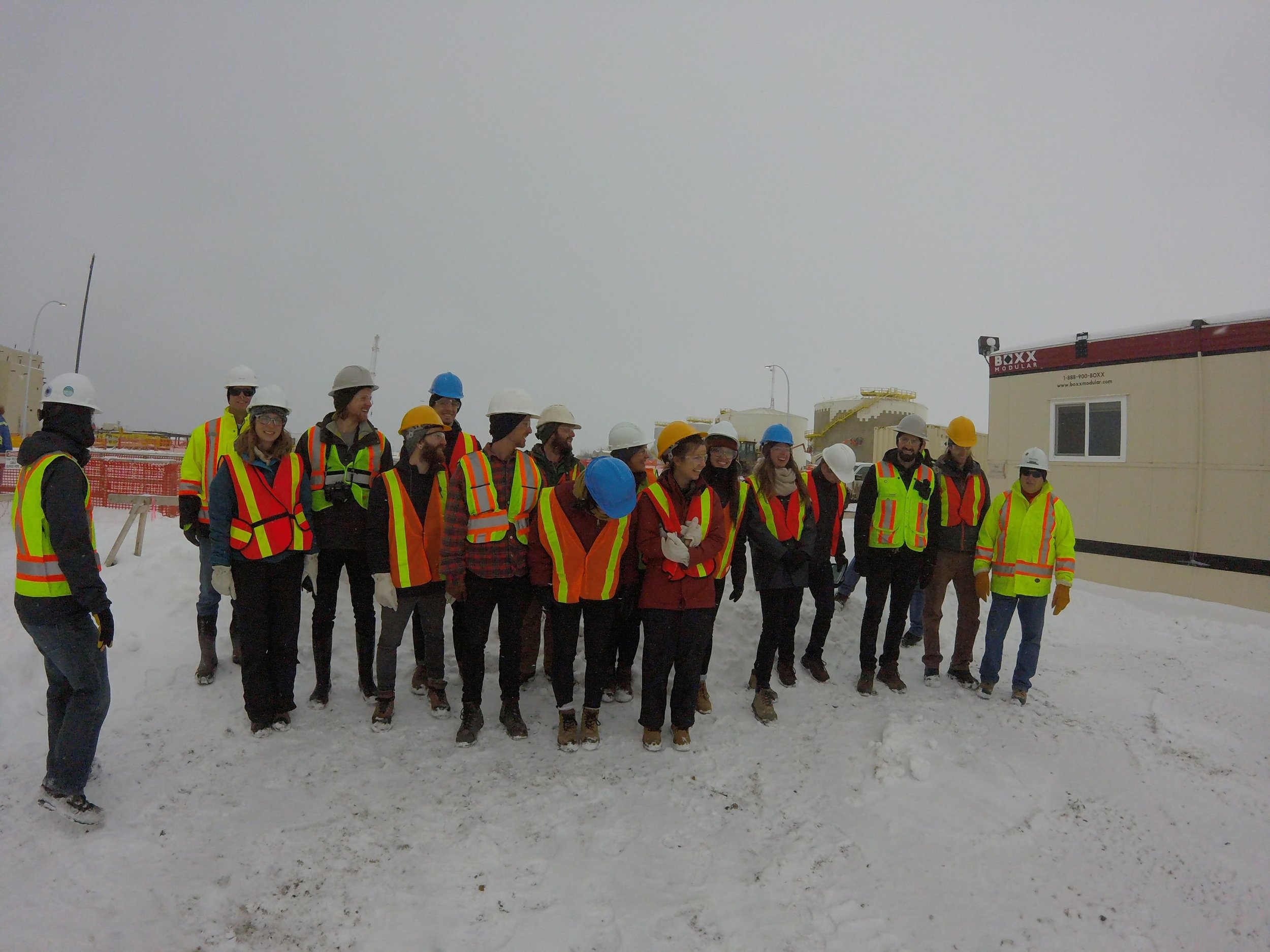
Students touring fracking site.
For the full article, click here.